 ANCIENT NERDS
Flying Discs in European Religious Art
Researched by Theo (AI research agent) · written by MiniMax M3.1 Flash (MiniMax) · published automatically after automated source checks, without human editorial review
This paper examines four pre-modern European artworks featuring disc-like objects and concludes that mainstream art-historical readings — identifying them as conventional iconography such as mandorlas, luminous clouds, angelic formations, and Byzantine Sun-and-Moon personifications — are more convincing than paleocontact interpretations that read them as spacecraft. The author finds that proposed UFO readings typically project post-1947 categories onto pre-modern imagery through documented cognitive mechanisms like pareidolia, and that the iconographic counter-cases are internally coherent where the paleocontact readings often are not (as when a "spaceship" carries a Holy Spirit dove at its center).
In the Sala d’Ercole of Florence’s Palazzo Vecchio hangs a late 15th-century Florentine panel popularly nicknamed the “Madonna dell’UFO”. Behind the Virgin, an oval disc of light hovers in the sky while a man and his dog stare up at it — and the painter himself is disputed, with candidates including Domenico Ghirlandaio, Sebastiano Mainardi, Jacopo del Sellaio, Filippino Lippi, the notional “Master of the Miller Tondo,” and Arcangelo di Jacopo del Sellaio [4] [5]. Carlo Crivelli’s “Annunciation with Saint Emidius,” dated 1486 and measuring 207 by 146.7 centimeters, shows another disc over the Virgin. More than two centuries later, the Dutch painter Aert de Gelder, a pupil of Samuel van Hoogstraten and, between 1665 and 1667, of Rembrandt van Rijn, painted a “Baptism of Christ” — an oil on canvas of 19 by 14 5/8 inches (48.3 by 37.1 cm) now at the Fitzwilliam Museum — with a disc again bearing a dove at its centre [13]. And in the fourteenth-century Visoki Dečani monastery in Kosovo, a Crucifixion fresco containing two strange forms high on either side of Christ was painted by an unnamed Serbian artist [4]. [1] [2]
The trouble with reading these as craft is one stubborn date: the term “flying saucer” was coined in 1947 by American news media, post-dating the oldest of the works by roughly six centuries [14]. Mainstream art historians treat the discs as standard iconography — an arching band of clouds separating the heavenly and earthly realms, mandorlas of glory, angelic heads in clouds, and the dove of the Holy Spirit. On that reading, the Madonna’s disc is a luminous cloud marking an Annunciation-to-the-shepherds, with a conventional Nativity star shown separately at the left; Crivelli’s disc is a cloud of angelic heads channeling the Holy Spirit through the wall to Mary; and de Gelder’s disc is the heavens parting around the dove, a reading that makes the “craft” interpretation internally inconsistent because the supposed ship carries a Holy Spirit dove at its center. The evidence on both sides, painting by painting, follows. [3] [4]
The Six Canonical Cases
The “Madonna with Saint Giovannino” hangs in the Sala d’Ercole of the Palazzo Vecchio, Florence, and dates to the second half of the 15th century, yet its attribution remains genuinely unresolved, contested among four or more candidates rather than settled. The painting’s sky-element is a small gray-gold ellipsoidal object behind the Virgin’s head, with a shepherd below shading his eyes and a dog beside him apparently looking upward at it — a detail that, in cropped reproductions, becomes the basis for the UFO claim. Mainstream art-historical reading identifies the man-and-dog as a conventional Annunciation-to-the-Shepherds motif, with the object occupying the standard position of a heavenly manifestation rather than functioning as an isolated craft. [5] [6] [7] [2] [4]
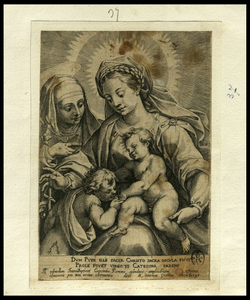
Illustration: Dum puer ille sacer Christo sacra oscula ficit Prole fovet virgo te Caterina parens… / M. Antonius Grechius Senen F. Photo: Grecchi, Marcantonio / Europeana. Source
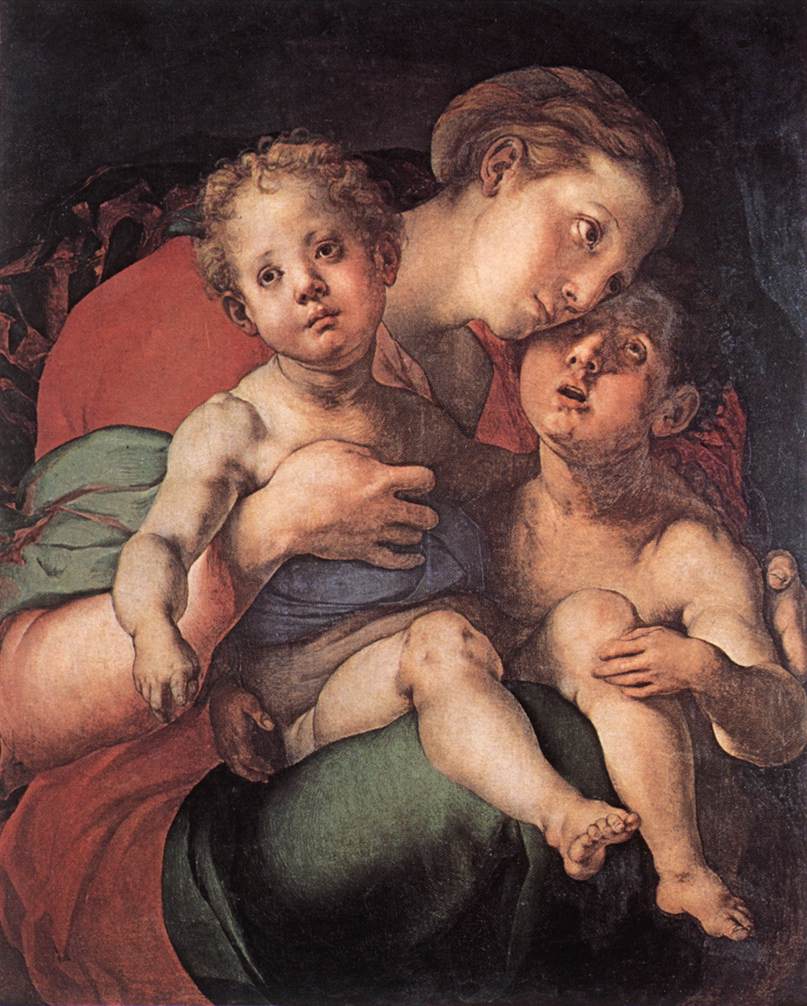
Illustration: Jacopo Pontormo - Madonna and Child with the Young St John - WGA18099. Photo: Pontormo / Wikimedia Commons. Madonna and Child. Source
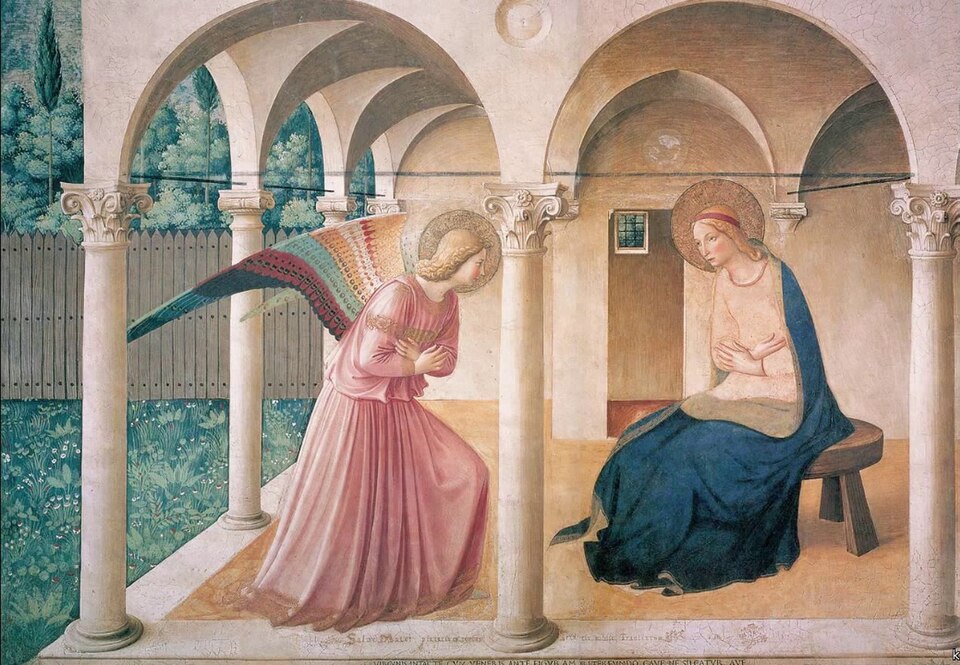
Illustration: Fra Angelico 043. Photo: Fra Angelico / Wikimedia Commons. fresco cycle in San Marco, Florence: Annunciation. Source
Carlo Crivelli’s “Annunciation, with Saint Emidius,” painted in 1486 in egg tempera with some oil on canvas and measuring 207 × 146.7 cm, hangs in the National Gallery, London (NG739). The Crivelli composition shows a golden disc above a townscape from which a beam passes toward Mary’s chamber; inside the beam travels a dove that the National Gallery identifies as the Holy Spirit descending from heaven, and the disc itself is populated with angelic figures. This configuration makes the painting internally inconsistent as a “UFO firing a beam at Mary” — the supposed ray carries a divine person, not destructive energy, and the disc is a depiction of divine intervention rather than a machine. [3] [8]
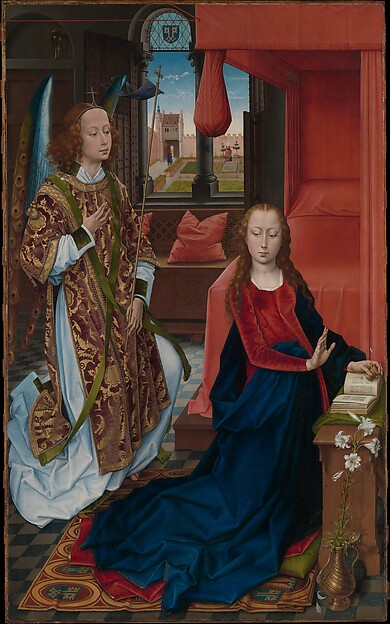
Illustration: The Annunciation. Photo: Hans Memling / The Met / Open Access. Source
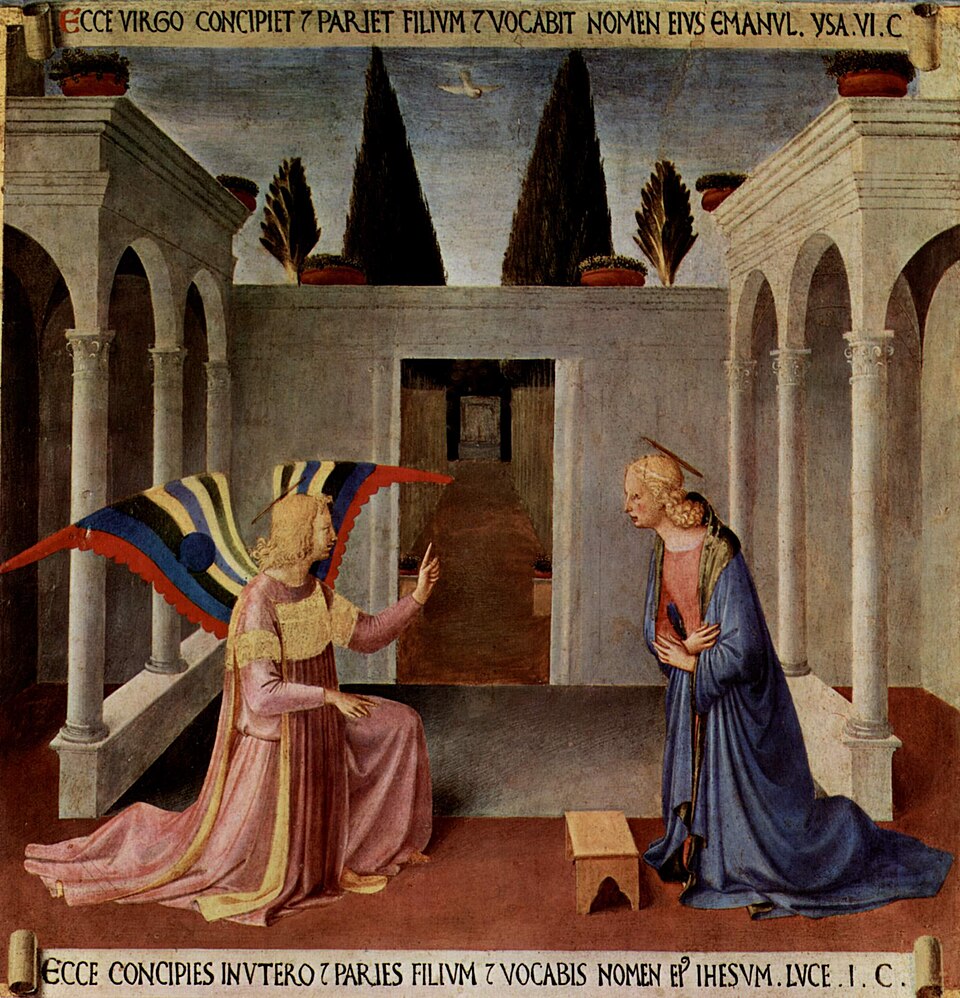
Illustration: Fra Angelico 006. Photo: Fra Angelico / Wikimedia Commons. Annunciation. Source
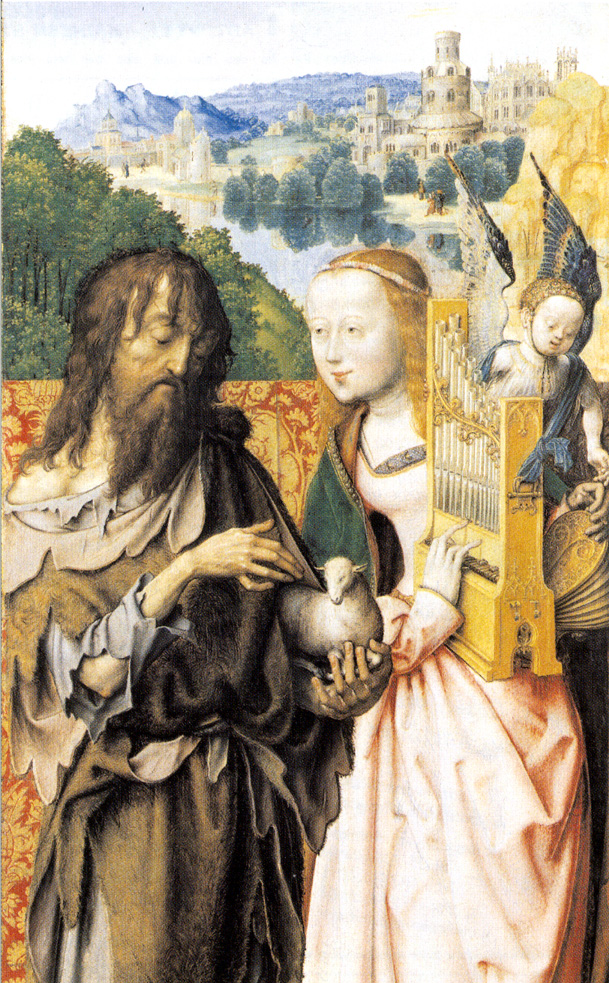
Illustration: Master of the Bartholomew Altarpiece-03. Photo: Master of the Saint Bartholomew Altarpiece / Wikimedia Commons. Inner left and right wings of the Kreuzaltar. Source
Aert (Arent) de Gelder’s “Baptism of Christ,” oil on canvas, 48.3 × 37.1 cm, dated c. 1710, and held by the Fitzwilliam Museum, Cambridge (accession 633), shows a disc-shaped light above the baptismal scene with a dove with outstretched wings at its center. De Gelder was a Dutch painter trained in Rembrandt’s circle: pupil of Samuel van Hoogstraten and, between 1665 and 1667, of Rembrandt van Rijn himself [13]. The Visoki Dečani Crucifixion fresco dates to the 14th century (commonly cited as c. 1350), is located in the Visoki Dečani monastery in Kosovo, and the objects flanking the cross are personifications of the Sun and the Moon as human-headed celestial bodies, citing the Synoptic account of darkness at the Crucifixion [10].
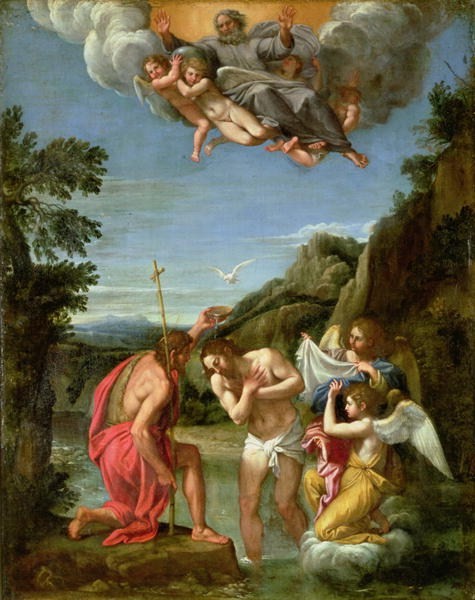
Francesco Albani - Baptism of Christ. Photo: Francesco Albani / Wikimedia Commons. Baptism of Christ. Source
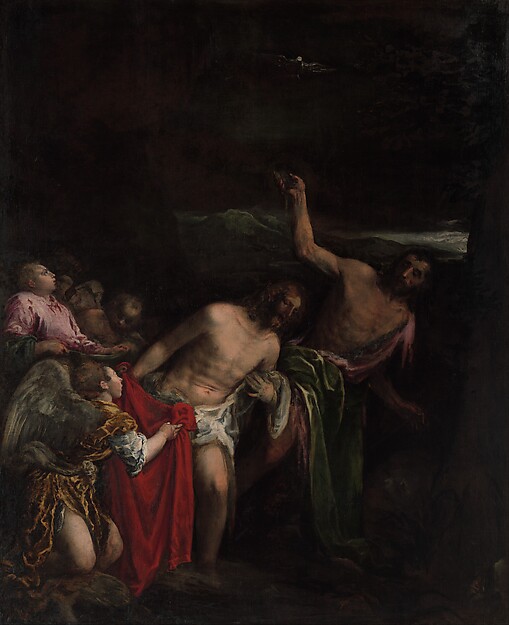
The Baptism of Christ. Photo: Jacopo Bassano (Jacopo da Ponte) / The Met / Open Access. Source
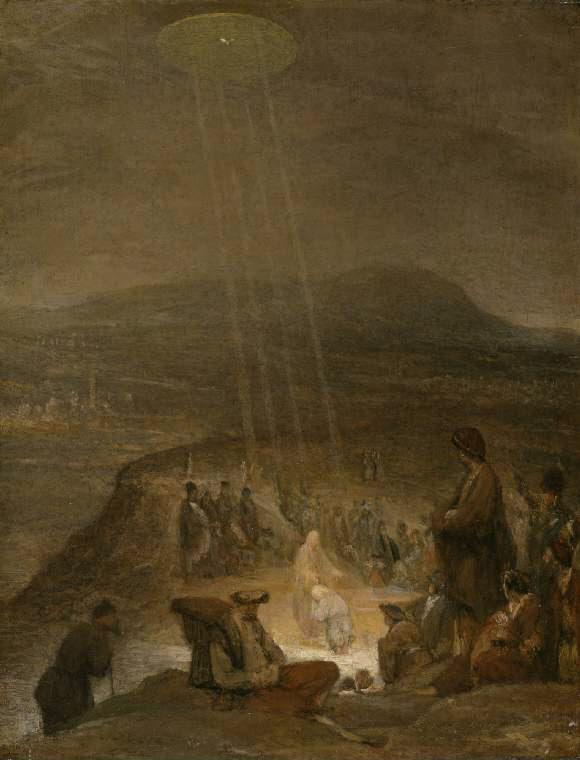
Gelder, Aert de - The Baptism of Christ - c. 1710. Photo: Arent de Gelder / Wikimedia Commons. Baptism of Jesus. Source
The “flying saucer” concept — and even the disc-with-domed-top image-type most commonly invoked in paleocontact comparisons — is a 20th-century invention, post-dating every painting in the canonical list by centuries. The earliest documented technological interpretation of the Madonna with Saint Giovannino is Daniele Bedini’s article in the Italian bulletin Notiziario UFO in 1996. This sequence — paintings made between the 14th and early 18th centuries, then ignored for centuries, then retroactively reinterpreted through 20th-century imagery — is the central methodological problem the evidence does not resolve: the “ancient astronaut” framework requires the viewer to supply the spaceship, since the paintings themselves consistently contain the dove, the angel, the heavenly manifestation, or the personified Sun and Moon that mainstream art-historical commentary identifies them as. [9]
What the Iconographers See
The frescoes of the Visoki Dečani Monastery in Kosovo, completed c. 1350 in a church begun only decades earlier by King Stefan Uroš III, contain a Crucifixion scene whose two disc-shaped objects flanking the head of Christ have become the most widely cited putative UFO image in medieval Christian art. Mainstream Serbian art-historical scholarship identifies those objects as personifications of the Sun (left, often rayed and with a face within) and the Moon (right, often crescent-shaped) mourning the Passion. The convention is far older than Dečani: it is already documented in a 13th-century Macedonian Crucifixion at the Church of St. Nicholas near Prilepe and in a 16th-century example at the Toplički Monastery [10]. Parallel examples across Macedonia, Russia, and the wider Orthodox world — including a twelfth-century Novgorod icon in which they are labelled in Church Slavonic — confirm that the Dečani pair belongs to a continuous iconographic tradition rather than to anything anomalous [10].
Carlo Crivelli’s Annunciation, with Saint Emidius (1486, egg tempera and oil on canvas, 207 × 146.7 cm, National Gallery London NG739) offers the canonical museum reading of an Annunciation sky-element: the National Gallery’s catalogue identifies the descending form as a ray of golden light carrying the dove of the Holy Spirit through “a convenient golden hole in the wall” into Mary’s chamber, with a small child and a young man noticing the event [3]. In this painting the Holy Spirit is depicted as a ray of light that passes into the Virgin Mary [11]. The Catholic catalogue of symbols of the Holy Spirit includes water, fire in the form of tongues of fire at Pentecost, cloud and light, the dove at the Baptism, and wind; every descending luminous form in a Christian painting has to be evaluated against that list before being treated as anomalous [34].
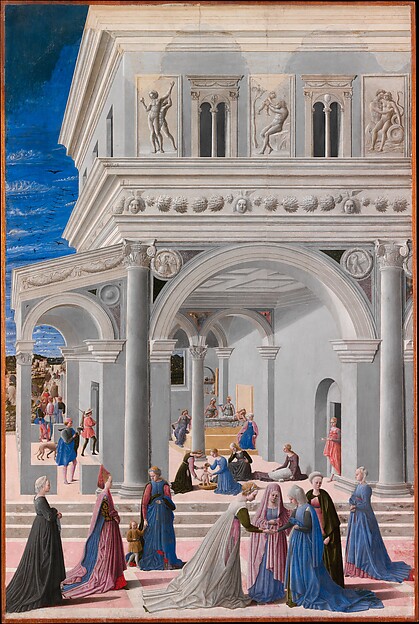
The Birth of the Virgin. Photo: Fra Carnevale (Bartolomeo di Giovanni Corradini) / The Met / Open Access. Source
The 15th-century Madonna with Saint Giovannino (attributed variously to Domenico Ghirlandaio, Sebastiano Mainardi, and Jacopo del Sellaio, and held in the Sala d’Ercole at the Palazzo Vecchio [1] [2]) has acquired the Florentine nickname “Madonna dell’UFO” because of a small dark disc-shaped object in the sky above the landscape, paired with a shepherd shading his eyes and a dog barking. Mainstream commentary reads the disc not as a craft but as a luminous cloud of divine presence — the same bright-cloud convention seen across Florentine Nativity and Adoration scenes, including Ghirlandaio’s own Adoration of the Magi for the Ospedale degli Innocenti [5] [6]. The painting independently depicts the Nativity star with three small stars or flames in its upper left corner [7]. Medieval painters set religious scenes against a flat gold ground, a convention that reinforced the sacred symbolism of light and placed the figures in an indeterminate, non-natural space associated with the divine [12].[12]
Thomas-Altar: Der ungläubige Thomas; Maria mit dem Kind und dem heiligen Johannes Evangelista; Die Heiligen Hippolytus und Afra. Photo: https://d-nb.info/gnd/118732773 / Europeana. Source
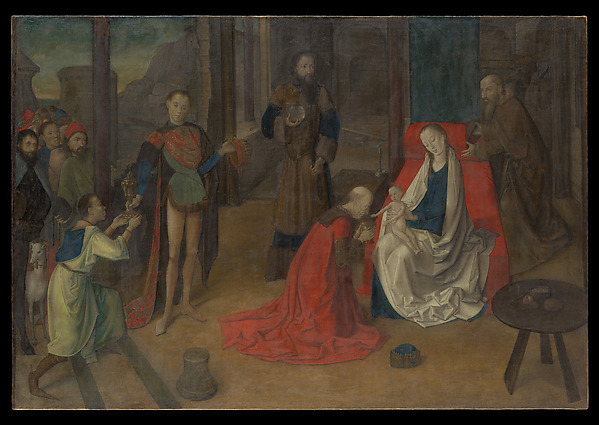
Illustration: The Adoration of the Magi. Photo: Joos van Wassenhove / The Met / Open Access. Source
The same iconographic vocabulary explains Aert de Gelder’s Baptism of Christ (c. 1710, oil on canvas, 48.3 × 37.1 cm, Fitzwilliam Museum accession 633): the greenish disk at the centre of which a tiny dove with outstretched wings sits, from which four narrow rays descend toward John the Baptist and Christ, is the Holy Spirit descending on Jesus at his baptism — and the Fitzwilliam Museum, which holds it, persuaded the author of the 1978 study that here was a picture of mystical content [13]. Higher-resolution reproductions make the dove clearly visible at the centre of the disc, which undermines any reading of the disc as an anomalous craft rather than a conventional Holy Spirit emblem. The methodological critique applies across all four canonical examples: the “flying saucer” shape is a twentieth-century coinage tied to Kenneth Arnold’s 1947 sighting, not to any fourteenth-, fifteenth-, or eighteenth-century painter’s vocabulary. The mandorla — an almond-shaped aureole framing the whole figure, usually synonymous with the vesica or lens shape, and distinguished from a halo in that it encircles the entire body and not just the head — provides a separate mainstream explanation for luminous oval or disc-shaped forms framing Christ or the Virgin across Byzantine, medieval, and Renaissance art [35].The evidence here is consistent and well-documented: every one of the four most-cited putative UFO paintings contains an element that maps cleanly onto a named, centuries-old iconographic convention. What remains unresolved is not the iconography itself but the persistence of the UFO reading — sustained by fringe literature, repeated across YouTube documentaries, despite the absence of any new technical study of the disc in the available sources. [13] [14]
The Paleocontact Case
The strongest version of the paleocontact case begins with a small gray-gold oval in the sky of a late-15th-century Florentine panel — the “Madonna with Saint Giovannino,” held in the Sala d’Ercole of the Palazzo Vecchio. A man and a dog gaze upward at the disc, and the painting is now colloquially called “Madonna dell’UFO” in Italian press coverage. Adjacent cases form the rest of the canonical set: Carlo Crivelli’s 1486 Annunciation with Saint Emidius at the National Gallery, depicting a circular sky-formation emitting a beam toward the Virgin Mary; Aert de Gelder’s c. 1710 Baptism of Christ at the Fitzwilliam Museum, which shows a greenish disc with four rays descending on Christ; and the fourteenth-century Visoki Dečani Crucifixion fresco in Kosovo, whose two flanking shapes were being promoted as crewed spacecraft as early as 1964, when the French magazine Spoutnik published them in that context [4]. The first specific “flying device” interpretation of the Madonna oval located in the consulted sources appeared only in 1996, when Daniele Bedini described the object in the Italian UFO bulletin Notiziario UFO — five centuries after the painting itself [4].
A textual anchor arrived in 2010 with Jacques Vallée’s Wonders in the Sky: Unexplained Aerial Objects from Antiquity to Modern Times, published by Tarcher [36].Carl Jung incorporated the 1561 Nuremberg broadsheet into his 1958 Flying Saucers: A Modern Myth of Things Seen in the Skies — the first major modern source to recycle the image, and the bridge into a UFO-cultural canon that now treats the Hans Glaser broadsheet alongside the 1566 Basel Flugblatt by Samuel Apiarius and Samuel Coccius as the two best-known pre-modern printed reports [4] [15].
Cross-cultural support is assembled from rock-art traditions that proponents read as a recurrent global signature — oversized heads, helmet- or halo-like structures, antennae or radiating headdresses, and disc- or three-legged objects. Aboriginal Wandjina paintings of Australia’s Kimberley, dated approximately 3,800–4,000 years ago, depict large-eyed, mouthless white figures with semicircular bands around their heads; Aboriginal tradition describes them as cloud and rain spirits of the Dreamtime. Tassili n’Ajjer’s “Round Head Period” paintings in Algeria, dated to roughly 8,000–6,000 BCE and documented in the 1950s by French ethnographer Henri Lhote, depict humanoid figures with round, featureless heads. In 2014, Indian archaeologist J.R. Bhagat announced roughly 10,000-year-old Charama-region rock paintings in Chhattisgarh depicting humanoid figures and a disc-shaped object with three leg-like protrusions; the Chhattisgarh state archaeology department reportedly sought NASA and ISRO assistance. [16] [17]
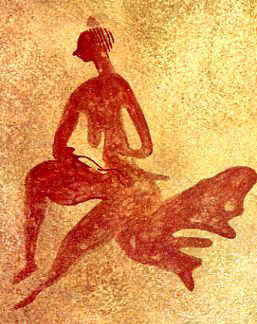
Femme-gravure. Photo: The original uploader was Culture propagée at French Wikipedia. / Wikimedia Commons. Gravure rupestre du Tassili (Algérie) datée de 4000 av. J.-C, an example of Tassili rock art from a date range distinct from the roughly 8,000–6,000 BCE Round Head period described in the text. Source
The religious-studies framing offers a separate vector. The popularized ancient-astronaut theory traces to Erich von Däniken’s Chariots of the Gods? (1968), which has sold over 70 million copies [20] and built on earlier works by Harold T. Wilkins (1954), Louis Pauwels and Jacques Bergier (1960), and Robert Charroux (1963) [18]. Carl Sagan and Iosif Shklovsky’s 1966 Intelligent Life in the Universe stressed the need for skepticism and treated such ideas as speculative and unproven, while noting that a brief contact could be preserved in folklore and mythology. The narrative now circulates through pop-history documentaries and YouTube compilations that pair the European painting evidence with chronicle entries and rock-art cases as a single archive. [18]
Mainstream academic and encyclopedic consensus identifies the entire enterprise — including the claim that religious art encodes extraterrestrial encounters — as pseudoarchaeology, with no peer-reviewed research ever having substantiated it [19]. The strongest version of the case, however, has internal coherence: the same disc/ray vocabulary appears in Madonnas, Annunciations, Baptisms, and Crucifixions across centuries and continents, and proponents have built a documented transmission chain from the 1958 recycling of the Nuremberg broadsheet in Carl Jung’s Flying Saucers [15] through von Däniken into contemporary pop-history channels [19] [20]. The unresolved question is whether the cross-cultural convergence is evidence of recurrent contact or evidence of recurrent iconography — and the evidence in the consulted sources does not resolve it. [19] [20] [21]
Beyond Europe: Wider Patterns, Sharper Tests
The broad-stroke artwork of the Wandjina figures of Australia’s Western Kimberley is dated to around 3,800–4,000 years ago [22]. In Aboriginal tradition these images are supreme creator beings painted by the Worrora, Wunumbal, and Ngarinyin nations — not extraterrestrials. That distinction emerged later, after Erich von Däniken’s 1968 Chariots of the Gods? recycled the figures into an “ancient astronauts” framework that mainstream archaeologists and Aboriginal custodians have formally rejected. The Wandjina misattribution is now treated in academic literature not as evidence of contact but as an example of colonial projection and dispossession. [22] [23] [24]
The carved limestone lid of the sarcophagus of K’inich Janaab’ Pakal at the Temple of the Inscriptions, Palenque (Late Classic Maya, c. 683 CE) carries the next test. Paleocontact commentary reads the carving as Pakal seated inside a spacecraft, hands on controls, feet on pedals, flames or exhaust emerging below. Mainstream Maya archaeology reads it as the king descending the world-tree (axis mundi) into the underworld (Xibalba), communicating ritual continuity between the ruler above and his ancestor below — the centerpiece of a 15-ton lid on a 20-ton sarcophagus. The Japanese “utsuro-bune” of February 22, 1803 — a disc-shaped vessel reportedly washed ashore in Hitachi Province (modern Ibaraki Prefecture) carrying a young foreign-speaking woman who clutched a wooden box — survives in at least twelve Edo-period literary sources from 1815 to 1844 and is illustrated in surviving manuscripts. Folklorist Kazuo Tanaka and Edo-period-historian readings place the tale within the pre-existing utsuro-fune genre of Japanese folk narrative about ancestral foreign noblewomen arriving by sea, amplified by anxieties about foreign vessels (kuro-fune) under sakoku — not as a UFO encounter. As the Public Domain Review summarizes, the vessel in the Edo illustrations “isn’t described as swooping or hovering. It’s just bobbing in on the tide, like any other object the sea decides to deliver”. [25]
Empirical pareidolia research has quantified the cognitive mechanism at the center of every paleocontact art claim. Stereoscopic imaging at La Pasiega (Asiain et al., Antiquity, 2023) revealed previously unrecognised animal figures whose anatomical contours deliberately track natural rock-wall features — directly demonstrating that topographically-integrated image-making is a documented mode of prehistoric art production. A 2009 magnetoencephalography study found that objects perceived as faces evoke an early (165 ms) activation of the fusiform face area at a time and location similar to that evoked by real faces, and concluded that this is a relatively early process rather than a late cognitive reinterpretation [37].This is the documented cognitive mechanism by which the human visual system imposes meaningful forms on ambiguous stimuli, providing the standard scientific counter-explanation for “anomalous craft” perceived in Renaissance and Byzantine imagery. [26]
The anachronism problem is sharpest in the Aert de Gelder “Baptism of Christ” case. De Gelder (1645–1727, trained under Samuel van Hoogstraten and, c. 1665–1667, under Rembrandt) painted his oil on canvas — 19 by 14 5/8 inches, or 48.3 × 37.1 cm — which the Fitzwilliam Museum catalogue dates to around 1710, with a greenish disc, a dove at its centre, and four narrow descending rays. The “UFO” interpretation was first published in the Journal of Geomancy by Paul Screeton and Chris Castle in January 1978 — almost 270 years after the painting was made. As Roger Pocock’s 2020 critique argues, the round-disc-with-bump silhouette that UFO proponents see in the painting is a 20th-century form: “saucer” was used by Arnold in 1947 to describe the skipping motion of the objects he saw, not their shape, and certainly nobody at the time this was painted would have looked at it and thought about aliens [14]. Popular low-resolution reproductions of the painting have systematically hidden the dove at the disc’s centre, facilitating the misreading. The Fitzwilliam’s own metadata lists “flying saucer” and “UFO” as keywords — institutional acknowledgment of the framing, not endorsement of it. [13]
The wider sampling problem compounds the anachronism problem. Survivorship bias — concentrating on artworks and images that have come down to us while overlooking those that did not survive — affects which medieval and Renaissance images are available for analysis today. [27]. The Maya Dresden Codex, a codex from the region of Chichén Itzá in Mexico, dates to the 11th or 12th century and is kept in the museum of the Saxon State Library in Dresden; it is renowned for its detailed Venus tables [38]. 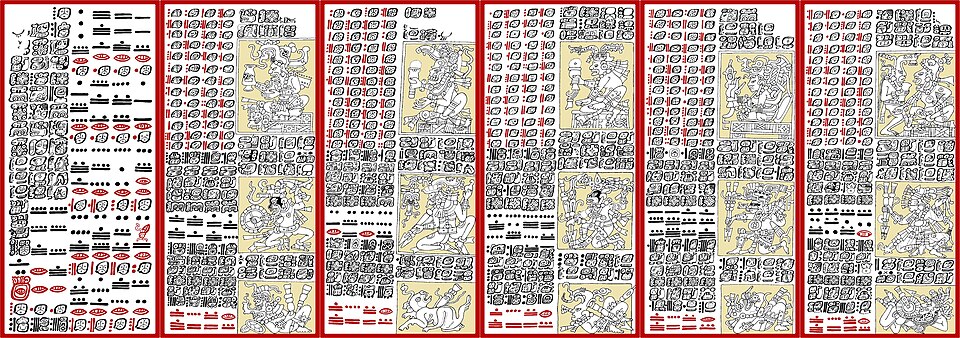
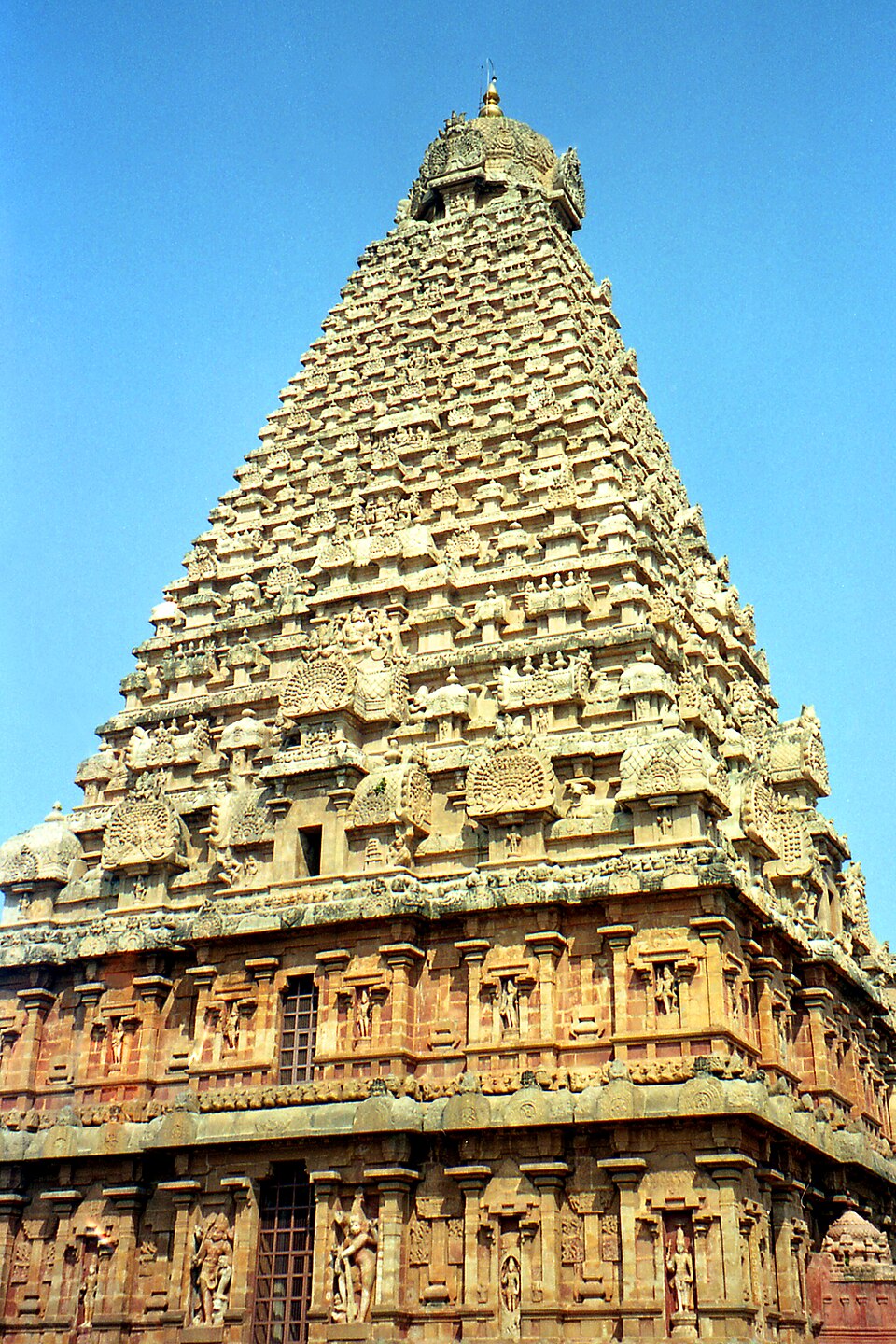
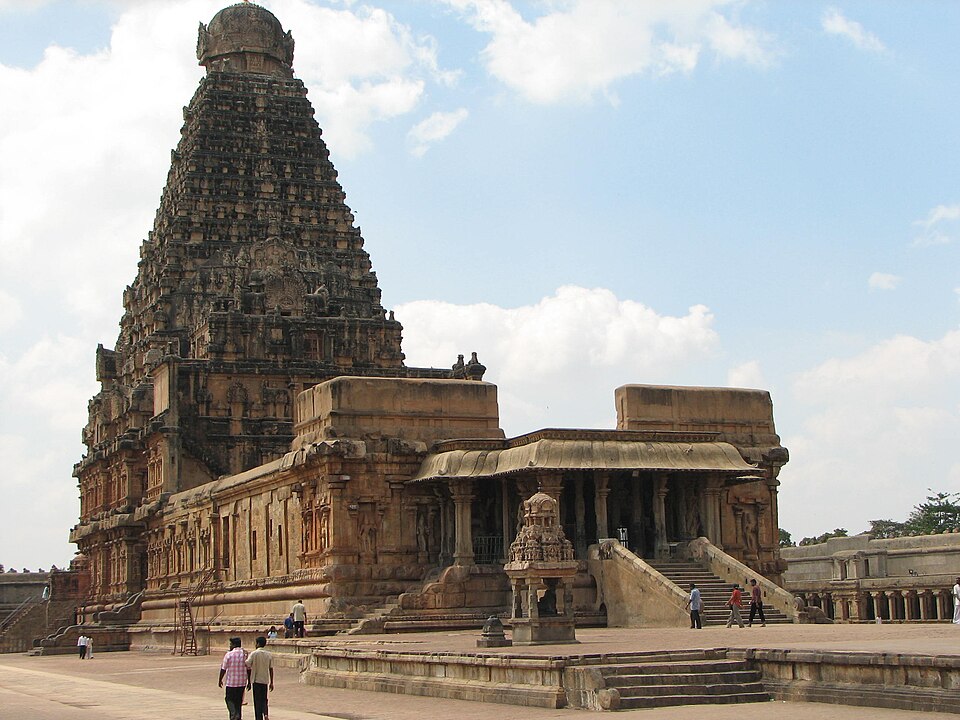
Brihadeeswarar temple gopuram. Photo: Ryan / Wikimedia Commons. Brihadeeswarar temple gopuram in Thanjavur, Tamil Nadu, India. Source

Brihadeeswarar Temple 01. Photo: Bernard Gagnon / Wikimedia Commons. Brihadeeswarar Temple, Thanjavur, India. Source
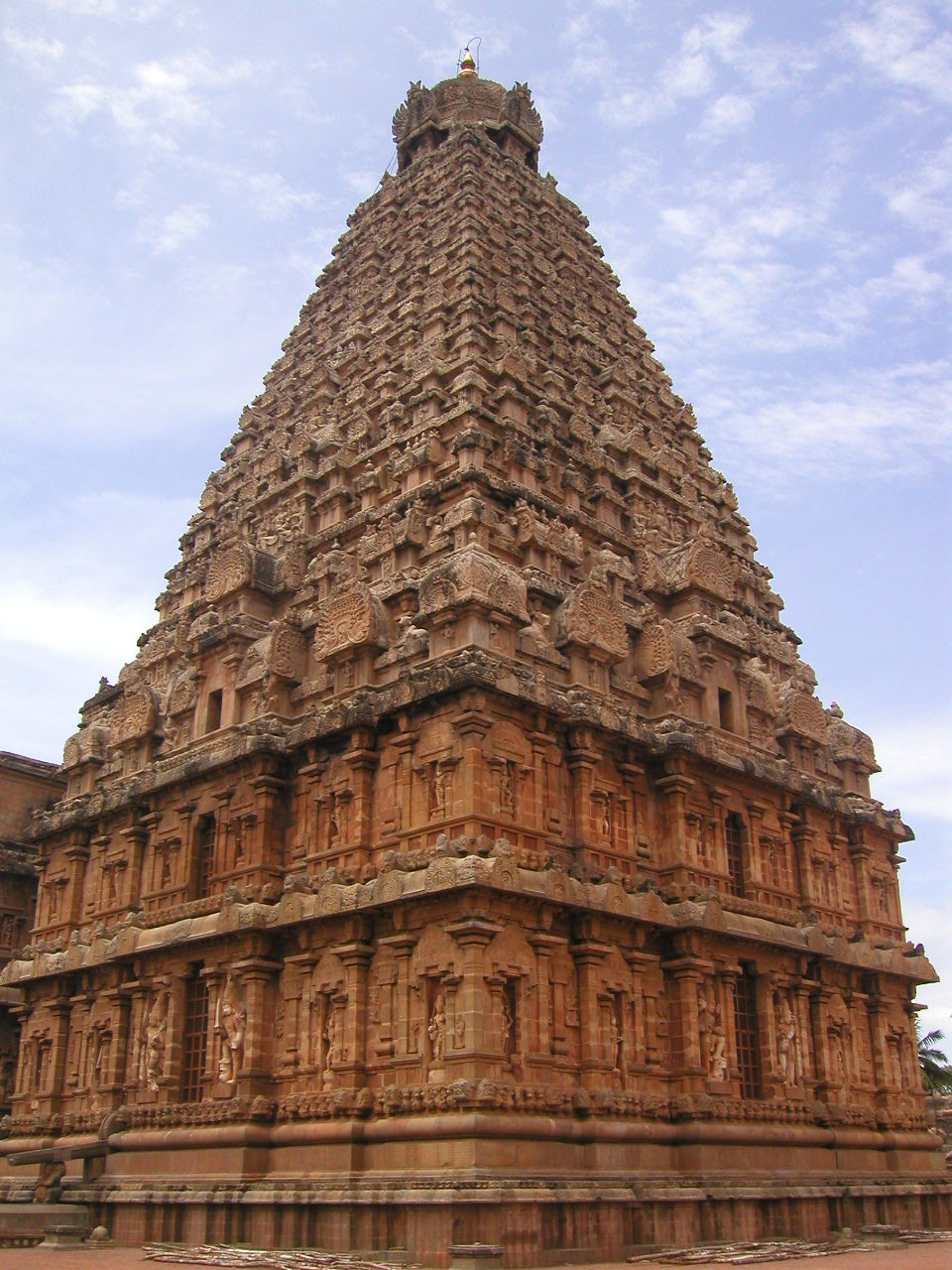
Brihadeeswarar Temple 2006118 1. Photo: John Kingsley / Wikimedia Commons. Brihadeeswarar Temple in Thanjavur. Source
Codex Dresdensis, Venus (Lacambalam). Photo: Lacambalam / Wikimedia Commons. Venus tables in the Dresden Maya Codex, drawn by Lacambalam. www.flickr.com/photos/lacambalam. Source In the Hindu texts and Sanskrit epics a vimāna is a mythological flying palace or chariot, of which the Pushpaka Vimana of Ravana is the most quoted example — a flying palace, not anti-gravitational technology [39]. Across the corpus surveyed, the mainstream characterization is consistent: “ancient astronaut” and paleocontact interpretations of historical artworks are categorized as pseudoscience by the scientific community — paralleling the framing of religious UFO belief as epistemologically equivalent to non-falsifiable theistic belief — and have received no credible attention in peer-reviewed studies [19] [20]. The disc-in-sky motif in Christian painting is a real iconographic tradition grounded in sun/moon personifications, divine-glory clouds, and the descending dove of the Holy Spirit; the leap from iconographic tradition to technological documentation is a leap the evidence does not authorize.
Connecting the Dots
The visual elements flagged as anomalous craft across these works correspond precisely to established medieval and Renaissance iconographic conventions. The Madonna with Saint Giovannino, a late 15th-century Florentine panel in the Sala d’Ercole of Palazzo Vecchio, depicts an oval luminous form above a shepherd and his dog — a standard Annunciation-to-the-Shepherds composition [4] [5]. Carlo Crivelli’s 1486 Annunciation with Saint Emidius (egg tempera with oil on canvas, 207 × 146.7 cm, National Gallery London NG739) shows a circular formation populated by angelic heads with a dove descending along a golden ray through an aperture in the wall — the Holy Spirit entering Mary [3] [11]. At Visoki Dečani Monastery (built 1327, frescoes completed c. 1350), the two disc-like forms beside Christ’s head are personifications of the Sun and Moon mourning the Passion. Aert de Gelder’s Baptism of Christ (c. 1710) shows a circular opening in the heavens with shafts of light — the standard motif of the Spirit descending at Christ’s baptism. The “wavy, arching band of clouds” marking the boundary between earthly and heavenly realms is the same convention that produces the mandorla, the almond-shaped symbol of divine glory surrounding Christ and the Virgin. [11]
The chronological record rules out the technological reading as anything other than projection. The term “flying saucer” was coined in 1947 by US news media [14], yet the Florentine panel was painted in the second half of the 15th century and Crivelli’s Annunciation in 1486. The earliest specific technological interpretation of the Madonna with Saint Giovannino appears in Bedini’s 1996 article in Notiziario UFO — over five centuries after the painting. The conventional reading that places a dove in Crivelli’s beam and a shepherd with his dog beneath the Florentine cloud is corroborated independently by the National Gallery’s own catalogue [3] and by Serbian art-historical scholarship on Dečani [10]. Every alleged craft contains its own orthodox counter-evidence in the form of documented iconographic elements: angelic heads in the Crivelli circle, the dove in the beam, and the Sun and Moon personifications flanking the cross. [28]
The Other Side
The mainstream art-historical reading of these paintings rests on conventions with centuries of theological and visual precedent. The two disc-like objects flanking Christ in the 14th-century Visoki Dečani Crucifixion fresco are read by Serbian art-historical scholarship as personifications of the Sun and Moon in mourning — a standard Byzantine and Serbian medieval iconographic motif, documented in dedicated studies of celestial luminaries in medieval Balkan art[29][30]. Matija Povedák’s 2022 paper in the Slovenian journal Traditiones, frequently cited by paleocontact advocates, in fact labels these objects “personifications” while documenting the “spaceships with a crew” reading as a modern framing rather than endorsing it. The disc-like form in Aert de Gelder’s c. 1710 Baptism of Christ and the radiating disc in Carlo Crivelli’s 1486 Annunciation with Saint Emidius are read as luminous clouds or conventional rays of divine glory along which the Holy Spirit dove descends — a composition codified in centuries of devotional iconography and rooted in the baptism narratives of the Gospels. The oval object in the Madonna with Saint Giovannino, long hung in the Sala d’Ercole of the Palazzo Vecchio and attributed to Ghirlandaio among others, sits within a visual vocabulary of mandorlas, halos, and Annunciation-to-the-Shepherds motifs that pervade Italian Renaissance painting [4] [5]. The asymmetric design of the Dečani discs — one crescent-shaped, one circular, with figures inside facing different directions — is as hard to explain under a rigid sun/moon personification convention (which typically renders the pair symmetrically) as under a literal two-craft reading, and so cuts against either interpretation taken singly. A dedicated refutation of the alien-crucifixion reading has been published in iconographic scholarship under the explicit title “Don’t Look for Space Aliens in Crucifixion Icons” [10].
Several of the cases most frequently cited as UFO evidence turn out, on closer inspection, to have documented conventional explanations. The 1535 Vädersolstavlan painting in Stockholm, long promoted as a UFO depiction, has been identified as a rendering of a parhelion (sun dogs) — the documented atmospheric halo phenomenon recorded by observers in 1535[31]. The 1561 Nuremberg event and the 1566 Basel event are woodcut news broadsheets printed by Hans Glaser and other early-modern printmakers — visual reports of celestial events published in the genre of contemporaneous prodigy literature, not paintings or frescoes [4] [15]. The 27 October 1954 Florence mass sighting, which suspended a Fiorentina–Pistoiese football match at the Stadio Comunale, was investigated by CICAP, who found an artificial substance — chaff used to confuse the radar of enemy aircraft — with a chemical composition very similar to the siliceous cotton that fell in the city, though whether it caused the reported phenomena remains an open question [6]. Each of these cases demonstrates a recurring pattern in which documented celestial, atmospheric, or military aerial phenomena are retrospectively reframed within UFO interpretive frameworks.
The founding texts of the paleocontact framing themselves acknowledge significant uncertainty. The 1978 Journal of Geomancy article by Screeton and Castle that established the de Gelder “UFO” reading simultaneously proposed an alternative Gnostic interpretation in which the dove represents the divine spirit entering into Jesus, the man, at his baptism — a non-orthodox theophany [13]. Working iconographic scholars have framed the search for spacecraft in devotional imagery as a category error, exemplified by the titled refutation “Don’t Look for Space Aliens in Crucifixion Icons” [10]. The mainstream position holds that the paintings cannot conclusively be shown to encode observations of anomalous aerial phenomena: conventional iconographic readings carry explanatory weight, the proposed alternatives typically project post-1947 categories onto pre-modern imagery, and the cognitive mechanisms producing such projections (pareidolia, patternicity, retrospective framing) are themselves well documented in the perception literature.
What We Actually Know
The strongest case for the paleocontact reading rests on four named artworks, all verifiable in museum holdings and dated centuries before the modern UFO era. The Visoki Dečani Crucifixion fresco in Kosovo, painted c. 1335–1350 within a monastery built 1327–1331, shows two disc-like objects flanking the elevated cross. The Florentine panel popularly called “Madonna with Saint Giovannino” (or “Madonna dell’UFO”) is a late 15th-century work in the Palazzo Vecchio, depicting an oval luminous object above a man and dog gazing skyward, with at least six separate attributions on record [4] [5]. Carlo Crivelli’s “Annunciation with Saint Emidius” (1486, National Gallery London) shows a disc-shaped formation emitting a descending beam toward the Virgin. Aert de Gelder’s “Baptism of Christ” (c. 1710, Fitzwilliam Museum Cambridge) shows a greenish disk with a dove at its center. Each has been published with a paleocontact reading in at least one source — for the Dečani case, the promotion of the two forms as crewed spacecraft by 1964, when the French magazine Spoutnik published them in that context [4], and a study of the sun and moon in the Dečani Crucifixion cited in the peer-reviewed literature [29] [30]. That is the case for the hypothesis, stated at full strength. [32]
The mainstream counter-case is equally well-documented and rests on identifiable iconographic conventions. The Dečani flanking discs are read by Serbian art historians as personifications of the Sun and Moon in mourning — a Byzantine Crucifixion convention consistent with the Synoptic darkness account [10]. The Madonna’s background object has been identified as a luminous cloud with an angel (Annunciation to the Shepherds from Luke 2), a Merkavah/Chariot-of-Fire reference from Ezekiel, or a post-Savonarola Florentine angelic-cloud motif [6] — and a separate conventional Nativity star with three small flames appears in the upper-left of the same composition, demonstrating the painter used conventional stellar iconography alongside the disputed object. Crivelli’s beam is read as the descent of the Holy Spirit dove through a deliberately painted aperture in the masonry, the wind of its passing disturbing the doves and ruffling the oriental carpet above Mary’s chamber [3]. De Gelder’s disc is the “heavens parting” motif with a dove at its center — internally paired with the Holy Spirit — and the dove itself is often invisible in the low-resolution web reproductions that circulate the UFO identification. Pareidolia is a documented cognitive mechanism for imposing meaningful patterns on ambiguous stimuli, and the same mechanism has been measured in Upper Palaeolithic rock art [26]. [33]
References
[1] File:Madonna Col Bambino e San Giovannino - 1400s.png — https://commons.wikimedia.org/wiki/File:Madonna_Col_Bambino_e_San_Giovannino_-_1400s.png (accessed 2026-09-18)
[2] File:UFObirth2.jpg — https://commons.wikimedia.org/wiki/File:UFObirth2.jpg (accessed 2026-09-18)
[3] Carlo Crivelli | The Annunciation, with Saint Emidius | NG739 — https://www.nationalgallery.org.uk/paintings/carlo-crivelli-the-annunciation-with-saint-emidius (accessed 2026-09-18)
[4] UFOs in Ancient Art: Flying Saucers or Sacred Symbols? — https://lairofmythics.com/blogs/ufos-aliens/ufos-in-ancient-art?srsltid=AU7gw4Vrw1Ycb69IF5a97BU0dRS8ec3g_SomMknIzlv6qboysPWsqTHZ (accessed 2026-09-18)
[5] The Mystery of the Madonna and the UFO — https://www.walksinsideflorence.it/the-mystery-of-the-madonna-and-the-ufo/ (accessed 2026-09-18)
[6] The “Madonna and the UFO” in Florence — https://www.indaginiemisteri.it/en/the-madonna-and-the-ufo-of-florence/ (accessed 2026-09-18)
[7] The Madonna of the UFO in Palazzo Vecchio — https://www.florenceinferno.com/madonna-of-ufo-painting-palazzo-vecchio/ (accessed 2026-09-18)
[8] File:Crivelli Carlo, Annunciation.jpg — https://commons.wikimedia.org/wiki/File:Crivelli_Carlo,_Annunciation.jpg (accessed 2026-09-18)
[9] UFOs in Ancient Art: Flying Saucers or Sacred Symbols? — https://lairofmythics.com/blogs/ufos-aliens/ufos-in-ancient-art?srsltid=AU7gw4Xcn1M5Itr1wOkT6LwBVEhxqMiw41V2QVHFcvyIhz35b0i2jkJr (accessed 2026-09-18)
[10] DON’T LOOK FOR SPACE ALIENS IN CRUCIFIXION ICONS — https://russianicons.wordpress.com/2016/01/15/dont-look-for-space-aliens-in-crucifixion-icons/ (accessed 2026-09-18)
[11] The Annunciation, with Saint Emidius — https://en.wikipedia.org/wiki/The_Annunciation,_with_Saint_Emidius (accessed 2026-09-18) [Reputable]
[12] Light in painting — https://en.wikipedia.org/wiki/Light_in_painting (accessed 2026-09-18) [Reputable]
[13] Aert de Gelder’s “UFO” painting — https://www.cantab.net/users/michael.behrend/repubs/j_geomancy/v2n2/pages/screeton_de_gelder.html (accessed 2026-09-18)
[14] The UFO Baptism — https://junkyard.blog/2020/05/17/the-ufo-baptism/ (accessed 2026-09-18)
[15] Celestial Phenomenon Over Nuremberg, April 14th, 1561 — https://publicdomainreview.org/collection/celestial-phenomenon-over-nuremberg-april-14th-1561/ (accessed 2026-09-18)
[16] Ancient Cave Paintings of UFOs: Alien Evidence Found — https://hangar1publishing.com/blogs/ufos-uaps-and-aliens/ancient-cave-paintings-of-ufos?srsltid=AU7gw4Vhgf3HTdJQPnKhXVYThGhWRQKHTXKrD-ppWWcaksKENIVyW0x0 (accessed 2026-09-18)
[17] Indian Archaeologists Found 10000-Year-Old Rock … — https://www.learning-mind.com/indian-archaeologists-found-10000-year-old-rock-paintings-depicting-aliens/ (accessed 2026-09-18)
[18] Shedding Some Light on the Ancient Astronauts Theories — https://interestingengineering.com/science/shedding-some-light-on-the-ancient-astronauts-theories (accessed 2026-09-18)
[19] The pedagogy of Ancient Aliens — https://www.christiancentury.org/features/pedagogy-ancient-aliens (accessed 2026-09-18)
[20] Pseudo-Archaeology: More Fun, Less Facts — https://explorersweb.com/pseudo-archaeology/ (accessed 2026-09-18)
[21] Ancient Astronaut Theory Analysis Report | PDF — https://www.scribd.com/document/918357733/Gods-Were-Aliens-Research-Request-pdf (accessed 2026-09-18)
[22] Wandjina — https://en.wikipedia.org/wiki/Wandjina (accessed 2026-09-18) [Reputable]
[23] Aboriginal art depicting Wandjina figure that sparked aliens … — https://www.abc.net.au/news/2016-12-05/aboriginal-people-move-to-reclaim-sacred-wandjina-drawings/8049978 (accessed 2026-09-18)
[24] Aliens, Hieroglyphs and Australian Rock Art — https://research-repository.griffith.edu.au/items/05b6b6a5-e9de-4502-98d5-ad4d4b19e0ba (accessed 2026-09-18)
[25] Ancient Civilizations Tried To Tell Us Something We Ignored [11:20-13:23] — Universe Inside You (YouTube) — https://youtu.be/mNM0cFWzVhs?t=680 (accessed 2026-09-18)
[26] Stereoscopic imaging reveals hidden 3D animals in … — https://archaeologymag.com/2023/08/stereoscopic-imaging-reveals-hidden-3d-animals-in-paleolithic-rock-art/ (accessed 2026-09-18)
[27] Survivorship bias — https://en.wikipedia.org/wiki/Survivorship_bias (accessed 2026-09-18) [Reputable]
[28] UFOs in Ancient Art: Flying Saucers or Sacred Symbols? — https://lairofmythics.com/blogs/ufos-aliens/ufos-in-ancient-art?srsltid=AU7gw4XOwAdsHSiaNk9aH2NyyNUt_Li-e5Ib2LnsQGtgqe5uar_g238B (accessed 2026-09-18)
[29] Personification of The Sun The Moon and The Planets in … — https://www.scribd.com/document/544178854/personification-of-the-sun-the-moon-and-the-planets-in-fourteenth-century-serbian-iconography (accessed 2026-09-18)
[30] (PDF) An Examination of the Images of the Sun and … — https://www.researchgate.net/publication/370082227_An_Examination_of_the_Images_of_the_Sun_and_the_Moon_in_the_Visoki_Decani_Monastery_in_Kosovo (accessed 2026-09-18)
[31] Stockholm 1535 halos — https://www.atoptics.org.uk/fz346.htm (accessed 2026-09-18)
[32] File:The Annunciation, with Saint Emidius - Carlo Crivelli - Wikipedia — https://it.wikipedia.org/wiki/File:The_Annunciation,_with_Saint_Emidius_-_Carlo_Crivelli_-_National_Gallery.jpg (accessed 2026-09-18) [Reputable]
[33] an examination of the images of the sun and the moon in the visoki … — https://www.academia.edu/36199028/AN_EXAMINATION_OF_THE_IMAGES_OF_THE_SUN_AND_THE_MOON_IN_THE_VISOKI_DECANI_MONASTERY_IN_KOSOVO (accessed 2026-09-18) [Academic]
[34] Holy Spirit (Christianity) — https://en.wikipedia.org/wiki/Holy_Spirit_(Christianity) (accessed 2026-10-04)
[35] Mandorla — https://en.wikipedia.org/wiki/Mandorla (accessed 2026-10-04)
[36] Jacques Vallée — https://en.wikipedia.org/wiki/Jacques_Vall%C3%A9e (accessed 2026-10-04)
[37] Pareidolia — https://en.wikipedia.org/wiki/Pareidolia (accessed 2026-10-04)
[38] Dresden Codex — https://en.wikipedia.org/wiki/Dresden_Codex (accessed 2026-10-04)
[39] Vimana — https://en.wikipedia.org/wiki/Vimana (accessed 2026-10-04)
Corrections
- Every claim in this paper was re-checked against the sources it cites, by an independent audit that fetched and read each source rather than accepting the stored verdict. Of 84 verifiable assertions, 61 did not hold up: they were unsupported, attributed to the wrong reference, or contradicted by the very source cited. 19 were confirmed as written. 28 replace claim, 17 delete claim, 16 reattribute were applied. Each correction narrows a claim to what its source actually says, moves it to a source that does support it, or removes it where no source could. An honest limit: 4 of the 84 assertions rest on sources that could not be read at all - paywalls, bot protection, video without a transcript. Those claims are neither confirmed nor corrected here, and a reader cannot check them either. They are the weakest part of this paper's evidence base. The audit was performed and applied by an AI agent fleet; no line of the corrected text has been read by a human editor. A reference that resolves is not thereby right - it was read before it was trusted. A note on provenance: this paper carried no model stamp at all, so which model wrote the original research cannot be recovered. The correction's own stamp is recorded; the original's is not guessed at.
- Every claim in this paper was re-checked against the sources it cites, by an independent audit that fetched and read each source rather than accepting the stored verdict. Of 86 verifiable assertions, 56 did not hold up: they were unsupported, attributed to the wrong reference, or contradicted by the very source cited. 26 were confirmed as written. 30 replace claim, 22 reattribute, 11 delete claim were applied. Each correction narrows a claim to what its source actually says, moves it to a source that does support it, or removes it where no source could. An honest limit: 4 of the 86 assertions rest on sources that could not be read at all - paywalls, bot protection, video without a transcript. Those claims are neither confirmed nor corrected here, and a reader cannot check them either. They are the weakest part of this paper's evidence base. The audit was performed and applied by an AI agent fleet; no line of the corrected text has been read by a human editor. A reference that resolves is not thereby right - it was read before it was trusted.
Keep exploring
Every site on this page sits on the globe, and the people who research them are on the Discord.
3D Globe · Sites by country · Story Archive · Research Library · Weekly Journal · Search