
Çatalhöyük (7500-5700 BC) wall paintings show vultures hovering over decapitated figures—on bedroom walls, not temples. Excavator Ian Hodder confirmed skull removal and vulture imagery were closely linked to death ritual.
Çatalhöyük vulture wall paintings in homes linked to mortuary rituals
 TürkiyeArt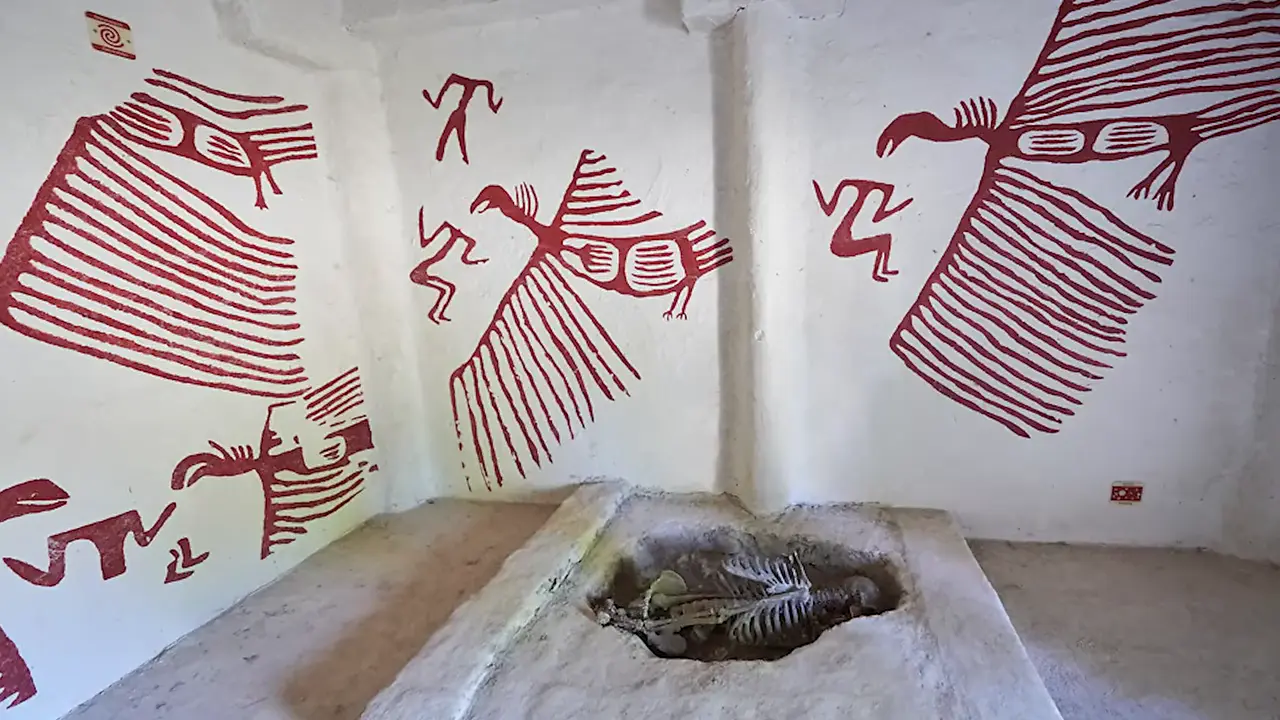
Site mentioned
Key facts
- Çatalhöyük wall paintings show large birds hovering over decapitated human figures
- Paintings were on walls of living rooms and bedrooms, not temples or public spaces
- People buried family members under floors and displayed ancestor skulls on mantles
- Skulls were repeatedly painted, buried, and brought up again for rituals
- Excavator Ian Hodder confirmed vultures and skull removal are linked to death ritual
- The practice reflects daily interaction with death and vultures in village life
Sources
Çatalhöyük (article) | Neolithic sites - Khan Academykhanacademy.org
It is also a site at which we see art, both painting and sculpture, appear to play a newly important role in the lives of settled people.
[PDF] The Wall Paintings of Çatalhöyük (Turkey) - UCL Discoverydiscovery.ucl.ac.uk
Çatalhöyük wall paintings are significant in terms of understanding the ideas of beliefs, rituality, symbolism and the social organization within the Neolithic ...
Remarkable Wall Paintings Discovered at Catalhoyukbiblicalarchaeology.org
Archaeologists excavating the important Neolithic site of Catalhoyuk in central Turkey's Konya Plain have uncovered an elaborate 9,000-year-old ...
Is it all Macabre? Recent Murals from Çatalhöyük - Colleen Morganmiddlesavagery.wordpress.com
Recent Murals from Çatalhöyük. Ian Hodder and Lynn Meskell published a piece titled “A 'Curious and Sometimes a Trifle Macabre Artistry': Some ...
Çatalhöyük - Wikipediaen.wikipedia.org
... vultures swooping down on headless figures. Relief figures are carved on walls, such as of lionesses facing one another. Heads of animals, especially ...
Was this story useful?
Keep exploring
Every site on this page sits on the globe, and the people who research them are on the Discord.
3D Globe · Sites by country · Story Archive · Research Library · Weekly Journal · Search
AI-generated text · images from the original sources · always verify with the sources.