

The 819-day cycle was a Late Classic Maya invention born at Palenque in the late 600s CE under K'inich Kan Bahlam. Copán picked it up within 20 years, and it later surfaced in the Dresden Codex 700 years on. Xultun Text A, dated to 781 CE, ties together multiples of Mars, Mercury, Venus, Jupiter, Saturn, the 819 cycle, and more, landing on a staggering 1,195,740 days — the highest common divisor bridging the older Maya long count with the newer 819-day system. Incredibly, Christopher Pel forecast this exact number in his 1997 University of Texas at Austin thesis, 15 years before it was published.
Xultun Text A contains Maya super number of 1,195,740 days predicted years earlier
 GuatemalaArchaeoastronomy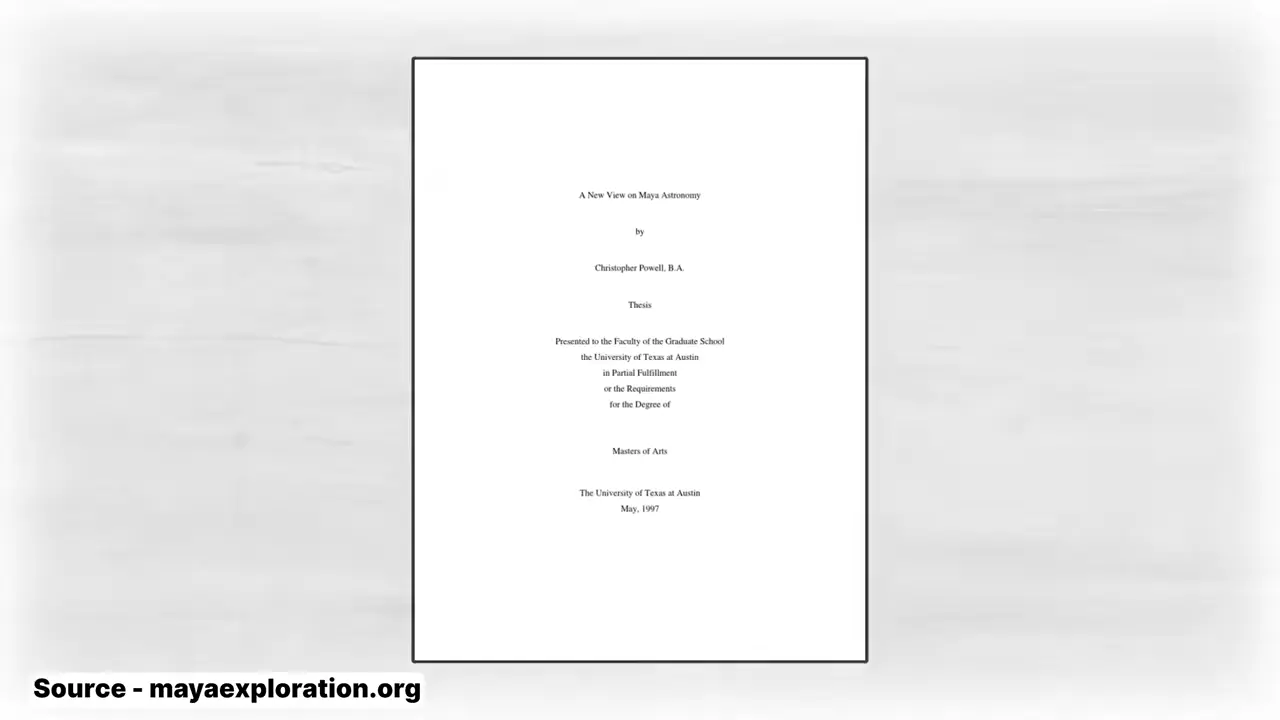
Key facts
- The 819-day cycle was a Late Classic Maya invention created at Palenque in the late 600s CE during the reign of K'inich Kan Bahlam, first showcased in the Cross Group inscriptions
- Within 20 years, Copán in Honduras also adopted the 819-day cycle, and it appears in the Dresden Codex 700 years later
- Xultun wall inscriptions include a contemporary date of 781 CE, roughly 100 years after the 819 cycle was created
- Xultun Text A incorporates even multiples of Mars, Mercury, Venus, Jupiter, Saturn, the 819 cycle, and other Maya calendar cycles
- The final total of 1,195,740 days represents the highest common divisor between the older Maya long count system (based on Sun and Venus) and the newer 819 cycle (based on Jupiter and Saturn)
- Christopher Pel predicted this 1,195,740-day number in his 1997 University of Texas at Austin thesis titled 'A New View on Maya Astronomy,' 15 years before it was confirmed in the 2012 Xultun publication
Site mentioned
Sources
Scientists Think They've Finally Figured Out How a Maya Calendar ...sciencealert.com
Twenty 819-day periods is a total of 16,380 days. If you multiply the Tzolk'in 63 times, you get 16,380 days. In fact, 16,380 is the smallest ...
Scholars May Have Finally Deciphered Secrets of Maya 819- ...sci.news
Linden and Professor Bricker discovered it takes 20 cycles of 819 days, which is about 45 years, to align with the synodic periods of all visible planets.
The Maya 819-Day Count and Planetary Astronomycambridge.org
by JH Linden · 2023 · Cited by 4 — At its most basic level, the 819-day count is composed of three modules: 819 = 9 × 7 × 13. Sek dates at Palenque. 20 periods of 819 days
819 Cyclemayan-calendar.com
It is a repeating cycle of four periods (or quadrants) of 819 days. Palenque records show an idealized 399-day Jupiter cycle into 21-day segments, a division ...
Astronomical Observations from the Temple of the Sunmayaexploration.org
by A Mendez · 2005 · Cited by 34 — Moreover, sometime during his reign, astronomers perfected the 819-day calendar, which took into account the cycles of Saturn and. Jupiter (Lounsbury 1978 ...
Was this story useful?
Keep exploring
Every site on this page sits on the globe, and the people who research them are on the Discord.
3D Globe · Sites by country · Story Archive · Research Library · Weekly Journal · Search
AI-generated text · images from the original sources · always verify with the sources.