

World's oldest brush dwellings — up to 4.5m long with 5–13 sq meter floors. Features the oldest grass bedding. Built in bedrock depressions with oak & willow branches. 🛖
World's oldest brush dwellings found at Ohalo II with grass bedding
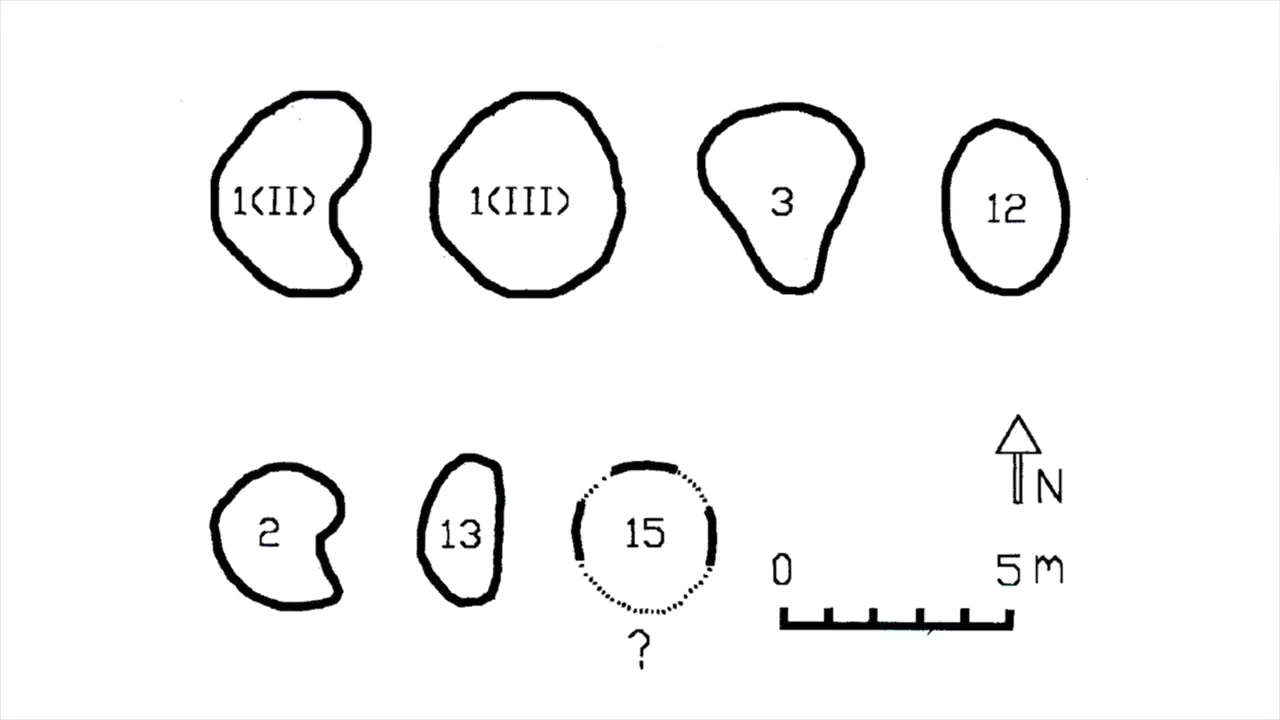
Key facts
- Huts measured up to 4.5 meters long with floor areas ranging between 5 and 13 square meters
- Three huts had grass bedding on the floor made of weeds — the oldest known use of grass bedding
- Ancient people dug shallow oval depressions in soft bedrock, with centers further lowered by 20 to 30 cm
- Brush walls built using thick branches of local oak and willow trees, with smaller leaf-bearing branches and grasses on top
- No post holes were identified, as construction did not require heavy central support logs
- Isolated stones deliberately placed vertically beneath hut floors, 20 to 40 cm apart, possibly supporting raised wooden installations
- One hut featured a large flat basalt stone floor set on lenses of yellow sand, with three successive phases of floor rebuilding
- All huts were purposefully burned at the end of their use life, likely before abandonment due to rising lake levels
Sources
Investigating ancient human DNA preservation on cave walls and in ...bradshawfoundation.com
'Ancient human DNA can survive on cave walls and rock art for thousands of years, a study of caves in Spain and Portugal has found. This opens ...
The Archaeology of Houses and Households in the Native Southeastlibrary.search.stmarys-ca.edu
brush shelter - The Tony Hillerman Portal - UNMehillerman.unm.edu
A brush shelter is a temporary dwelling made of branches, grass, and other plant materials. has ties to many Native American tribes.
Archaic Indian Housing: Brush Shelter | Peoples of Mesa Verdecrowcanyon.org
Archaic houses were simple structures consisting of a framework of branches covered with animal hides, reeds, or brush. covered with brush and daub.
Answering Archaeology Questions: Pithouse Architecturedesert.com
Hohokam period (AD 500 to 1450) houses are most often rectangular or subrectangular (with rounded corners), again with protruding entryways.
Was this story useful?
Keep exploring
Every site on this page sits on the globe, and the people who research them are on the Discord.
3D Globe · Sites by country · Story Archive · Research Library · Weekly Journal · Search
AI-generated text · images from the original sources · always verify with the sources.