

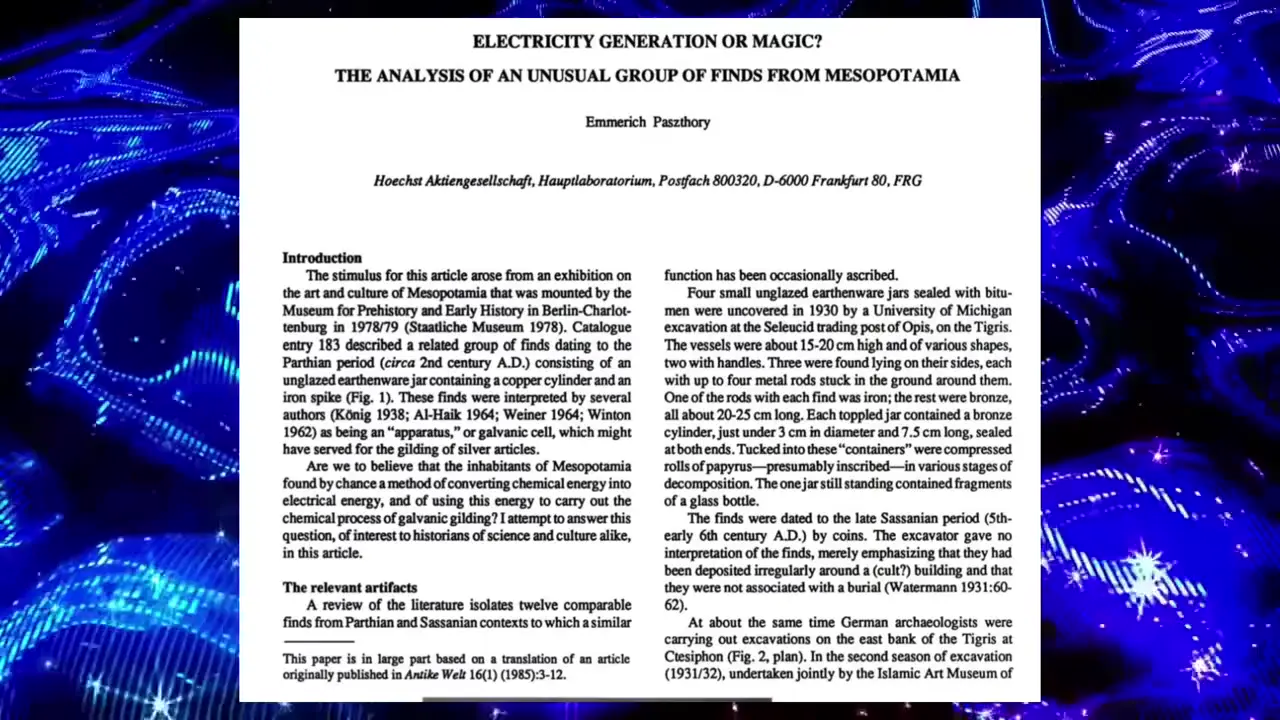
The Baghdad Battery — iron & copper submerged in electrolytic solution — found in 1936 near the Khuyut Rabbou'a archaeological site in Iraq. Galvanic cells using oxidation-reduction to generate electron flow. Some jars contained rolled copper sheets alongside metals. Electricity produced was minuscule, no wiring found. What were they really for?
The video argues a proposed alternative function: galvanic cells used for precious metal extraction from mine runoff solutions
- It argues noble metals (gold, silver, copper) would accumulate on the cathode through electrochemical reduction
- It says reactive metals (iron, nickel, magnesium) would form sludge deposits at the bottom of the vessel
- It explains the lack of metal residue on cathodes by harvesting and salvage of accumulated precious metals
- Mercury was used by Romans in the amalgamation process to extract silver and gold from ore
- It suggests blue vitriol (copper sulfate pentahydrate) from copper-rich mine runoff as the solution source
- It notes electrowinning could purify metals when electricity is applied in reverse polarity
- It argues the process could look like alchemy or metal transformation to ancient observers
- It suggests the discovery may have been accidental: a coin or nail immersed in mine runoff slowly gaining copper plating
Function remains disputed — electroplating/gilding and ritual uses have also been proposed.