

A video argues that a 20,000–15,000-year-old population bottleneck coincided with the collapse of a pyramid civilization, but the genetic evidence does not establish that link. The 1000 Genomes Project catalogues modern human variation; its project pages do not identify a global bottleneck at that date. Separately, Hu et al.’s 2020 Science study found a major ancestral bottleneck around 930,000–813,000 years ago, estimating an effective population size of about 1,280 for roughly 120,000 years and a loss of up to 98.7% of genetic diversity. The cause remains uncertain. Regional population turnovers in Europe and East Asia around 19,000–14,000 years ago do not establish a worldwide pyramid collapse.
Video links proposed 20,000–15,000-year bottleneck to pyramid collapse
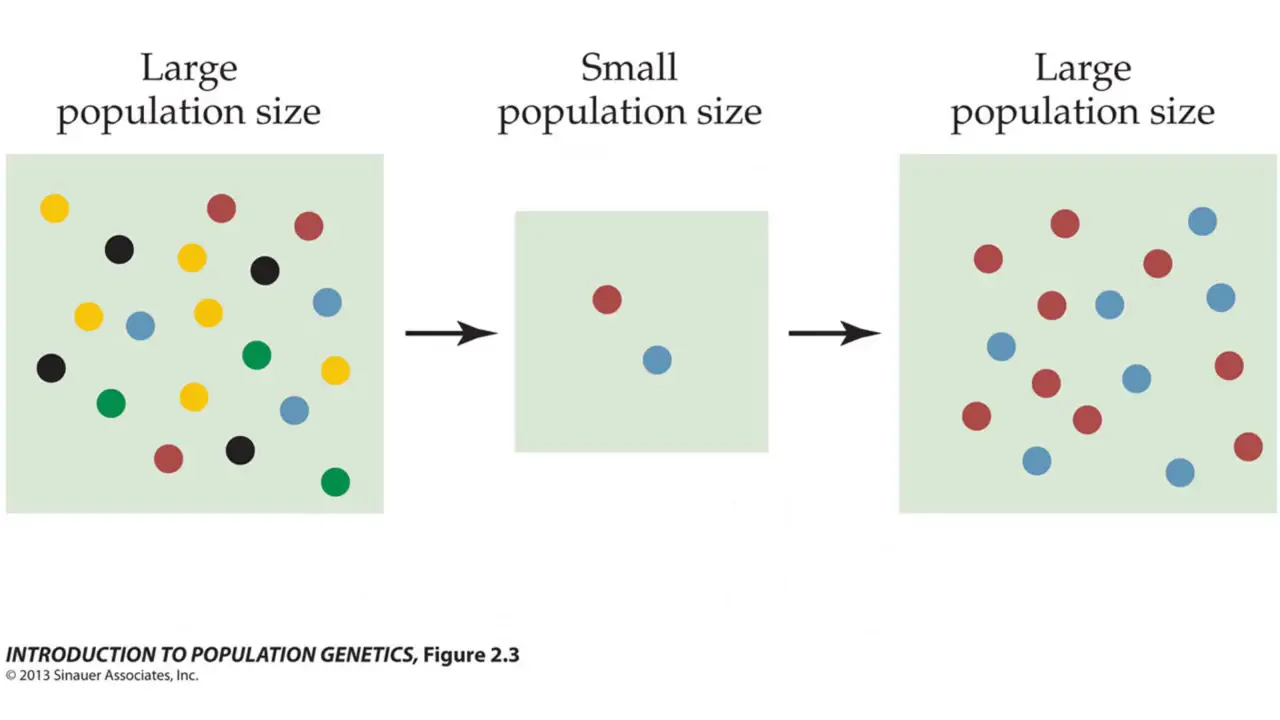
Key facts
- The video argues that a proposed 20,000–15,000-year-old population bottleneck coincided with the collapse of a pyramid civilization; the genetic evidence does not establish that link.
- The supplied 1000 Genomes Project pages describe a catalogue of modern human variation and do not identify a global bottleneck at that date or one shared by all non-African populations.
- Population turnovers around 19,000–14,000 years ago in Europe and East Asia are documented, but they do not demonstrate a single worldwide bottleneck.
- The proposed link to a 4,000-year Northern Hemisphere drought and a pyramid civilization's collapse is the video's interpretation, not an established genetic conclusion.
- Hu et al.’s 2020 Science study found a separate ancestral bottleneck around 930,000–813,000 years ago, estimating an effective population size of about 1,280 for roughly 120,000 years.
- The 1,280 figure is an effective-population estimate, not a literal count of breeding individuals; the associated estimate was a loss of up to 98.7% of genetic diversity.
Sources
Population bottleneck - Wikipediaen.wikipedia.org
"Humanity's Ancestors Nearly Died Out, Genetic Study Suggests - The population crashed following climate change about 930,000 years ago, scientists concluded.
Study Reveals How Ancient Humans Escaped Climate Extinction ...sciencealert.com
A close reading of the human genome found that a population bottleneck caused a loss of genetic diversity some 900,000 years ago. A second study ...
Human ancestors may have almost died out after ancient population ...nhm.ac.uk
Humans may have been driven to the brink of extinction within the past million years, new research suggests.
Human Ancestors Nearly Went Extinct 900,000 Years Agoscientificamerican.com
Human ancestors in Africa were pushed to the brink of extinction around 900,000 years ago, a study shows. The work, published in Science, ...
Did Humans Nearly Go Extinct 900,000 Years Ago? A Biologist ...forbes.com
The most honest answer is: possibly, but we don't know for sure. The 2023 Science study presents one of the strongest genetic cases ever made ...
1000 Genomes Project | Info and Population Samplescoriell.org
The 1000 Genomes Project is an important resource on human genetic variation supporting studies relating genetic variation to health and disease.
1000 Genomes Projecten.wikipedia.org
Since the completion of the Human Genome Project advances in human population genetics and comparative genomics enabled further insight into genetic diversity.
Whole-genome view of the consequences of a population ...pmc.ncbi.nlm.nih.gov
by H Chheda · 2017 · Cited by 101 — Isolated populations with enrichment of variants due to recent population bottlenecks provide a powerful resource for identifying disease-associated genetic ...
Was this story useful?
Keep exploring
Every site on this page sits on the globe, and the people who research them are on the Discord.
3D Globe · Sites by country · Story Archive · Research Library · Weekly Journal · Search
AI-generated text · images from the original sources · always verify with the sources.