

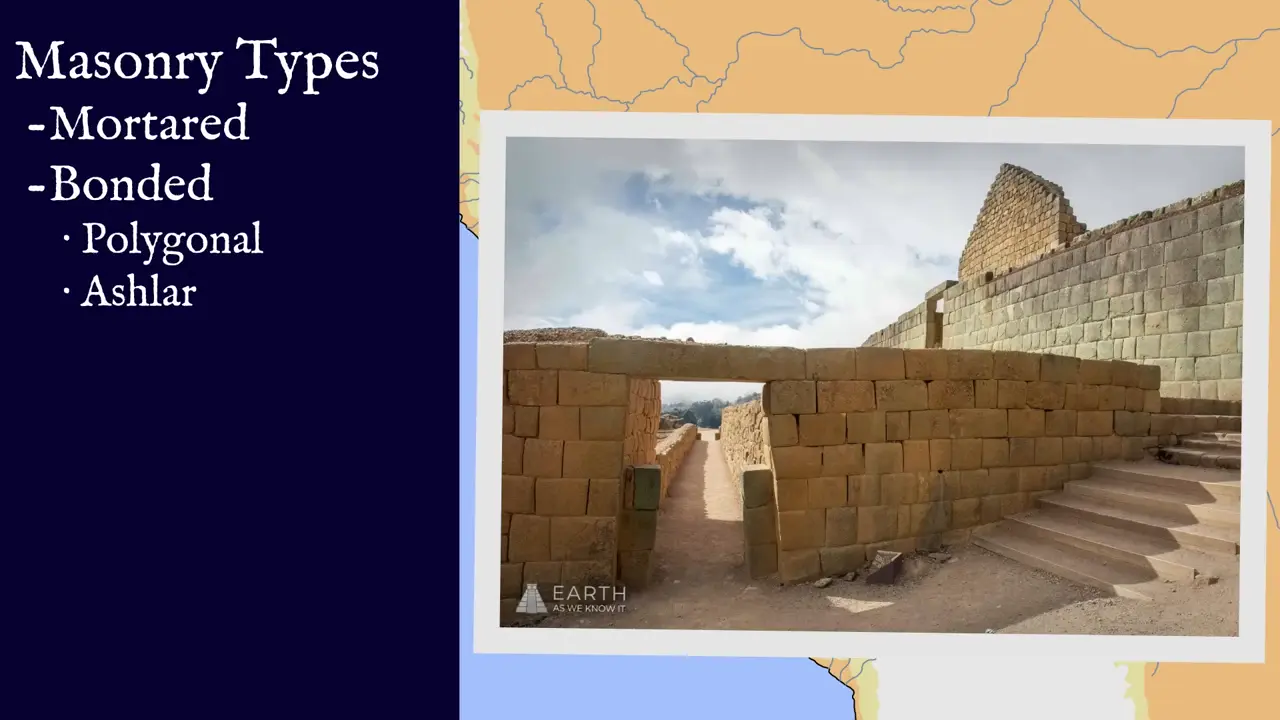
Two main types of Inca bonded masonry: polygonal and ashlar. Mortared masonry used undressed fieldstones for commoner housing Bonded masonry (caninacukpirca) used no mortar, reserved for important buildings Polygonal masonry uses stones with more than 5 faces fitted together

Inca architecture employed two main bonded masonry styles: polygonal (irregular multi-faced stones) and ashlar (rectangular cuts). Ashlar was used for important buildings including sacred spaces like Qoricancha and elite residences, reinforcing social hierarchy through construction quality.

Key facts:

- Rough stonework with mortar used undressed fieldstones for commoner housing

- Fine mortarless masonry (without mortar) was reserved for important buildings

- Polygonal masonry features irregularly shaped stone blocks fitted together without mortar

- Ashlar masonry cuts stones to rectangular forms, used in most sacred buildings like Qoricancha

- Ashlar considered highest quality construction, used in elite residences and temples

Key Facts

  • Mortared masonry used undressed fieldstones for commoner housing
  • Bonded masonry (caninacukpirca) used no mortar, reserved for important buildings
  • Polygonal masonry uses stones with more than 5 faces fitted together
  • Ashlar masonry cuts stones to rectangular forms, used in most sacred buildings like Qoricancha
  • Ashlar considered highest quality, used in elite residences and temples
  • Different masonry types reinforced social hierarchy in construction