

Scientists combined electrical resistivity tomography, ground penetrating radar, and ultrasonic testing to scan Menkaure's pyramid. Found two anomalies (A1: 1×1.5m, A2: 0.7×0.9m) interpreted as air gaps. Results published as conference paper at NDTCE 2025 (NDT.net).
Three non-destructive tests find two voids behind Menkaure's east face
 EgyptRemote Sensing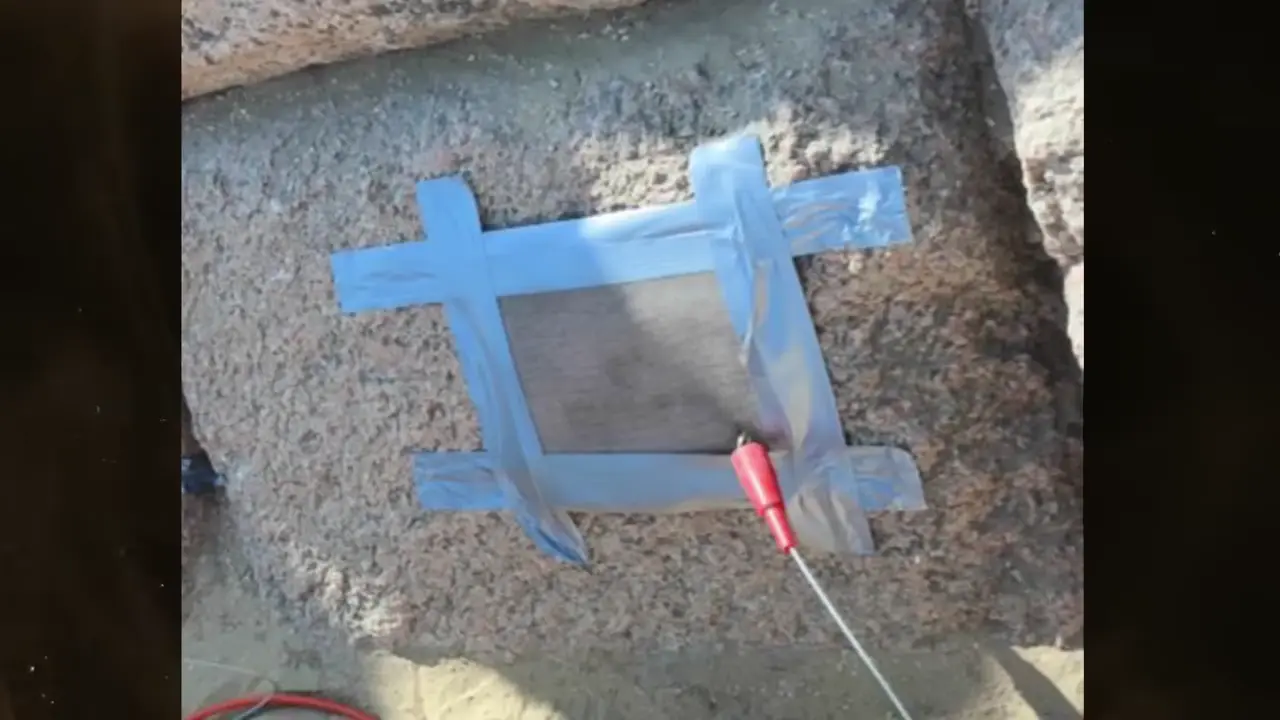
Site mentioned
Key facts
- Pyramid of Menkaure scanned using electrical resistivity tomography, ground penetrating radar, and ultrasonic testing
- Data merged using image fusion technique for more reliable void detection
- Anomaly A1 is 1 by 1.5 meters, begins 1.4 meters deep
- Anomaly A2 is 0.7 by 0.9 meters, begins 1.13 meters deep
- Both anomalies interpreted as air gaps from combined scan data
- Maximum scan depth achieved was 3.5 meters - does not mean voids extend that deep
- Paper published in journal NDT and E International
- Scientists Hani Halal previously accurately predicted Great Pyramid's northface corridor using non-destructive tests
Was this story useful?
Keep exploring
Every site on this page sits on the globe, and the people who research them are on the Discord.
3D Globe · Sites by country · Story Archive · Research Library · Weekly Journal · Search
AI-generated text · images from the original sources · always verify with the sources.