

Why does Pyramid G2-A have two descending passageways on different axes? Some researchers suspect the western serdab passage was added later, possibly as a New Kingdom restoration by Amenhotep II, Thutmose IV, or Ramesses the Great. Radiocarbon dating the wooden artifacts could finally resolve this mystery! 🤔
Theories and unresolved questions about Pyramid G2-A's purpose and history
Site mentioned
📍 Pyramid G2-A
Key facts
- It is unclear why the pyramid had two descending passageways on different axes
- The serdab passageway is positioned on the east-west axis, while the main chamber entrance is on the north-south axis
- The serdab passageway may have been added later, possibly as a New Kingdom restoration project
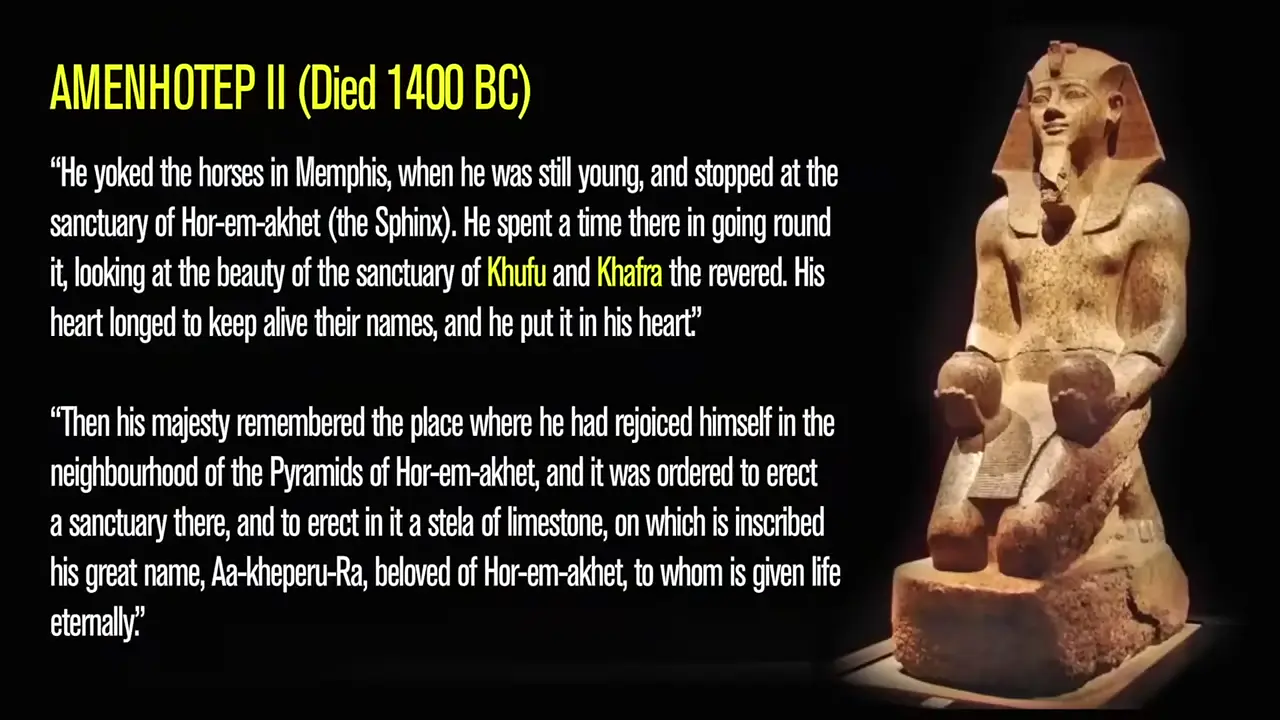
- Possible later restorers include Amenhotep II, Thutmose IV, or Ramesses the Great, all of whom had connections with Giza
- Radiocarbon dating of the wooden frame and box could clarify whether they are contemporaneous
- Keith Hamilton compiled the most comprehensive guide on the pyramid in his work 'The Minor Pyramids of Giza, Part One'
Sources
Great Pyramid of Giza | Ancient Egypt Onlineancientegyptonline.co.uk
The descending corridor cuts into the bedrock for a distance of about thirty meters under the base of the pyramid, before turning into a horizontal passageway ...
NOVA Online/Pyramids/Scaling the Pyramids/Passageway - PBSpbs.org
The descending passageway that leads to the Unfinished Chamber is long, narrow, steep and, without any windows, very dark!
The Great Pyramid of Giza. The Descending passage from the ...atlaspub.20m.com
2013 Atlas Publications. The Great Pyramid of Giza. The Descending passage from the entrance to the 'Pit' or 'Unfinished' Subterranean Chamber.
Khafre-G2: A Perfectly-Proportioned 3-4-5, 'Alpha Pyramid'academia.edu
This study presents a multidisciplinary analysis of the Khafre pyramid (G2) at Giza, proposing that its architectural proportions encode the fine-structure ...
The Great Pyramid - Guardian's Gizaguardians.net
Eventually, a passageway was found which descended into the lowest chamber of the pyramid. Following this passageway back upward, the original entrance was ...
Was this story useful?
Keep exploring
Every site on this page sits on the globe, and the people who research them are on the Discord.
3D Globe · Sites by country · Story Archive · Research Library · Weekly Journal · Search
AI-generated text · images from the original sources · always verify with the sources.