

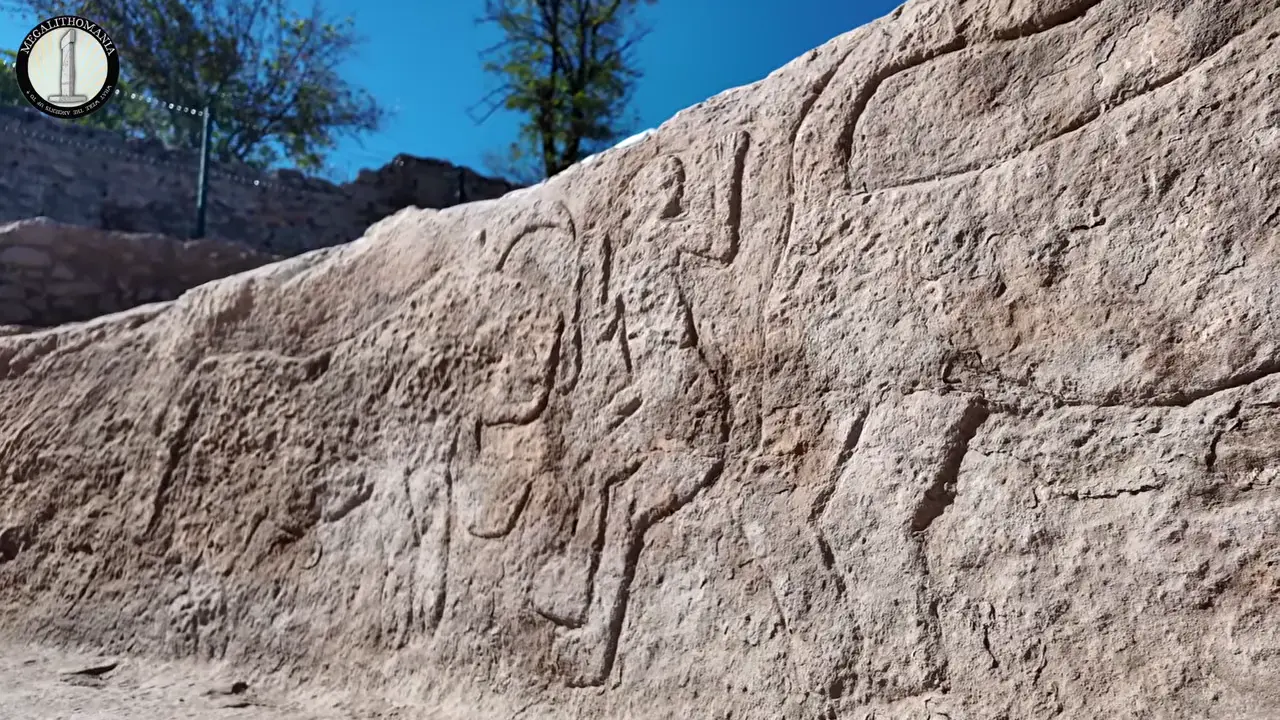
At Sayburç in southeastern Turkey, Neolithic reliefs include a man apparently holding his genitals between two leopards and a large-bull scene interpreted as bull leaping. The video presents this as the earliest known bull-leaping example and argues that the enclosure's roughly 348° axis links Sayburç with Göbekli Tepe, Deneb and the Cygnus Rift around 9000 BC, reflecting a Neolithic 'sky world' belief. The sky-alignment explanation is the presenter's archaeoastronomical theory.
The video presents Sayburç's bull scene as the earliest known bull-leaping example
Site mentioned
📍 Sayburç🌍 Show on the globe
Key facts
- Sayburç's Neolithic reliefs include a male figure apparently holding his genitals between two leopards.
- A second relief depicts a large bull and human figures; one figure is interpreted as being in a bull-leaping pose.
- The video presents the Sayburç scene as the earliest known bull-leaping example; the Middle Bronze Age and Minoan bull-leaping art in the search results is later.
- The video says the enclosure axis is roughly 348° (12° west of north) and links it with Göbekli Tepe, Deneb, the Cygnus Rift and a Neolithic 'sky world'; this is the presenter's archaeoastronomical theory.
Sources
Man gripping his phallus is oldest known narrative scenethehistoryblog.com
Carving of man holding his penis and surrounded by leopards is ...theartnewspaper.com
Bull-Leaping in the Ancient Near Eastresearchgate.net
Bull-leaping fresco from the palace of Knossos (article)khanacademy.org
(PDF) Minoan Bull-leaping, grappling or ridingacademia.edu
Was this story useful?
Keep exploring
Every site on this page sits on the globe, and the people who research them are on the Discord.
3D Globe · Sites by country · Story Archive · Research Library · Weekly Journal · Search
AI-generated text · images from the original sources · always verify with the sources.