

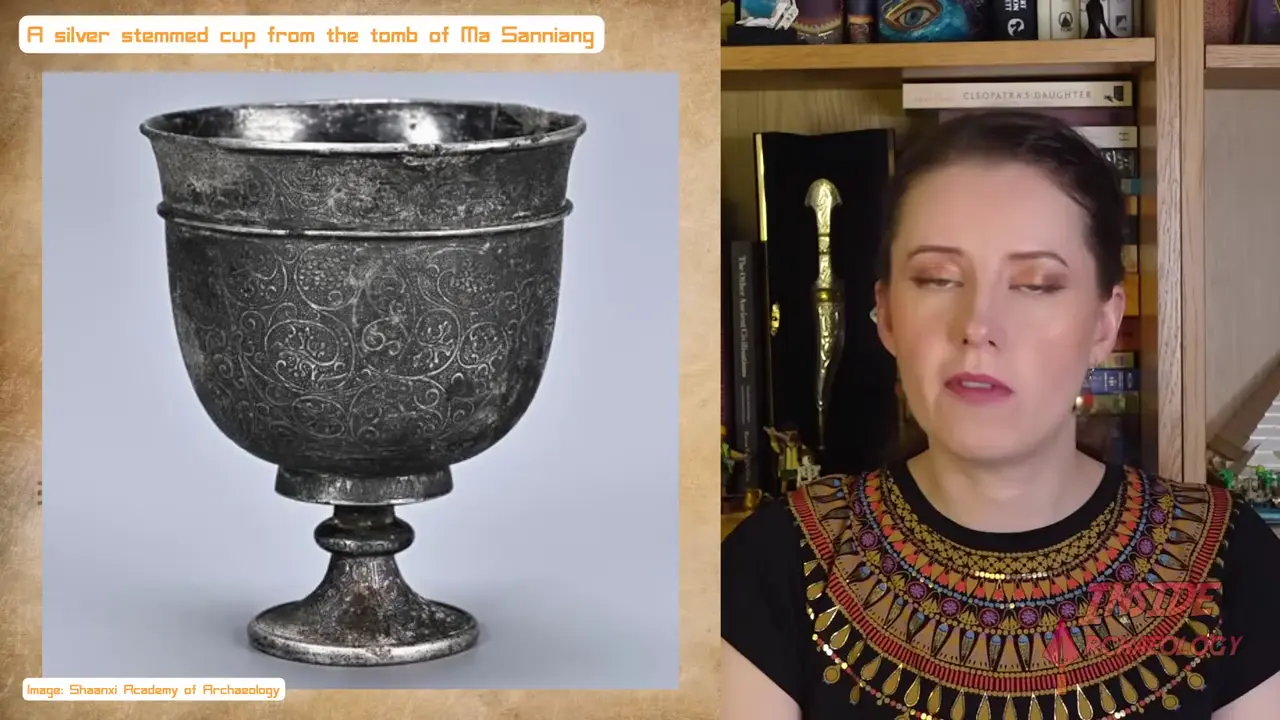
A tomb discovered in Xi'an, China belonging to Ma San Niang, wife of Tang Dynasty military officer Dong Shunian, contains 19 burial artifacts reflecting the cosmopolitan nature of 7th-century Chinese society. Among the finds are a silver jar and stemmed cup decorated with grapevine motifs, which researchers link to western artistic traditions brought through the Silk Road trading network. The tomb dated to approximately 915 CE contains personal accessories, containers, and decorative vessels made from pottery, bronze, iron, stone, gold, and silver. These objects provide new insight into the lifestyle and identity of elite women at the Tang Court during its peak, showing how international trade routes shaped even intimate personal possessions.
Tang Dynasty tomb of elite woman reveals Silk Road artistic influences
Site mentioned
📍 Ma San Niang tomb
Key facts
- 1,300 years old, 698 CE
- Xi'an, Shaanxi Province, China
- Tomb of Ma San Niang, wife of Tang Dynasty military officer Dong Shunian
- 19 burial artifacts including pottery, bronze, iron, stone, gold, and silver items
- Personal accessories: hair ornaments, containers, decorative vessels
- Silver jar and stemmed cup adorned with grapevine motifs
- Grapevine designs influenced by western artistic traditions
- Western-inspired designs linked to Silk Road trading network
- Intricate engraving and high-quality metalwork
- Blend of domestic and foreign artistic styles
- Reflects cosmopolitan nature of Tang society during 7th century peak
- Provides insight into lifestyle and identity of elite Tang Court women
Sources
Tang Dynasty Tomb with Exquisite Artifacts Unearthed in Xi'anheychinaculture.com
A total of 19 items or sets of burial objects were recovered, including pottery, bronze, iron, gold and silver ware, and stone objects. Notably, ...
Tang Dynasty tomb in Xi'an yields Sasanian coins, rich artifacts ...globaltimes.cn
Archaeologists in Northwest China's Shaanxi Province have unearthed 19 Sasanian silver coins in a Tang Dynasty (618-907) tomb, ...
1,110-year-old grave linked to Tang Dynasty unearthed in Chinainterestingengineering.com
The presence of Persian coinage in her tomb reflects the allure of this noblewoman's grave from a historical perspective.
Tang Dynasty noblewoman buried with gold hair ornamentsheritagedaily.com
The burial, designated M228, was excavated at Jiali Village on the outskirts of Xi'an during a systematic investigation conducted between 2022 ...
Tang Dynasty tomb with exquisite artifacts unearthed in Xi'anenglish.scio.gov.cn
A total of 19 items or sets of burial objects were recovered, including pottery, bronze, iron, gold and silver ware, and stone objects. Notably, ...
Was this story useful?
Keep exploring
Every site on this page sits on the globe, and the people who research them are on the Discord.
3D Globe · Sites by country · Story Archive · Research Library · Weekly Journal · Search
AI-generated text · images from the original sources · always verify with the sources.