

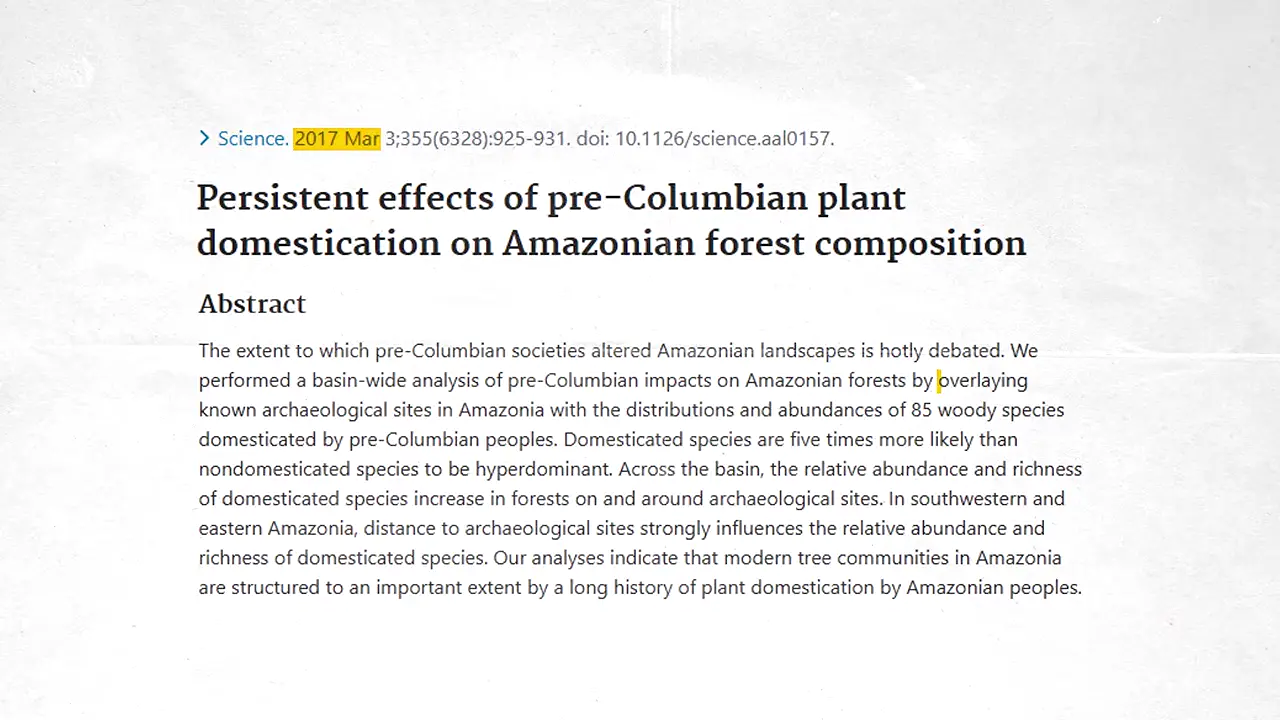
A 2017 comparison of Amazonian archaeological sites with the distribution of 85 woody plants domesticated by pre-Columbian peoples found domesticated species were more abundant and more diverse in forests on and around those sites. That points to past plant domestication actually shaping the composition of today's Amazonian forests — though it doesn't mean the whole rainforest was planted, nor that every useful-tree cluster is a settlement. 🌿🔎
Study links Amazonian forests near archaeological sites to pre-Columbian plant domestication
Key facts
- In 2017, researchers compared archaeological sites across Amazonia with the distribution of 85 woody plant species domesticated by pre-Columbian peoples.
- They found that domesticated species tended to be more abundant and more varied in forests on and around archaeological sites.
- The relationship between domesticated species and sites was particularly strong in some regions.
- The findings indicated that past plant domestication helped shape the composition of modern Amazonian forests.
- The video notes this does not mean the entire Amazon was planted, nor that every cluster of useful trees marks a settlement.
Sources
Eighty-four per cent of all Amazonian arboreal plant ... - PMCpmc.ncbi.nlm.nih.gov
The domestication of Amazonia before European conquestroyalsocietypublishing.org
Ancient peoples shaped the Amazon rainforesteurekalert.org
Plant domestication in Amazonian forests: Can you see ...environment-review.yale.edu
Was this story useful?
Keep exploring
Every site on this page sits on the globe, and the people who research them are on the Discord.
3D Globe · Sites by country · Story Archive · Research Library · Weekly Journal · Search
AI-generated text · images from the original sources · always verify with the sources.