

Stonehenge's earliest phase began around 3000 BC: a 110m circular ditch dug with red deer antler picks, chalk piled into inner/outer banks. Mesolithic activity goes back even further - pine charcoal found dates to 8000 BC. 🦌🏛️ A 2022 survey also uncovered a 10,000-year-old hunting trap nearby.
Stonehenge's First Phase: 3000 BC Earthwork Construction with Antler Tools
 EnglandGeneral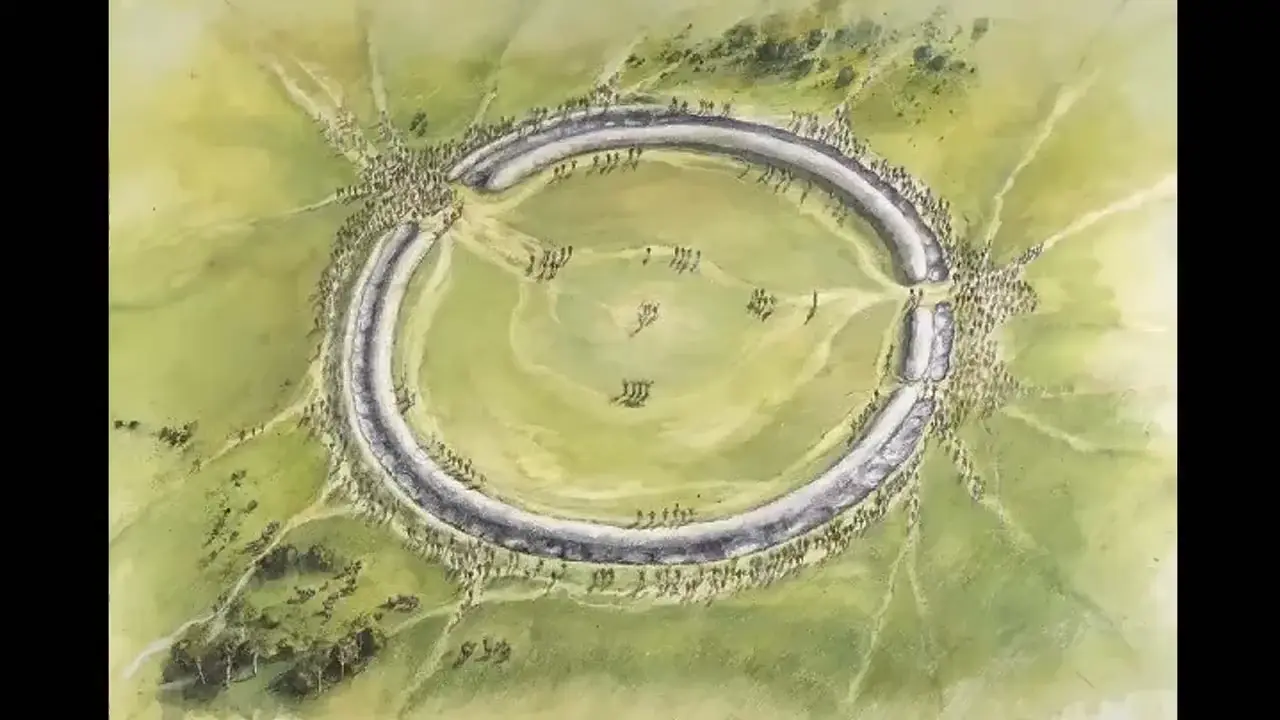
Site mentioned
Key facts
- First stage of Stonehenge occurred around 3000 BC
- A 110m circular ditch was dug on a chalk plain using antler tools
- Chalk from the ditch was piled to create inner and outer banks
- Antler picks found at the bottom show battering marks from use as pickaxes
- Antlers were predominantly from red deer, shed annually in spring
- The Cursus earthwork, 500m long and 100m wide, was dated to 3500 BC, predating Stonehenge by 500 years
- Mesolithic pits and post holes discovered in 1966 during visitor car park extension
- Pine charcoal from these holes dated to 8000 BC, 5000 years before Stonehenge
- 2022 electromagnetic induction survey uncovered hundreds of large pits including a 10,000-year-old hunting trap 4 meters wide and 2 meters deep
Sources
english-heritage.org.uk
Linked in video description
Was this story useful?
Keep exploring
Every site on this page sits on the globe, and the people who research them are on the Discord.
3D Globe · Sites by country · Story Archive · Research Library · Weekly Journal · Search
AI-generated text · images from the original sources · always verify with the sources.