

Stonehenge's primary axis runs through the avenue, not the heel stone. Earth's axial tilt shift over millennia has moved the solstice sunrise. The heel stone sits east of the true solstice line. William Stukeley first identified this axis in the 1720s–1740s, but John Smith later incorrectly took credit for the discovery.
Stonehenge solar alignments: 4,500-year-old axis verified
 EnglandArchaeoastronomy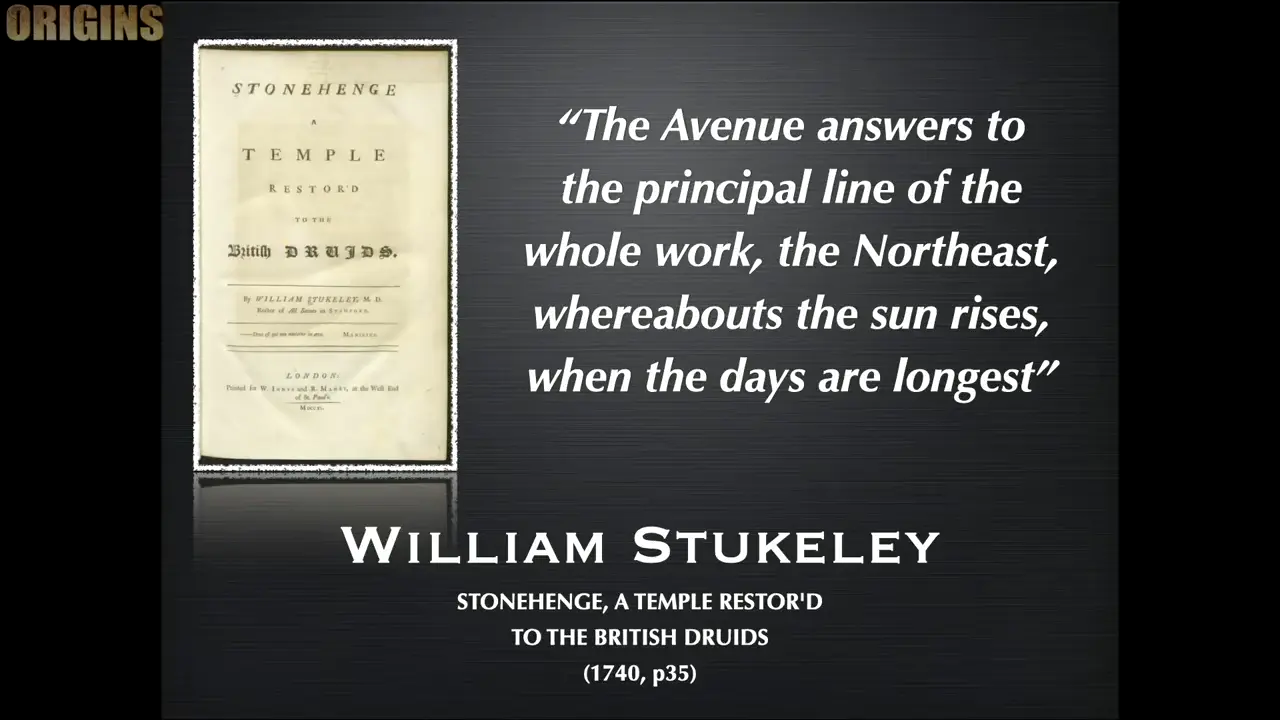
Key facts
- William Stoley in 1760s identified the avenue aligns with summer solstice sunrise, the primary axis
- John Smith incorrectly credited himself with Stoley's idea about the heel stone
- The heel stone actually points east of the true solstice sunrise position
- The Earth's obliquity has changed from 24° to 23.5° over 4,500 years, shifting sunrise by about 1 degree
- 4,500 years ago, sun rose to the left of the heel stone tip, not over it
- Winter solstice sunset aligns with the opposite end of the avenue, verified by observation
- The shadow of the heel stone on summer solstice morning would have pointed through the main entrance to the altar stone
- The primary axis is defined by the avenue's center line, not the heel stone
Site mentioned
Sources
stonesofstonehenge.org.uk
Linked in video description
Was this story useful?
Keep exploring
Every site on this page sits on the globe, and the people who research them are on the Discord.
3D Globe · Sites by country · Story Archive · Research Library · Weekly Journal · Search
AI-generated text · images from the original sources · always verify with the sources.