

Southern Ojibwe birch bark scrolls, engraved with symbolic imagery, served as memory aids within the Midewiwin tradition for origin myths, migration narratives, and ritual ceremonies. Some scrolls were recovered from auction in recent years and repatriated to Ojibwe communities. The scrolls are inscribed with messages and symbols sacred to Ojibwe people, reflecting deep cultural and spiritual traditions.
Southern Ojibwe birch bark scrolls: types and ritual functions documented
Key facts
- Scrolls were engraved birch bark using flint burins, not ink
- Depicted animals: deer, bear, wolf, loon, goose, fish, otter, beaver, owl, thunderbird - used as memory aids and mnemonic encoding
- Type 1 scrolls: origin myths, creation stories, celestial beings, primordial waters, land emergence, first animal beings
- Type 2 scrolls: similar motifs with narrative focus on emergence, first ancestors, animals, culture heroes, sacred places
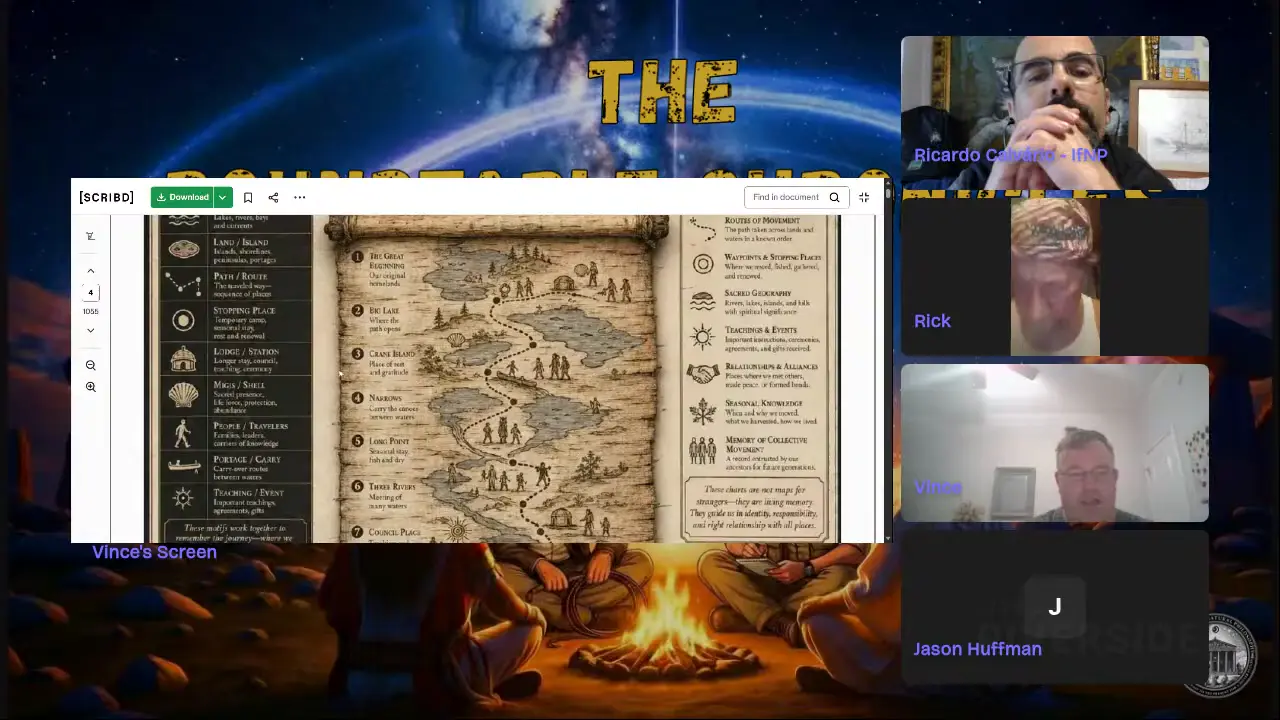
- Migration scrolls: documented movement routes with waypoints, geography, stopping places - showed Great Lakes, Crane Island, narrows between lakes, three rivers
- Mijis shells depicted on scrolls came from near India, species only lives in Indian waters - evidence of trade network reaching Wisconsin
- Type 4 master scrolls/ritual charts: four cardinal directions, ceremonial landscapes, ritual pathways, stations, lodges
- Ghost lodge/sky degree scrolls: depicted spirit journeys and sky degrees, spirit received in enclosure and introduced to law
- Scrolls were rolled into cylinders, sacred, passed down generations, remade when old
- Southern Ojibwe territory ranged from Canada to Illinois, Indiana, Ontario, Quebec, Potawatomi lands, Alberta, Nova Scotia
- Migration stopped at place of wild rice around Lake Superior and western shore of Lake Michigan
- Researcher Myron Paine proposed Ojibwe language shares 12,000 words with Old Norwegian/Gumlorsk, suggesting inheritance from lost Greenland colonists (1320s-40s)
- One hypothesis suggests some scrolls were made by biting images using teeth into bent bark
- Hundreds of scrolls found in Indiana, Illinois, Wisconsin, Michigan in drained swamps, still showing engraved color after submersion
- Coloring used red ochre, yellow ochre, and charcoal
Sources
[PDF] Ojibwa Pictography - Ontario Archaeological Societyontarioarchaeology.org
Pictographs were painted (Figure 1) or engraved. Ojibwa birch bark scrolls developed out of indigenous ancient traditions
Ojibwe Birchbark Certificate - Longfellow House Washington's ...nps.gov
A birchbark certificate with text in Ojibwe written on it. The birchbark certificate, or scroll, is an example of a type of wiigwaasabak. They ...
Inscribed Birch Bark Scrolls and Other Objects of the Midewiwinojs.library.carleton.ca
Inscribed Birch Bark Scrolls and Other Objects of the Midewiwin. Downloads Nelson PDF Published 1983-11-01. Platform and Workflow by OJS/PKP.
Emotional ceremony welcomes birch bark scrolls back to Ojibwe ...minnesotareformer.com
birch bark scrolls the symbols engraved by Ojibwe ancestors more than a century ago. raising about $5,000.
'We did it': Birch bark scrolls recovered from auctionwisconsinexaminer.com
LiveAuctioneers website was selling off a set of four birch bark scrolls, inscribed with messages and symbols that are sacred to Ojibwe people.
Was this story useful?
Keep exploring
Every site on this page sits on the globe, and the people who research them are on the Discord.
3D Globe · Sites by country · Story Archive · Research Library · Weekly Journal · Search
AI-generated text · images from the original sources · always verify with the sources.