

Seti I's tomb contains the longest passage in the Valley of the Kings at ~137 meters. Its walls display the Amduat, Book of Gates, and Litany of Ra—texts serving as 'operating instructions' for the king's afterlife rebirth. Discovered 1817 by Giovanni Belzoni. ⭐🐂
Seti I's tomb features 137-meter corridor and elaborate underworld theology texts
 EgyptExcavation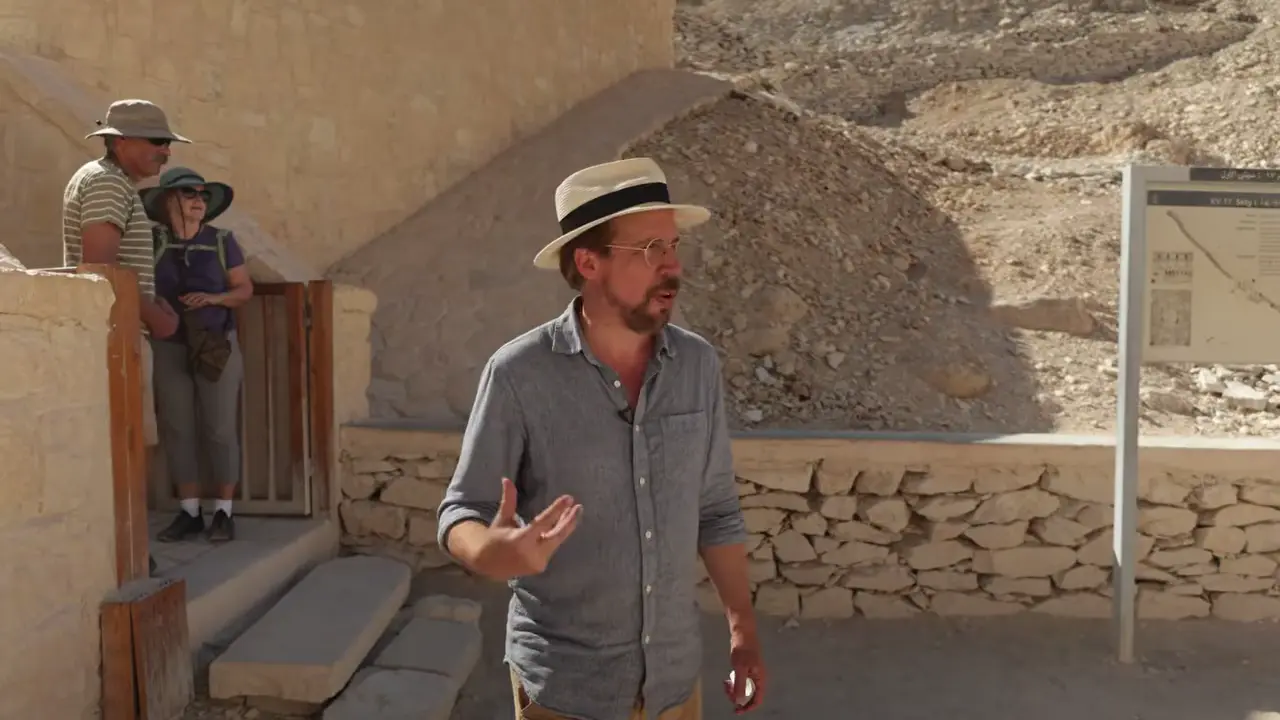
Site mentioned
Key facts
- Seti I was great conqueror and father of Ramesses the Great
- Tomb approximately 137 meters long with longest passage in Valley of the Kings
- Walls covered with funerary compositions: Amduat, Book of Gates, Litany of Ra
- Decorative texts function as operating instructions for king's rebirth in afterlife
- Early New Kingdom tombs used bent axis layout; later Ramesses tombs trend toward straight axis plan
- Seti I died around 1279 BCE
- Sarcophagus is famous alabaster piece now in Sir John Soane's Museum in London
- Tomb discovered by Giovanni Belzoni on October 16, 1817
- Burial chamber features ceiling representing heavens with star constellations including lion and bull equivalents
Was this story useful?
Keep exploring
Every site on this page sits on the globe, and the people who research them are on the Discord.
3D Globe · Sites by country · Story Archive · Research Library · Weekly Journal · Search
AI-generated text · images from the original sources · always verify with the sources.