

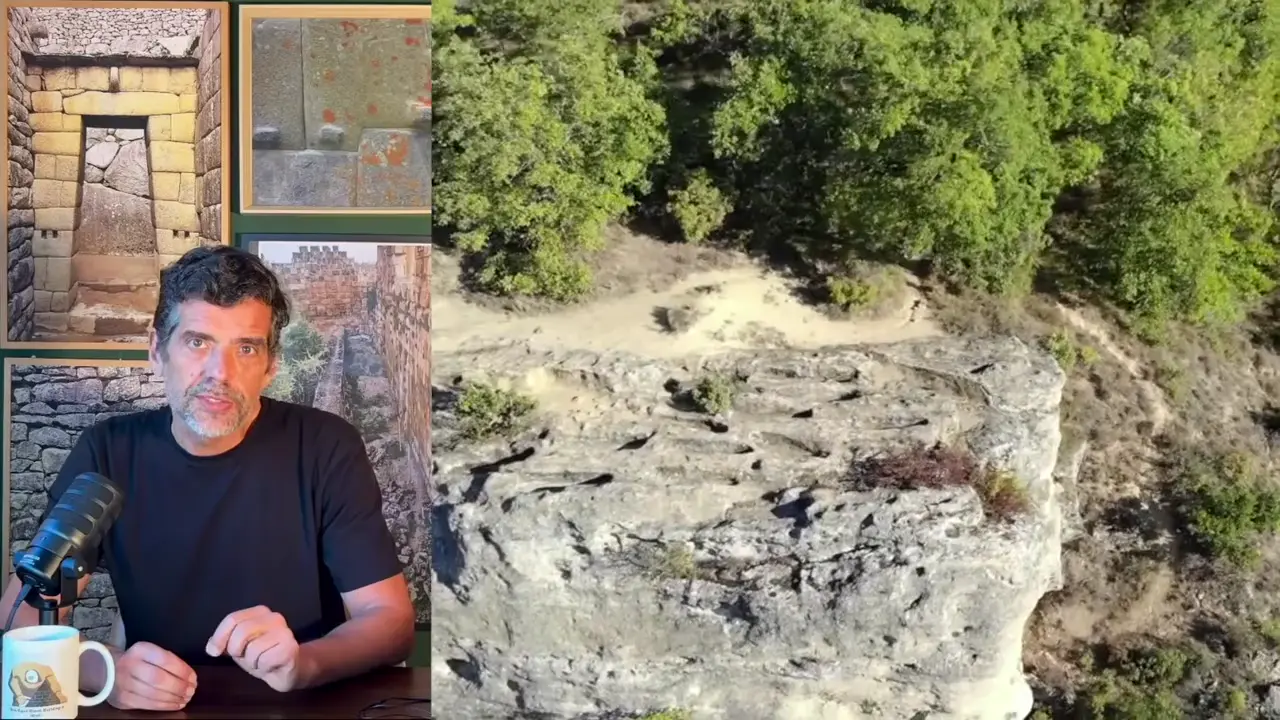
The video argues that some Bronze Age and Neolithic rock-cut graves may have been protected spaces for excarnation, with bodies left to decompose before their bones were collected. Excarnation is documented in prehistoric Europe, but that grave function—and the idea of a lost culture linking cyclopean walls and dolmens—belongs to the presenter’s theory. The named tomb types are not all established excarnation ossuaries, while later reuse can complicate their chronology.
Presenter links some rock-cut graves to controlled excarnation
Key facts
- Excarnation and exposure of the dead are documented in prehistoric funerary practices, including Bronze Age Britain.
- Using rock-cut graves as controlled spaces for decomposition is the video presenter’s hypothesis, not an established general function of rock-cut graves.
- Research distinguishes deliberate excarnation from passive exposure of bodies to decay and carnivores.
- Long barrows, Sardinian giant’s tombs, navetas and hypogeums are varied tomb types and should not collectively be described as established excarnation ossuaries.
- The proposed link between rock-cut graves, cyclopean walls, dolmens and a lost European culture is the presenter’s interpretation.
- Later reuse of tombs can complicate their dating and obscure their original funerary function.
Sources
earth.google.com
Linked in video description
Rest In Piecesarchaeology.co.uk
Recent research has found intriguing evidence for Bronze Age communities retaining fragments of human bones for many years after an ...
Excarnationen.wikipedia.org
excarnation (also known as defleshing) refers to the practice of removing the flesh and organs of the dead before burial. in Bronze Age Britain"
Iron Age Burials. Murphy. Internet Archaeol. 48.intarch.ac.uk
It has been argued that excarnation - exposing the body allowing the fleshy parts to decay - was the primary way of disposing of the dead in the early and ...
Diachronic variation in secondary burial practices ...sciencedirect.com
by A Pankowská · 2018 · Cited by 3 — Early Bronze Age human remains bear traces of both passive excarnation by natural agents, such as exposure to carnivores, and excarnation by primary burial. By ...
6.6.1.2 Early Bronze Age Funerary Practicesscarf.scot
The tradition of inhumation, usually of single bodies in a contracted position, in a short stone cist continued after the introduction of bronze around 2200 ...
Was this story useful?
Keep exploring
Every site on this page sits on the globe, and the people who research them are on the Discord.
3D Globe · Sites by country · Story Archive · Research Library · Weekly Journal · Search
AI-generated text · images from the original sources · always verify with the sources.