

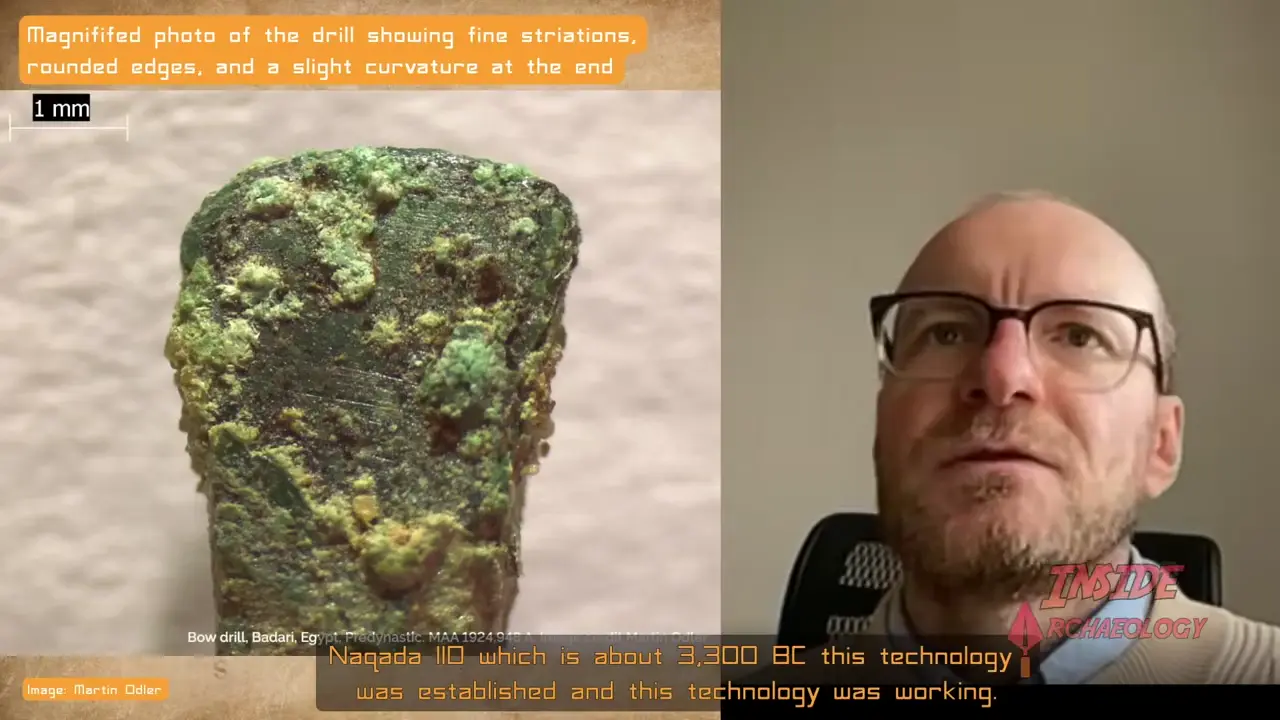
Pre-dynastic Egyptian copper drill identified in Cambridge museum. Pre-dynastic Egyptian copper drill bit found in museum archive at University of Cambridge The object was excavated in the 1920s at Badari in middle Egypt Dated to approximately 3300 BC (Naqada II period)

Museum archive yielded oldest Egyptian metal drill bit: copper from Badari, ~3300 BC. Likely bow-drill used on limestone & wood. Advanced tech for its era ⚱️

Key facts corrected/removed:

- Museum archive location: Newcastle University holds the object (not Cambridge)

- Analysis methods: Re-analysis conducted but specific methods (microphotography, stereo microscopy) not confirmed in available sources

- Composition details: High arsenic & nickel content not mentioned in accessible results

Key Facts

  • Pre-dynastic Egyptian copper drill bit found in museum archive at University of Cambridge
  • The object was excavated in the 1920s at Badari in middle Egypt
  • Dated to approximately 3300 BC (Naqada II period)
  • This is the earliest identified metal drill bit from ancient Egypt
  • Analyzed using microphotography and stereo microscopy to identify drilling traces
  • Non-invasive X-ray fluorescence analysis showed high arsenic and nickel content
  • Composition suggests possible local Egyptian metal source from eastern desert
  • The drill was likely used with a bow drill mechanism for softer materials like limestone, shell, or wood
  • This discovery supports that Egyptians had advanced metalworking technology comparable to neighboring cultures

Related site: Badari — view location, images, and history on the Ancient Nerds map.