

The mirror-like Mauryan polish on Ashoka's pillars may trace to Achaemenid Persian masons displaced after Alexander destroyed Persepolis in 330 BCE. Bihar Museum notes it matches Persian masonry. The Kandahar bilingual (~260 BCE) in Greek and Aramaic confirms displaced Persian craftsmen likely shaped Mauryan India's leap from timber to monumental stone. 🪨
Mauryan stone polish traced to Achaemenid craftsmen displaced after 330 BCE
 IndiaArchitecture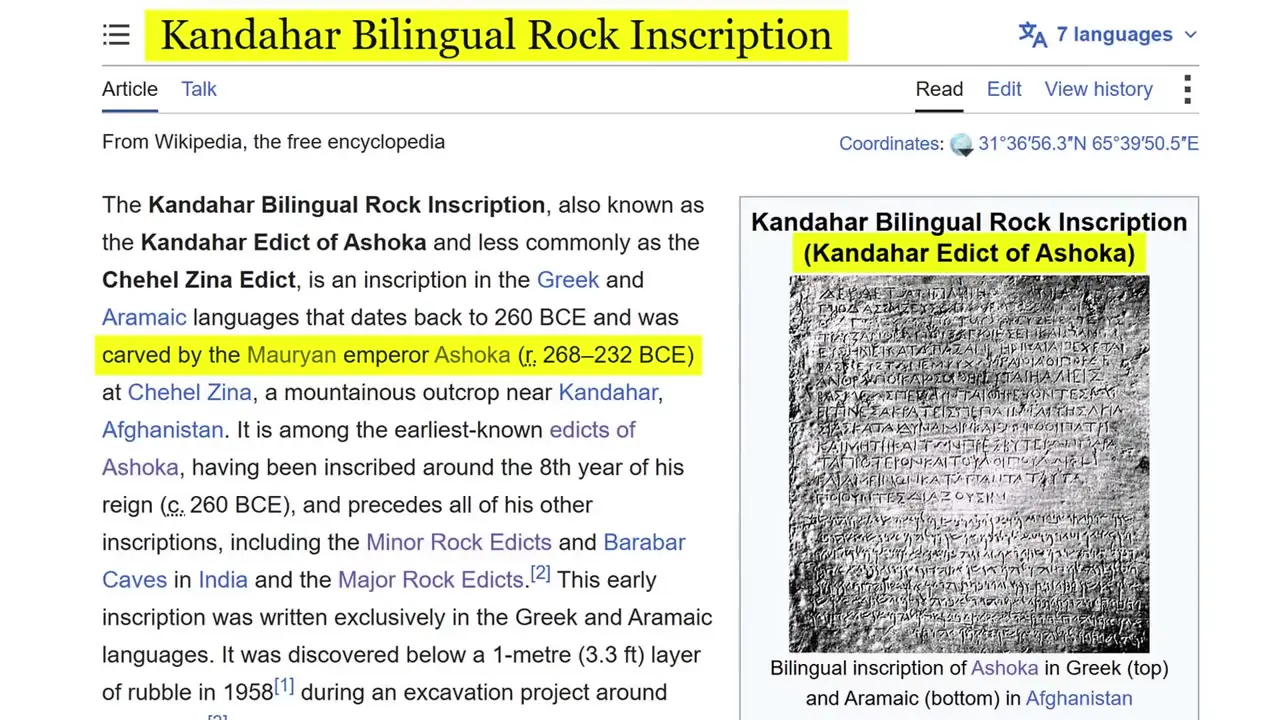
Site mentioned
Key facts
- Mauryan polish appears on Ashokan pillars including the Lion Capital at Sarnath and the Didarganj Yakshi statue in the Bihar Museum, a life-sized sandstone figure still gleaming after 2,300 years
- The Bihar Museum notes the Mauryan polish appears to be an imported technique matching Achaemenid Persian masonry
- Before the Mauryan period, monumental Indian architecture was almost entirely timber, thatch, and brick with no gradual stone-carving evolution
- In 330 BCE, Alexander the Great destroyed the Persian Empire, burning Persepolis and displacing thousands of Persian elites, scribes, craftsmen, and stone masons
- Kharosthi script used in northwestern India derives from Aramaic
- Ashoka's monolithic pillars echo columns of Persepolis, described as distinctly Indian in spirit but Achaemenid in technique
- The Kandahar bilingual inscription (~260 BCE) is written in both Greek and Aramaic, confirming Persian and Greek communities under Mauryan administration in Afghanistan
- Historians believe Persian craftsmen helped shape the sudden emergence of Mauryan stone architecture
Sources
bam-investigations.com
Linked in video description
bam-investigations.com
Linked in video description
lifeonweekends.com
Linked in video description
irna.fr
Linked in video description
lah.ru
Linked in video description
geolines.ru
Linked in video description
Mauryan polishen.wikipedia.org
Mauryan polish is found especially in the Ashoka Pillars. All known Mauryan pillars have the characteristic mirror-like polish, although most were left ...
Ashokan Pillars: Mauryan India's Imperial Art in Stonestudiomatrx.org
In the third century BCE, the Mauryan emperor Ashoka set up polished stone columns across his empire — each a single shaft of sandstone, ...
Was this story useful?
Keep exploring
Every site on this page sits on the globe, and the people who research them are on the Discord.
3D Globe · Sites by country · Story Archive · Research Library · Weekly Journal · Search
AI-generated text · images from the original sources · always verify with the sources.