

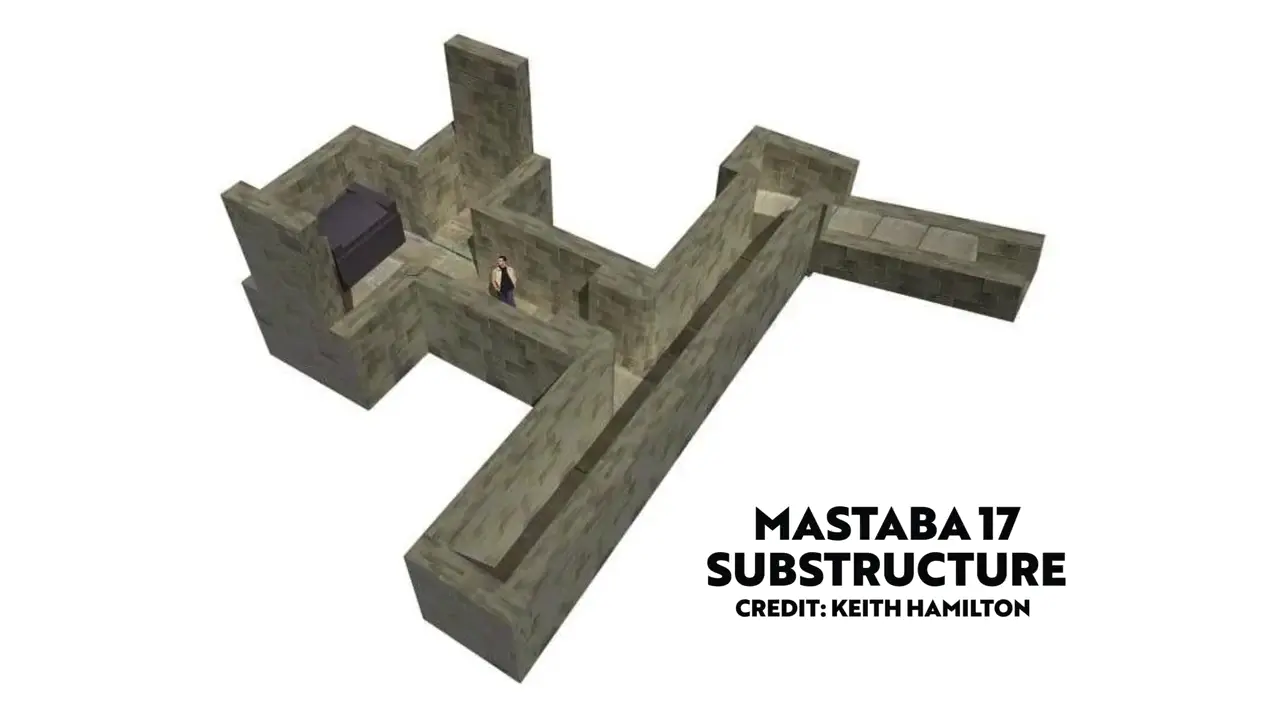
Mastaba 17 at Meidum surpasses Mastaba 16 (Prince Nefermaat's tomb) in quality, positioning, and monumental stonework. It features a precision granite sarcophagus while other Meidum burials used wood. The chamber was sealed permanently over the completed burial, with no entrance passage. Single burials are rare for high-status men, adding to the intrigue! ⛰️
Mastaba 17 architectural evidence points to King Sneferu as occupant
Site mentioned
📍 Mastaba 17
Key facts
- Mastaba 16 housed Prince Nefermaat, Sneferu's eldest son and vizier
- Mastaba 17 surpasses Mastaba 16 in quality, positioning, and monumental stone construction
- Mastaba 17 contains a precision-made granite sarcophagus, whereas all other Meidum sarcophagi are wooden
- The burial chamber and passages were built inside a bedrock pit with no entrance passage or vertical shaft
- The mastaba was constructed over the completed burial, leaving no access to the interior
- Mastaba 17 is a single burial, unusual for high-status men who were normally interred with their wives
- Queen Hetepheres' burial goods were moved to an unmarked pit on the east side of the Great Pyramid at Giza
- Mastaba 17 appears to be the last major monument built during Sneferu's reign, suggesting Meidum was not abandoned as a necropolis
Sources
The Mysteries of Meidum & Mastaba 17 - Sailingstone Travelsailingstonetravel.com
Meidum was possibly Egypt's first-ever smooth-sided pyramid. And just next to it is Mastaba 17, one of ancient Engypt's most mysterious ...
Guardian's Meidum II Mastaba #17guardians.net
This mastaba is a great example of an Old Kingdom Mastaba. We will enter this ancient tomb through a robbers entrance that was burrowed into the south end of ...
Medum. Mastaba 17. - ISIDA Projectisida-project.ucoz.com
- MEIDUM -. Mastaba № 17. "Its outside was built of large crude bricks, the body of it is formed of clean chips of limestone, evidently the waste from the ...
Meidum (Maidum) | Ancient Egypt Onlineancientegyptonline.co.uk
M17: Mastaba of an unknown noble ... The largest mastaba at Meidum is that of an unknown noble who was probably one of the sons of Sneferu. Access to the burial ...
(PDF) Mastaba 17 at Meidum, A Layman's guide - Academia.eduacademia.edu
Mastaba 17 at Meidum represents a significant yet often overlooked structure within ancient Egyptian architecture.
Was this story useful?
Keep exploring
Every site on this page sits on the globe, and the people who research them are on the Discord.
3D Globe · Sites by country · Story Archive · Research Library · Weekly Journal · Search
AI-generated text · images from the original sources · always verify with the sources.