

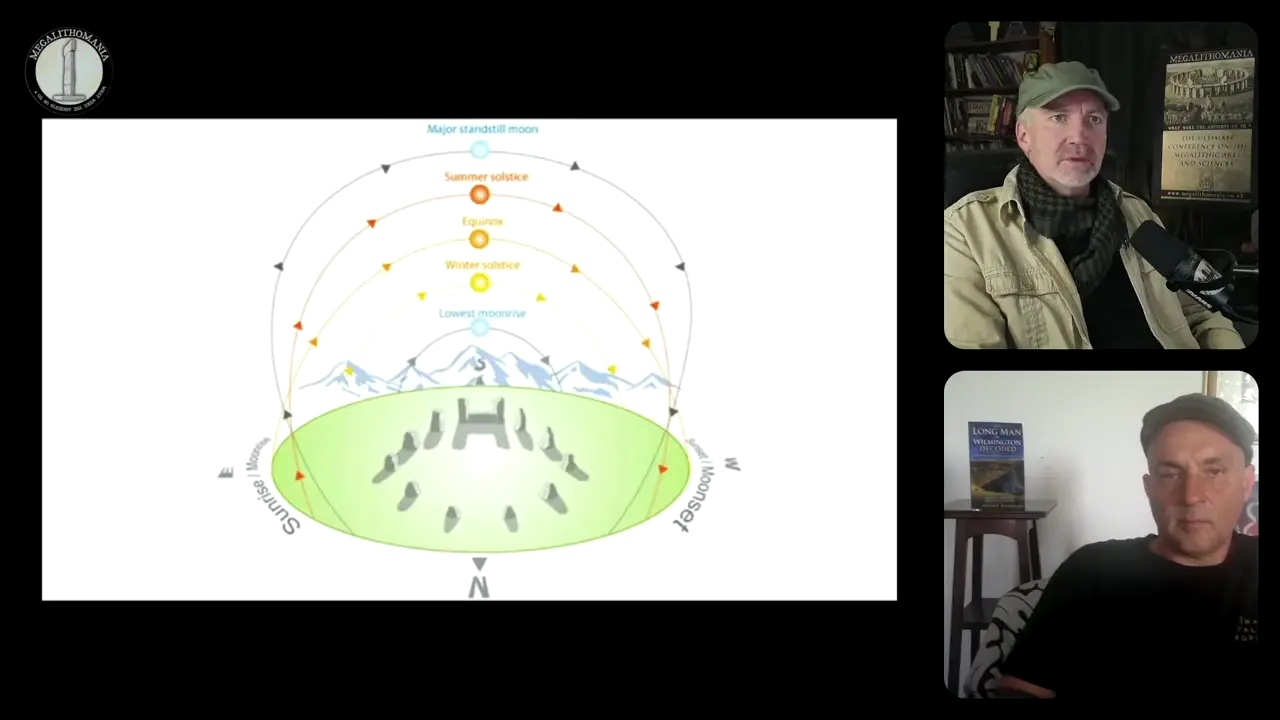
Every 18.6 years, the moon reaches its most extreme positions in a major lunar standstill. During this cycle, the moon rises lower than the winter solstice sun. The moon accomplishes in one month what the sun does in a year. When perigee coincides with a full moon at equinox, 'king tides' cause significant flooding. The Callanish stones in Scotland were aligned to track these rare lunar extremes, requiring 18+ years of continuous observation to map the cycles.
Lunar standstill cycles: 18.6-year moon phenomenon observed at ancient sites worldwide
Key facts
- The major lunar standstill occurs every 18.6 years when the moon reaches its lowest rise and set positions
- During major standstill, the moon rises lower than the winter solstice sun
- The moon completes in one month what the sun does in a year, making lunar cycles faster and more complex
- Perigee (closest moon) and apogee (furthest moon) occur monthly and affect tides significantly
- When perigee coincides with full moon and equinox sun, 'king tides' occur causing flooding
- Callanish stones in Scotland display the southern major standstill of the moon
- Chimney Rock in Colorado has a Pueblo viewing platform built specifically to observe lunar standstills through a natural rock portal
- Alexander Thom witnessed moon extremes during the minor standstill in the Outer Hebrides
Sources
Extreme Moon: The Major Lunar Standstills of 2024 - 2025griffithobservatory.lacity.gov
The major lunar standstill results from the rotation of the Moon's inclined orbit over an 18.6-year cycle. Because the greatest monthly excursion of the Moon ...
Lunar standstill - Wikipediaen.wikipedia.org
The degree of lunar standstills changes over the course of 18.6 years ... In a year of a major lunar standstill, solar eclipses occur in March or April at ...
Stonehenge Major Lunar Standstill - English Heritageenglish-heritage.org.uk
The limits of moonrise and moonset change over a period of about 18.6 years. The major lunar standstill is when the northernmost and southernmost moonrise and ...
2024-2025 MAJOR LUNAR STANDSTILL - Cloudy Nightscloudynights.com
The 18.6-year cycle is caused by the precession of the plane of the lunar orbit, while this orbit maintains a 5 degree tilt relative to the ...
The 1st 'major lunar standstill' in more than 18 years is ... - Spacespace.com
A major lunar standstill is about to occur. The phenomenon happens every 18.6 years when the moon rises and sets at its most extreme points on the horizon.
Was this story useful?
Keep exploring
Every site on this page sits on the globe, and the people who research them are on the Discord.
3D Globe · Sites by country · Story Archive · Research Library · Weekly Journal · Search
AI-generated text · images from the original sources · always verify with the sources.