

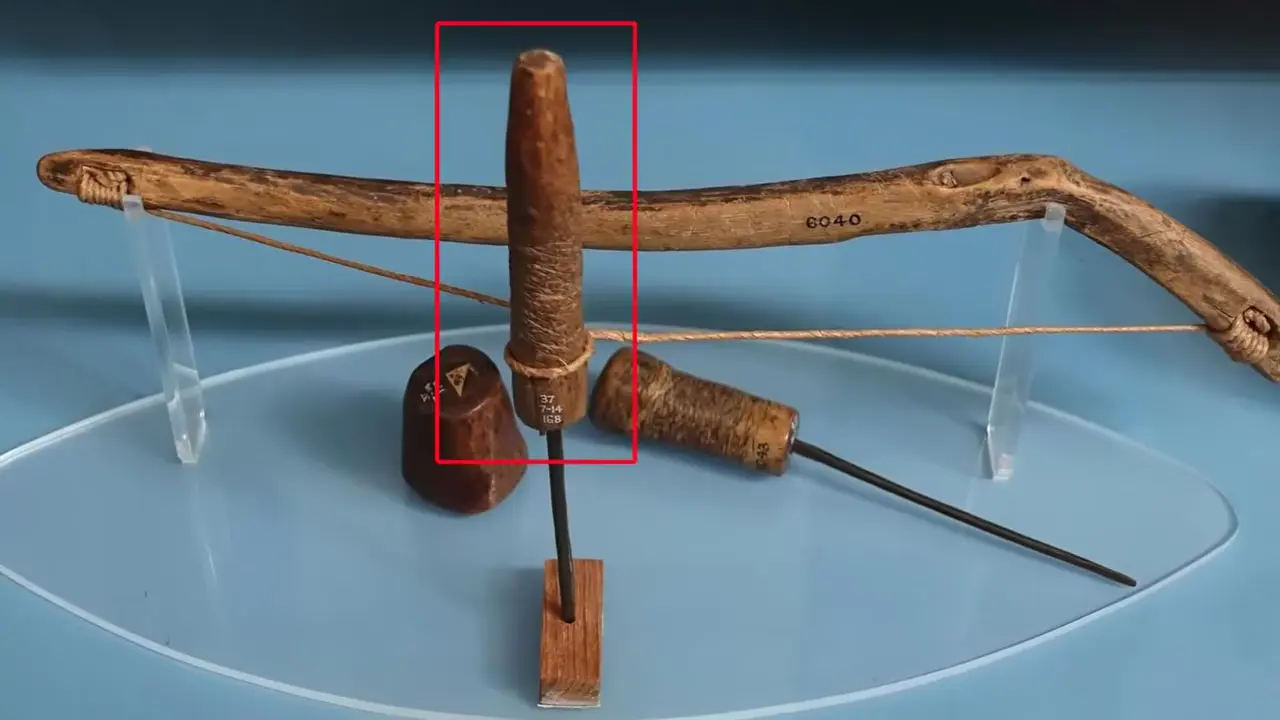
A 6.3 cm dual-ended sandstone drill from Lingjiatan reveals Neolithic bow drill technology in action. Horizontal wear grooves on the central shaft indicate cord wrapping for a bow drill spindle—one of humanity's oldest mechanical inventions, predating writing and agriculture. Even ancient Egyptian bow drills show identical friction marks! 🛠️
Lingjiatan sandstone drill reveals Neolithic bow drill technology
Site mentioned
📍 Lingjiatan
Key facts
- Dual-ended stone drill made of sandstone, 6.3 cm long (roughly the length of a house key)
- One end has a thicker bit with flattened tip; the other has a finer pointed bit
- Spiral and concentric wear patterns indicate consistent sustained rotary drilling
- Horizontal wear grooves on central shaft indicate cord or rope wrapping, diagnostic of a bow drill spindle
- The bow drill is one of humanity's oldest mechanical inventions, predating writing and agriculture
- Ancient Egyptian bow drills show identical horizontal friction marks on their wooden spindles
Sources
file.ahm.cn:444
Linked in video description
Was this story useful?
Keep exploring
Every site on this page sits on the globe, and the people who research them are on the Discord.
3D Globe · Sites by country · Story Archive · Research Library · Weekly Journal · Search
AI-generated text · images from the original sources · always verify with the sources.