

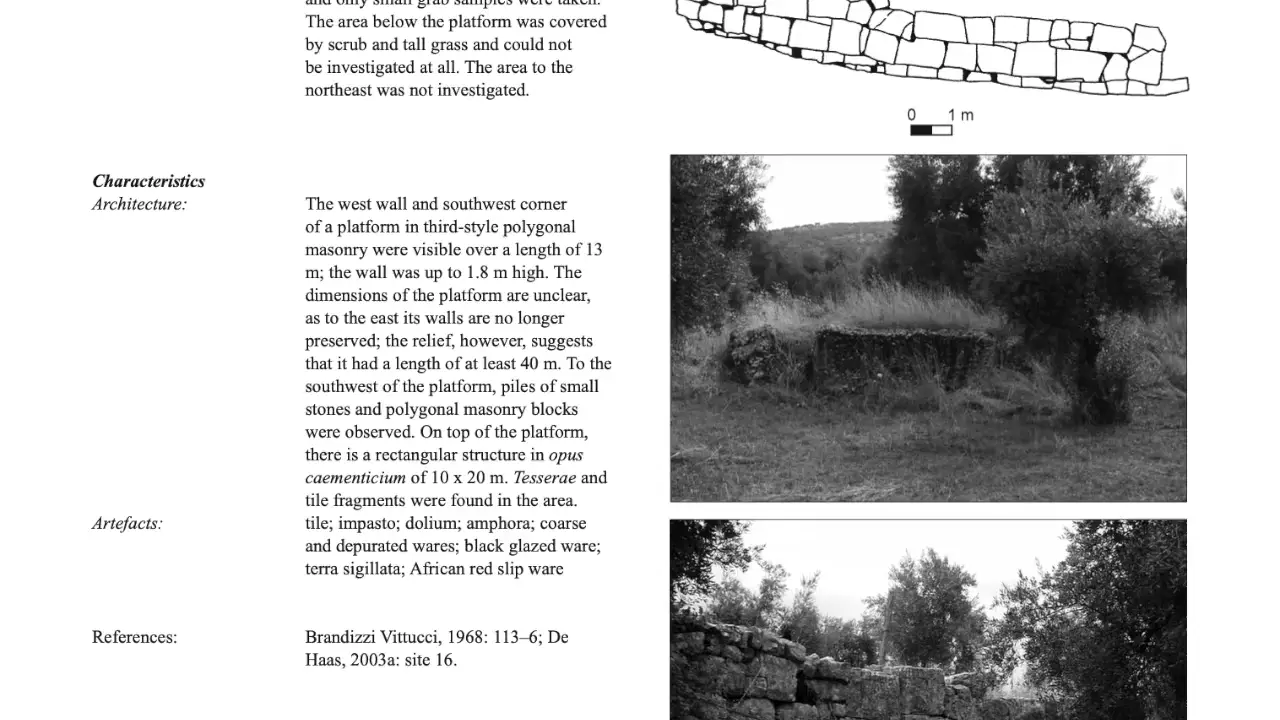
Italian mainland cyclopean walls have traditionally been dated to the 400s BC based on the earliest Roman written records. But Romans themselves noted most platforms predated them. Academic research at sites south of Rome in Lazio now shows most buildings actually date to before 800 BC, roughly four centuries before Roman expansion. At least 7-9 platforms are securely dated older than the 800s BC, forcing a rethink of similar constructions across Italy.
Lazio research dates Italian cyclopean platforms to before 800 BC, challenging 400s BC dating
Key facts
- Italian mainland cyclopean walls are traditionally dated to the 400s BC based on the earliest Roman written records
- Romans themselves documented that most platforms existed before their arrival
- Academic research at platforms in Lazio, south of Rome, found most buildings date to before 800 BC, approximately 4 centuries before Roman expansion
- At least 7-9 platforms have been securely dated to be older than the 800s BC, raising questions about dating methods for similar works elsewhere in Italy
Sources
Cyclopean masonry - Wikipediaen.wikipedia.org
Italy's Mysterious Mycenaean-Like Cyclopean Walls - We the Italianswetheitalians.com
THE CYCLOPEAN WALL ON THE ISTHM1JS ...ascsa.edu.gr
The Cyclopean Cities of Ancient Latiumunchartedruins.blogspot.com
Was this story useful?
Keep exploring
Every site on this page sits on the globe, and the people who research them are on the Discord.
3D Globe · Sites by country · Story Archive · Research Library · Weekly Journal · Search
AI-generated text · images from the original sources · always verify with the sources.