

Las Médulas in Spain was the crown jewel of Roman gold mining. After Augustus brought the region into the empire in the early 1st century AD, up to 20,000 workers toiled there for around 150 years. Gold was trapped in clay and sand buried under 100m of waste rock. The most perilous jobs fell to condemned prisoners.⛏️
Las Médulas: Roman Spain's largest gold mine exploited from 1st century AD
 SpainGeneral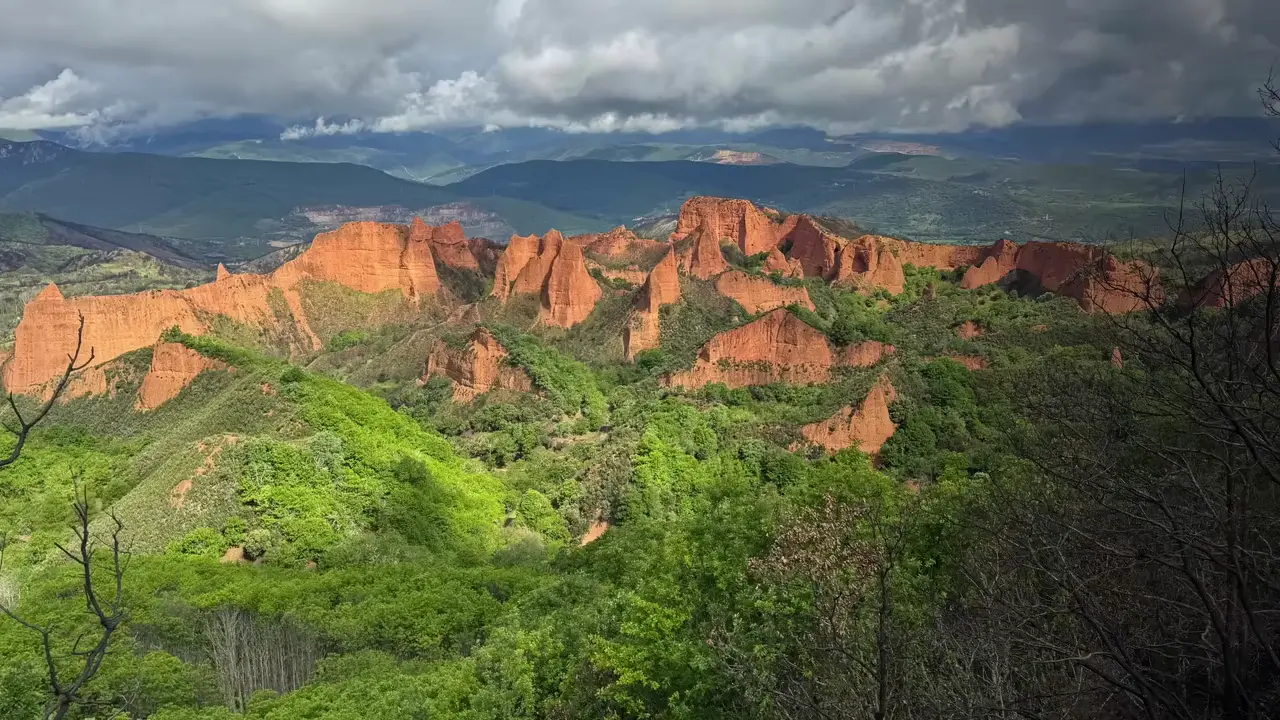
Key facts
- Las Médulas was the most spectacular of Roman Spain's gold mines
- Exploitation began early in the 1st century AD, after Augustus added the region to the empire
- A workforce sometimes swelling to 20,000 men worked the site over approximately 150 years
- Gold was embedded in layers of sand and clay eroded from the Somiedo mountains
- Gold-bearing strata were buried beneath up to 100 meters of sterile sediment
- Near-surface gold was extracted using converging trenches and hydraulic washing, analogous to California gold rush hydraulic mining
- Empire-owned mines were overseen by an imperial procurator and managed by imperial freedmen leasing concessions to private contractors
- The most dangerous work was done by condemned prisoners
Site mentioned
Sources
(PDF) The Roman gold mine of Las Médulasresearchgate.net
In the first stop of the day we will visit the rests of the most important gold mine of the. Roman Empire. In this text you will find something about the ...
Visit Las Médulas One Of The Most Unique Places To See ...packing-up-the-pieces.com
Las Médulas offers hiking trails, guided tours, and numerous viewpoints that showcase one of the greatest and well-preserved Roman mines in history.
Las Médulasen.wikipedia.org
It was the most important gold mine, as well as the largest open-pit gold mine, in the entire Roman Empire. Las Médulas Cultural Landscape is listed by ...
Las Médulaswhc.unesco.org
Las Médulas was declared a Historic Monument in 1931, and a Natural Monument in 2002. It is set under the responsibility of the Junta of Castile and León.
Las Médulas, the Most Unique Roman Ruins in Spaintrevorhuxham.com
Approximately five million Roman pounds were extracted from the area during that time, or 1.6 million kilos of raw gold ore. Las Médulas, Spain.
Was this story useful?
Keep exploring
Every site on this page sits on the globe, and the people who research them are on the Discord.
3D Globe · Sites by country · Story Archive · Research Library · Weekly Journal · Search
AI-generated text · images from the original sources · always verify with the sources.