

Archaeology at Hawara spans nearly two centuries ⛏️ Early explorers visited the site, but Lepsius conducted the first large-scale excavation at Hawara in 1843, documenting the site and attempting to enter the pyramid. Flinders Petrie's excavations in 1888 and 1911 revealed a large structure south of the pyramid that scholars associated with the labyrinth. Later digs in 1995 and 2000 didn't reach underground chambers. In 2008, archaeologists discovered remains of a lost labyrinth underground beneath the pyramid of Hawara. Some structures turned out Roman-era.
Historical excavations at Hawara (Humeima) Labyrinth since 18th century
 EgyptGeneral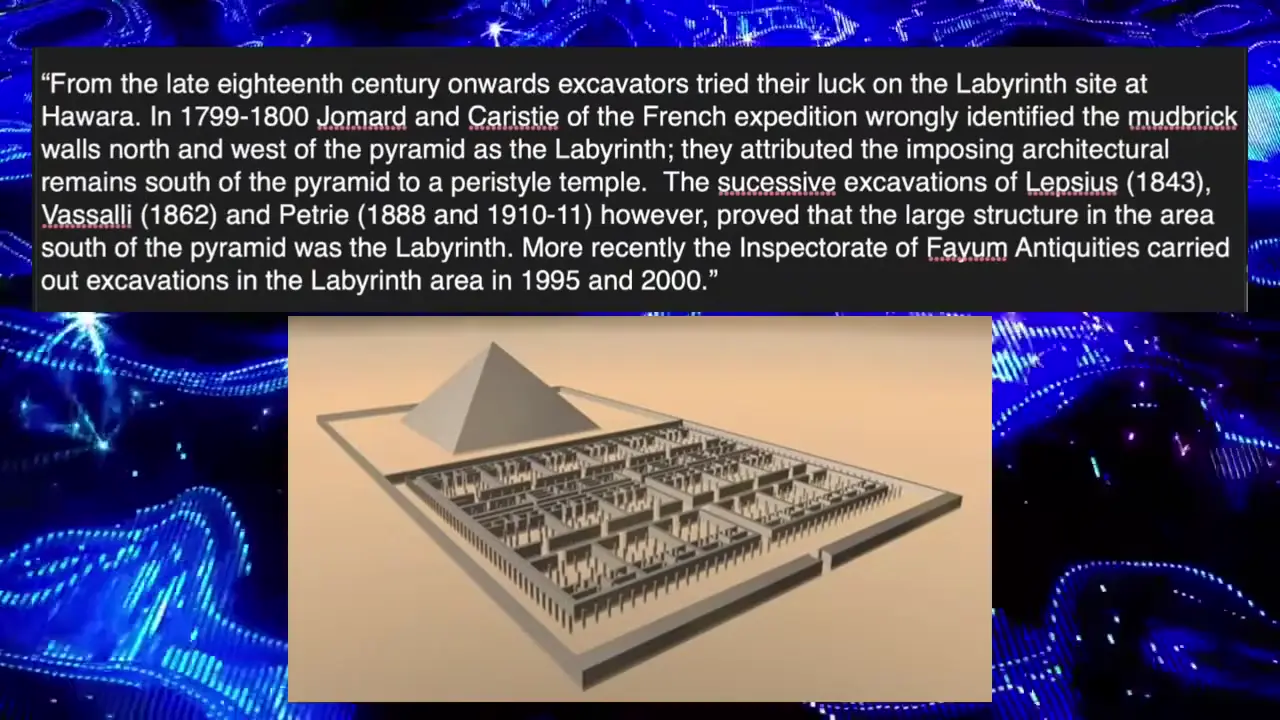
Site mentioned
Key facts
- French expedition in 1799-1800 (Jamard and Keristy) wrongly identified mudbrick walls as labyrinth
- Carl Richard Lepsius excavated at Hawara (Humeima) in 1843, first large-scale excavation there
- Flinders Petri's excavations proved large structure south of the pyramid was the labyrinth
- Egyptian inspectorate excavated in 1995 and 2000
- Excavations were not deep enough to find the underground chambers described in ancient accounts
- Some structures identified by Lepsius turned out to be Roman in date
Sources
penelope.uchicago.edu
Linked in video description
penelope.uchicago.edu
Linked in video description
gutenberg.org
Linked in video description
attalus.org
Linked in video description
dfg-viewer.de
Linked in video description
dn790008.ca.archive.org
Linked in video description
Was this story useful?
Keep exploring
Every site on this page sits on the globe, and the people who research them are on the Discord.
3D Globe · Sites by country · Story Archive · Research Library · Weekly Journal · Search
AI-generated text · images from the original sources · always verify with the sources.