

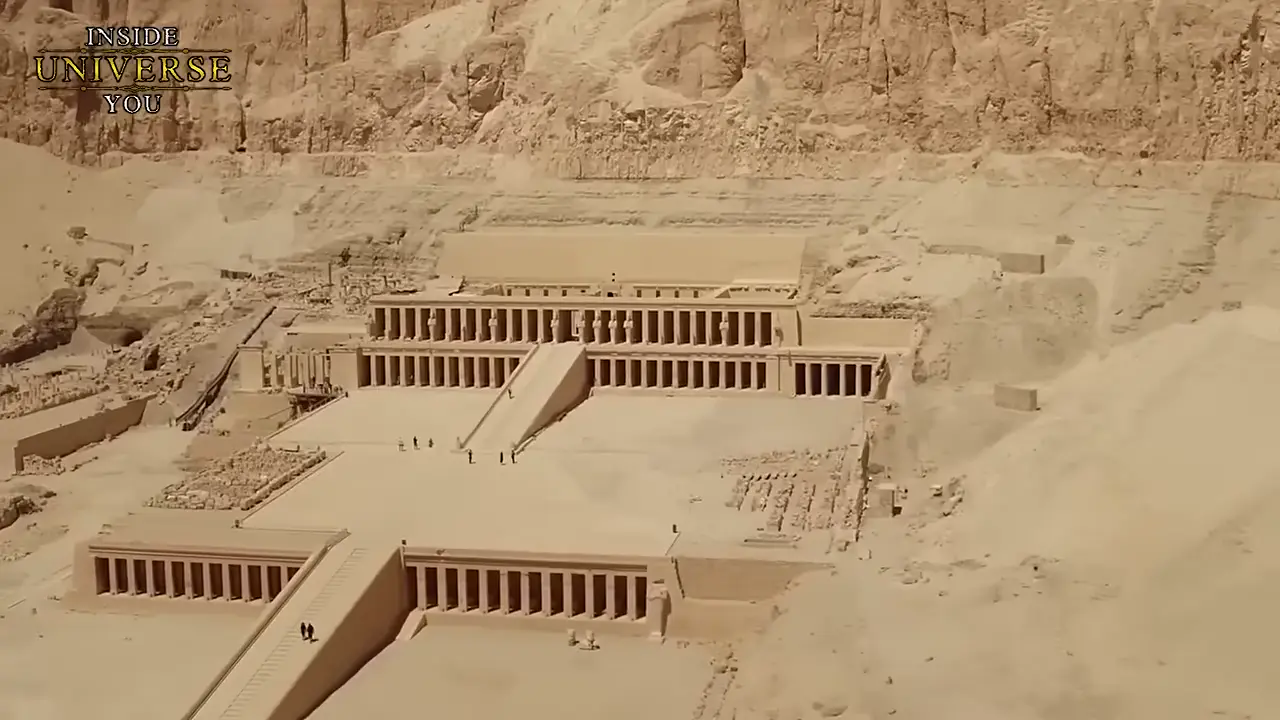
Hatshepsut's 15th-century BC temple at Deir el-Bahari rises from the desert in terraces linked by wide ramps, designed by Senmut. At winter solstice, sunrise illuminates Amun-Ra and Hatshepsut statues along the central axis. Walls record the Punt expedition, and forecourt gardens grew frankincense and myrrh trees — among the earliest documented gardens.
Hatshepsut's terraced temple at Deir el-Bahari, designed by Senmut
Key facts
- Built in the 15th century BC at Deir el-Bahari on the west bank of the Nile
- Designed by the architect Senmut as a series of terraces rising from the desert floor, connected by wide central ramps
- Central axis aligned with the winter solstice sunrise, illuminating statues of Amun-Ra and Hatshepsut
- Reliefs record the expedition to the Land of Punt, returning exotic animals, incense, ivory, and gold
- Archaeological evidence indicates the forecourt contained ornamental botanical gardens with frankincense and myrrh trees imported from Punt, one of the earliest documented gardens
- Statues depicted Hatshepsut as a male pharaoh with the royal false beard
Was this story useful?
Keep exploring
Every site on this page sits on the globe, and the people who research them are on the Discord.
3D Globe · Sites by country · Story Archive · Research Library · Weekly Journal · Search
AI-generated text · images from the original sources · always verify with the sources.