

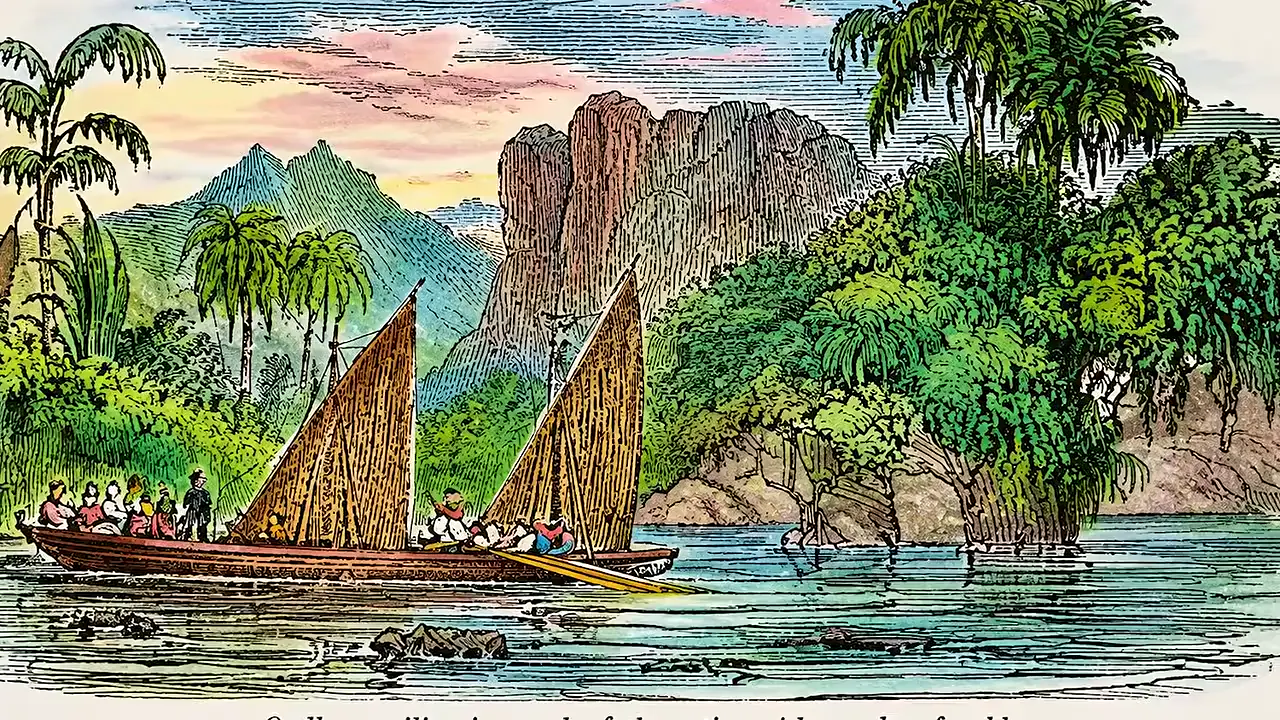
Gaspar de Carvajal, who chronicled Orellana's 1542 voyage down the Amazon River, wrote of countless large settlements so tightly packed they looked like continuous urban corridors, along with canoe fleets, broad forest roads and deliberately planted fruit orchards. By the 20th century the basin was treated as pristine wilderness with soils too poor for intensive farming — yet terra preta, that dark fertile soil built by centuries of human activity, is widespread. His reports vanished from the record within decades, so many accused him of exaggeration. 🛶🍈
Gaspar de Carvajal's 1542 account of a densely settled Amazon largely dismissed
Key facts
- Gaspar de Carvajal, chronicler on Orellana's 1542 voyage, described a densely inhabited Amazon region
- He reported countless large settlements, some packed so closely they appeared as continuous urban corridors
- Carvajal described fleets of canoes, broad roads extending into the forest, and intentionally planted fruit orchards
- By the 20th century the Amazon was widely portrayed as a pristine wilderness with soils too poor for intensive agriculture
- Terra preta, unusually dark and fertile soil created by sustained human activity, is widespread across the Amazon basin
- Reports of large Amazonian settlements had largely disappeared within decades of Orellana's voyage, leading some to accuse him and Carvajal of exaggeration
Sources
web.as.uky.edu
Linked in video description
Was this story useful?
Keep exploring
Every site on this page sits on the globe, and the people who research them are on the Discord.
3D Globe · Sites by country · Story Archive · Research Library · Weekly Journal · Search
AI-generated text · images from the original sources · always verify with the sources.