

Fermin de Rueda (1744-1793), Spain's top military engineer, faced a broke country, crumbling military, and unstoppable French forces. He likely visited ancient cyclopean sites in Lusitania or studied Peruvian works. His solution: build a star-fort using 2,000-year-extinct dry-stacked cyclopean masonry. Why? Non-hydraulic mortar would trap moisture in thick walls and collapse. His counterintuitive choice proved cyclopean walls resist cannon fire - yet NO other star-fort worldwide adopted this technique. He was the last cyclops.
Fermin de Rueda - the last cyclops who revived extinct technique
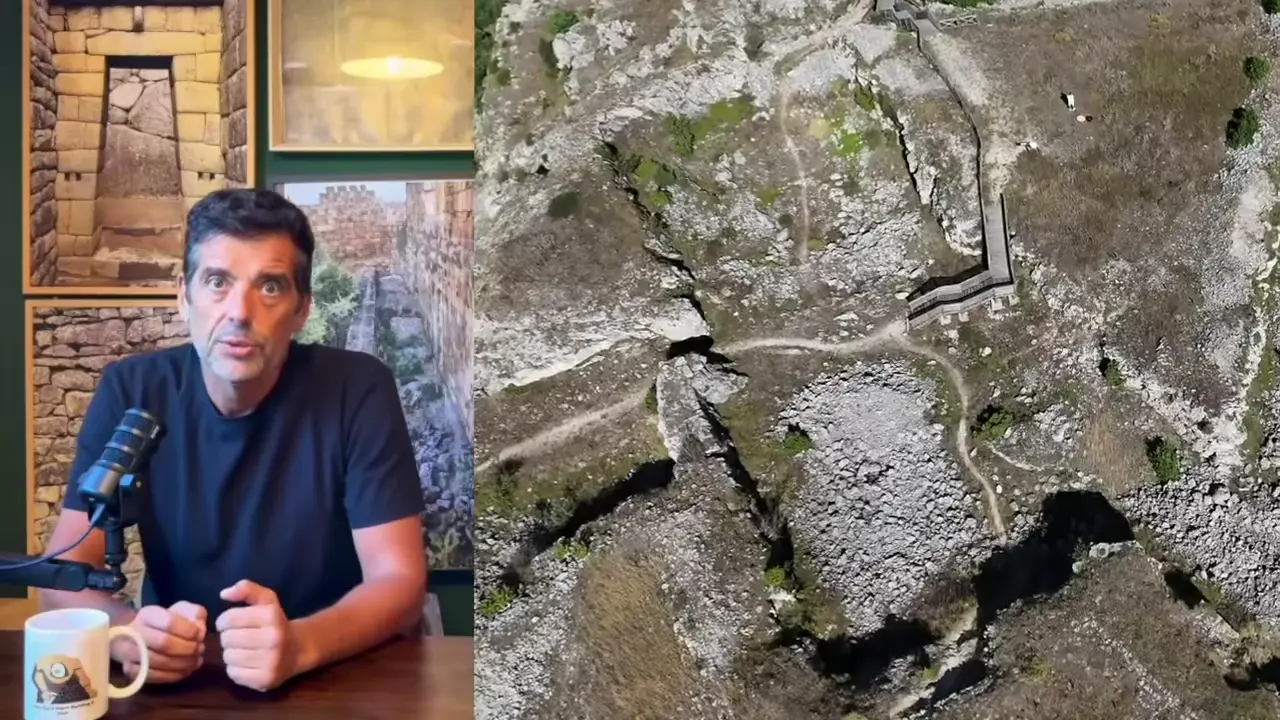
Site mentioned
📍 La Fortaleza del Crestón🌍 Show on the globe
Key facts
- Fermin de Rueda was Spain's top military engineer in 1793, born 1744 in Salamanca
- He was sent to build a fort blocking passage from Basque Country into Castille
- The country was broke, military in shambles, and French forces seemed unstoppable
- Non-hydraulic mortar was too scarce and expensive at the time
- He likely visited old cyclopean sites in Lusitania: Yecla la Vieja, Merchanas, or Ulaca
- He may have spent time in Venezuela and learned of Peruvian cyclopean works
- His solution proved cyclopean walls can resist cannon fire without mortar
- No other star-fort in the world used this technique despite hundreds built in 18th-19th centuries
- Cyclopean wall strength is not apparent - their exceptional resistance to forces is counterintuitive
Was this story useful?
Keep exploring
Every site on this page sits on the globe, and the people who research them are on the Discord.
3D Globe · Sites by country · Story Archive · Research Library · Weekly Journal · Search
AI-generated text · images from the original sources · always verify with the sources.