

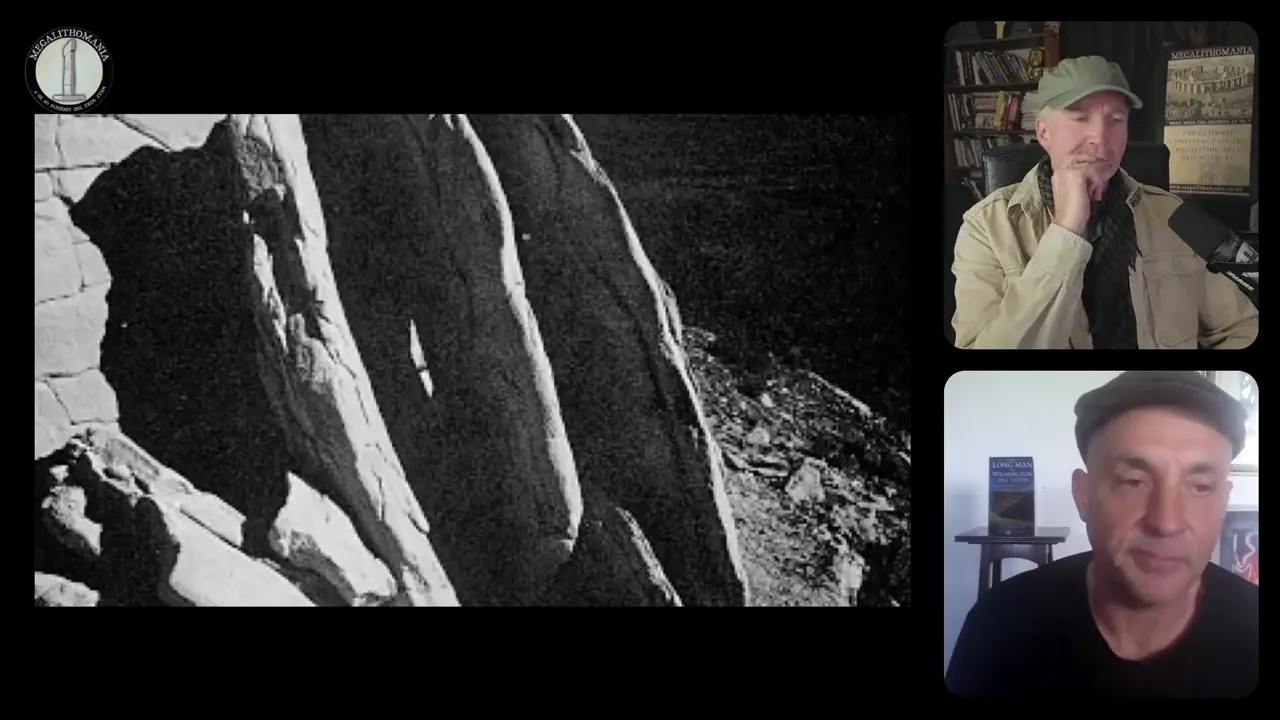
At Fajada Butte in North America, three stone slabs with carved spirals create precise solar and lunar markers at noon. At equinox, two daggers of sunlight pierce through the spirals. Summer solstice noon brings one solar dagger through the spiral's center, while winter solstice creates two flanking daggers. The minor lunar standstill illuminates half the spiral, and the major standstill (every 18.6 years) lights only the smaller spiral's corner. Whoever created this required at least 18.6 years of observation to map these cycles - demonstrating sophisticated understanding of both solar and lunar patterns encoded into a single monument.
Fajada Butte solar daggers: spiral carvings mark solstices and equinoxes at midday
Site mentioned
📍 Fajada Butte
Key facts
- Fajada Butte in North America contains three stone slabs with carved spirals
- At equinox noon, two daggers of sunlight pierce through the spirals
- At summer solstice noon, one solar dagger penetrates the middle of the spiral
- At winter solstice, two daggers of light appear on either side of the spiral
- On the minor standstill of the moon, half the spiral is illuminated
- On the major standstill of the moon, only the smaller spiral corner is illuminated
- Observers had to spend at least 18.6 years at the site to map these cycles
- The site demonstrates sophisticated understanding of both solar and lunar cycles
Sources
The Sun Dagger | High Altitude Observatorywww2.hao.ucar.edu
The first, clearly visible on this photograph, is a large spiral, 34 cm high and 41 cm wide. The spiral numbers nine and a half turns, moving outwards and ...
[PDF] Fajada Butte Solstice Markernpshistory.com
On a cliff face atop Fajada Butte, three large upright rock slabs stand in front of two spiral petroglyphs carved by ancestral Pueblo (Chaco ...
Fajada Butte - Wikipediaen.wikipedia.org
Fajada Butte is a butte in Chaco Culture National Historical Park, in northwest New Mexico. Fajada Butte (Banded Butte) rises 135 meters above the canyon floor.
[PDF] A CASE STUDY OF THE PICTURE ROCKS SUN DAGGER, PLUS A ...apod.nasa.gov
The Fajada Butte Sun Dagger can be characterized as a wedge with an opening angle of around 3°. The Hayden Butte spiral petroglyph has a 40° wedge on the summer ...
[PDF] Lunar Markings on Fajada Butte, Chaco Canyon, New Mexicosolsticeproject.org
To the upper left of that spiral is a smaller spiral of 2 1/2 turns, measuring 9 by 13 cm (Figure. 4). Page 2. Fig. 1 Fajada Butte from the north. The solar/ ...
Was this story useful?
Keep exploring
Every site on this page sits on the globe, and the people who research them are on the Discord.
3D Globe · Sites by country · Story Archive · Research Library · Weekly Journal · Search
AI-generated text · images from the original sources · always verify with the sources.