

At Rumi Gate, evidence of habitation includes a wall structure and a chinkana (Andean term for underground passage) at Caja Rumi, accessed by carved steps leading into a large carved stone/underground room. Nearby, a perfectly cut rectangular block with smooth surfaces and precise right angles was found partially buried, with straight lines suggesting deliberate megalithic construction.
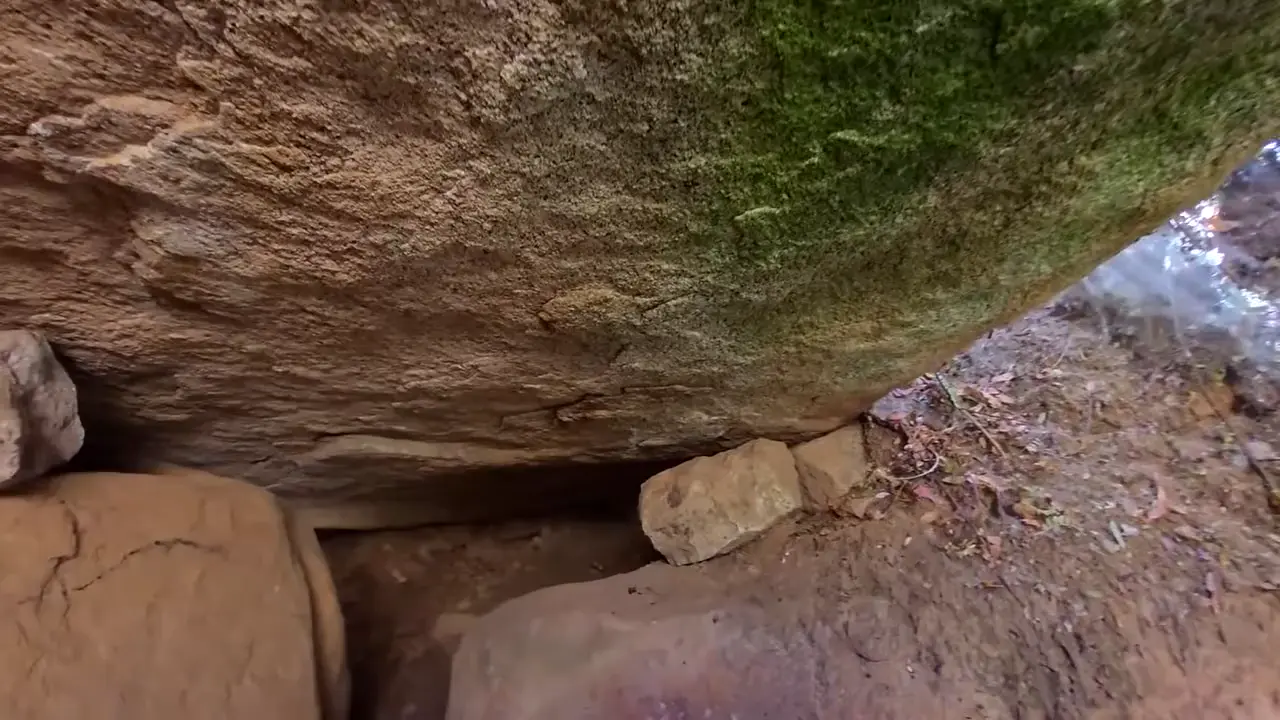
Evidence of human habitation: cave, walls, and megalithic blocks
Site mentioned
📍 Rumi Gate🌍 Show on the globe
Key facts
- A wall structure was identified along the site, providing evidence of human habitation
- A cave or chinkana (Andean term for underground passage) was explored at Rumi Gate
- Carved steps lead into the cave, which may have partially collapsed like a dolmen
- A perfectly cut rectangular block with smooth surfaces and precise right angles was found, partially buried
- Straight lines and a jointed rock edge near the cave suggest deliberate megalithic construction
Sources
Uncovering the Ancient Mysteries of Cosmapopular-archaeology.com
Inca occupation known as Caja Rumi, which features large boulders, more ancient terraces, and more domestic walls and architecture.
Cajarumimegalithic.co.uk
Cajarumi, Rock Cut Tomb. still recognisable as an ancient site. At over 4,000 meters an the Ancash region of Peru.
Cosma | District of Cáceres- Ancash Peru-Archaeological Projectpadcaperu.wordpress.com
Caja Rumi, Rumi Underground room at Caja Rumi exploring the underground room at Caja Rumi large carved stone at Caja … carved boulders
Túcume Archaeological Sitewmf.org
Túcume Archaeological Site is located on Peru's arid north coast and stretches across 220 hectares. The ancient settlement was built entirely of mud-brick
Chinkanas of Sacsayhuaman: Mysterious Underground Tunnelswamanadventures.com
The Chinkanas of Sacsayhuaman, sometimes referred to as labyrinths, are underground passages carved into limestone. These chinkanas, or cave ...
Was this story useful?
Keep exploring
Every site on this page sits on the globe, and the people who research them are on the Discord.
3D Globe · Sites by country · Story Archive · Research Library · Weekly Journal · Search
AI-generated text · images from the original sources · always verify with the sources.