

Vinča material culture vanishes from the record around 4,500 BC, likely worsened by the Piora oscillation cooling event (~4200 BP), eight centuries of soil depletion, and deforestation from construction and smelting. The broader "Old Europe" collapse by 4,000 BC is tied to Pontic-Caspian steppe movements linked to early Indo-European pastoralists. 🌾⚠️
Decline of Vinča culture by 4400 BC: climate change, resource depletion, and steppe pressure
 SerbiaGeneral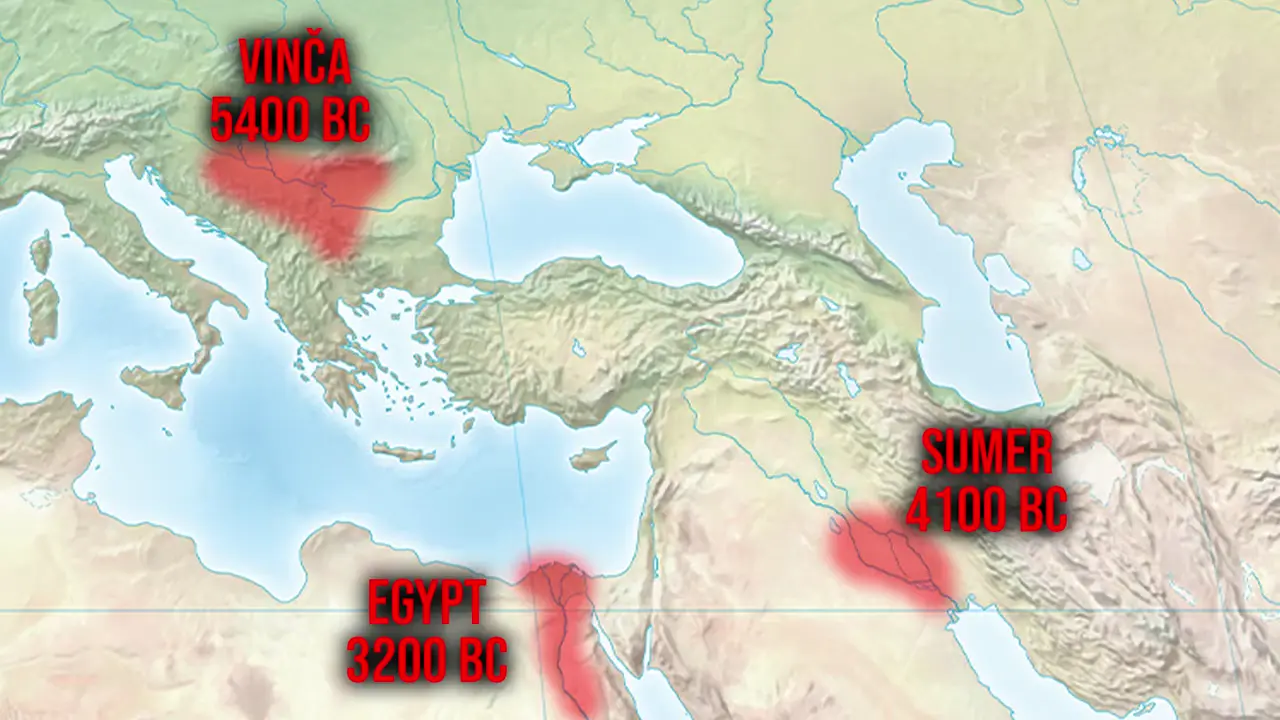
Key facts
- Vinča material culture—black burnished pottery, figurines, large settlements—disappears from the archaeological record around 4,400 BC, confirmed by radiocarbon chronology
- Climate change around 4,200 BC linked to the Piora oscillation may have caused cooling and disrupted cereal agriculture
- Possible contributing factors include soil erosion and nutrient depletion from 8 centuries of continuous farming and deforestation for construction and smelting
- Sutz and Gomolava sites continued farming and metallurgy but at much smaller, more dispersed scale
- Broader 'Old Europe' collapse across the Balkan-Carpathian region around 4,000 BC attributed to population movements from the Pontic-Caspian steppe associated with early Indo-European-speaking pastoralists (Khvalynsk cultures, later Yamnaya)
- Both Yamnaya groups and Vinča successors in Mesopotamia used the same swastika motif, indicating contact
Site mentioned
Sources
link.springer.com
Linked in video description
link.springer.com
Linked in video description
nature.com
Linked in video description
nature.com
Linked in video description
nature.com
Linked in video description
The End of the Vinča World: Modelling the Neolithic to ...academia.edu
The current evidence suggests that most Vinča settlements were abandoned by the 46th century calBC, indicating a simultaneous decline across the ...
The approximate spatial extent of the Vinča culture and ...researchgate.net
The Vinča culture is a Late Neolithic phenomenon, which lasted from 5300/5200 cal BC to 4600/4500 cal BC across the northern and central Balkans, and is defined ...
Vinča cultureen.wikipedia.org
... Vinča culture or Vinča-Turdaș culture, is a Neolithic archaeological culture of Southeast Europe, dated to the period 5400–4500 BC. It is named ...
Was this story useful?
Keep exploring
Every site on this page sits on the globe, and the people who research them are on the Discord.
3D Globe · Sites by country · Story Archive · Research Library · Weekly Journal · Search
AI-generated text · images from the original sources · always verify with the sources.