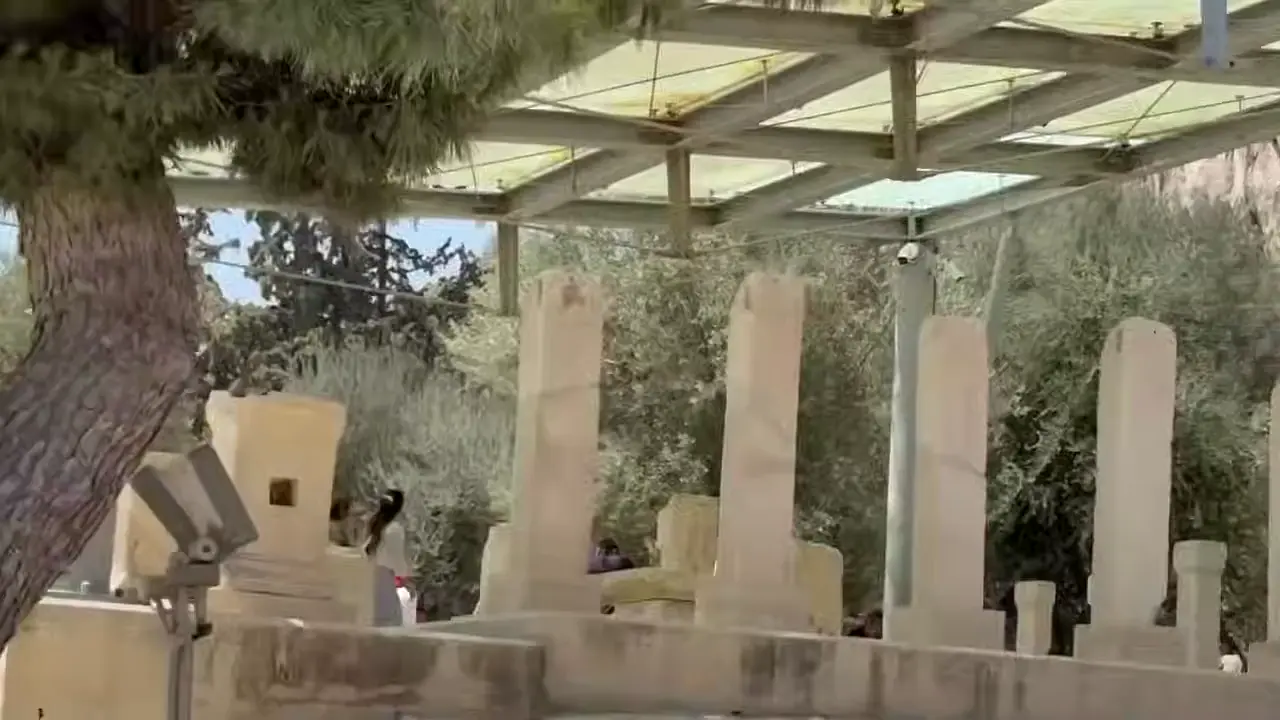
Ancient cyclopean walls were built along the top of the Acropolis during the Mycenaean period (13th century BC), centuries before the classical era. Ancient authors mentioned the mysterious Pelasgians, but historians debate who they actually were. The Mycenaean fortifications remain a subject of study, with some scholars noting the mysterious origins of early Greek civilizations. 🗿❓
Key facts claimed:
- Cyclopean walls appear at the base of most important monuments throughout Athens
- In the Agora, layer upon layer of grand buildings were built on top of cyclopean traces
- In Keramicos (the funerary center), a complete timeline of burial practices is documented with bones and pottery, plus an anachronistic stretch of polygonal wall
- The Dema wall is a mysterious stretch of rustic cyclopean work that cannot be convincingly dated
- Odd shaped stones at the base of the Acropolis echo memories of an older time when the rock was flattened to serve as a smooth landing pad
Sources
Acropolis of Athensen.wikipedia.orgThe Acropolis of Athens is an ancient citadel located on a rocky outcrop above the city of Athens, Greece, and contains the remains of several ancient ...
THE CYCLOPEAN WALL ON THE ISTHM1JS ...ascsa.edu.grThe total width of the wall varies between 3.75 and 4.00 m. From the surface soil came a mixed lot of pottery, mostly Roman, a few classical. Greek, and 14 ...
06.3 History of Greece: Mycenaean Greeceancient-greece.orgThe late Mycenaean period saw a surge in coastal settlements and the fortification of the Athenian Acropolis with a massive Cyclopean wall and ...
The Parthenon and the Acropolis of Athenseverything-everywhere.comSituated on top of the Acropolis is the Parthenon, a masterpiece of ancient Greek architecture and one of the most recognizable landmarks of classical ...
Lesson 21: Narrative – Aegean Prehistoric Archaeologysites.dartmouth.eduMycenaean fortification walls tend to be built along the edge of a sharp change in elevation in the local topography.
AI-generated text · images from the original sources · always verify with the sources.