

Mind-blowing timeline! Uruk's foundations reach back to ~5000 BC, and it's where cuneiform was invented around 3100 BC — later spreading to Akkadians, Babylonians, Assyrians, and Persians. Sumerians considered nearby Eridu (~5400 BC) the first city, established by the god Enki. Remarkably, Sumerian texts were still being copied when Alexander died at Babylon in 323 BC!
Cuneiform invented at Uruk around 3100 BC
 Iraqunverified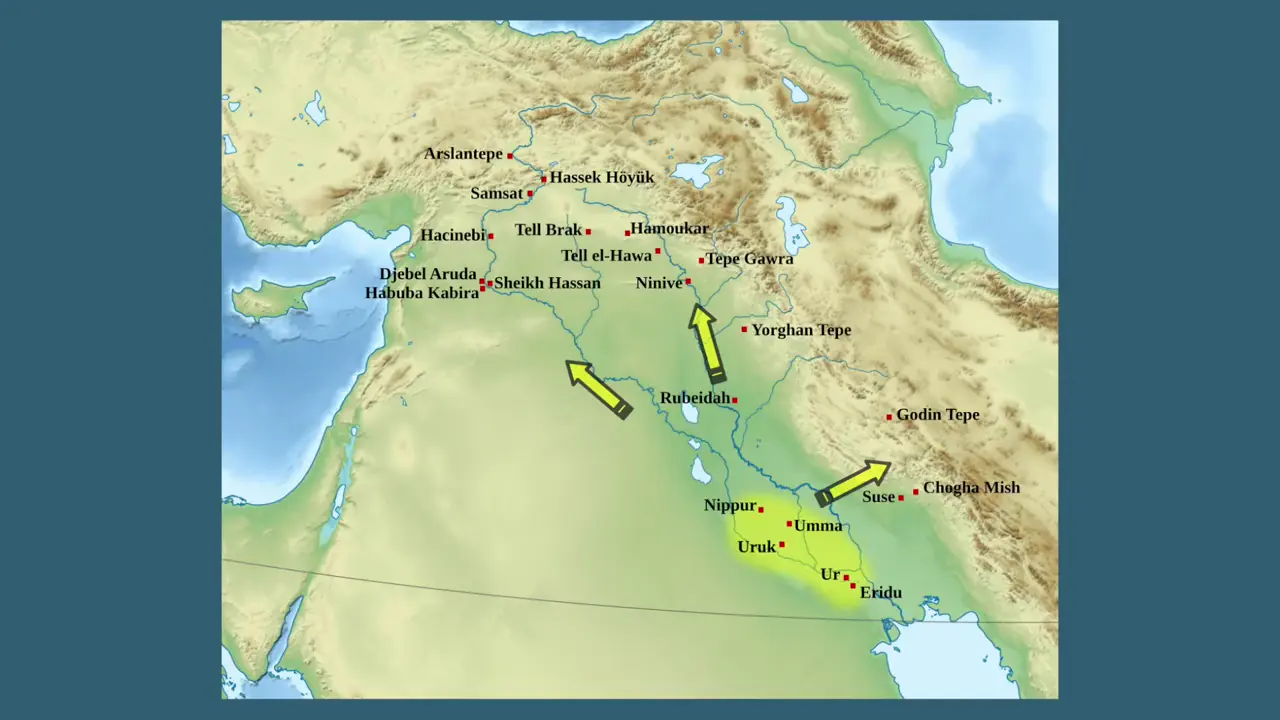
Key facts
- Ubaid period in southern Mesopotamia ended approximately 4000-3700 BC
- Uruk foundations date to approximately 5000 BC, with habitation continuing until about 700 AD
- Eridu's foundations as a settlement date to approximately 5400 BC and was considered by Sumerians to be the first city, established by the god Enki
- Cuneiform was invented at Uruk and passed to Akkadians, Babylonians, Assyrians, and Persians
- Lexical texts comprise approximately 15% of surviving cuneiform from the Uruk period
- Practice of copying Sumerian texts continued until Alexander's death in Babylon in 323 BC
- The Uruk period ended around 3100 BC; sites associated with the Uruk expansion in northern Mesopotamia were abandoned and the associated level at Uruk was burned
- Urbanism resumed by 2900 BC
Site mentioned
Keep exploring
Every site on this page sits on the globe, and the people who research them are on the Discord.
3D Globe · Sites by country · Story Archive · Research Library · Weekly Journal · Search
AI-generated text · images from the original sources · always verify with the sources.