

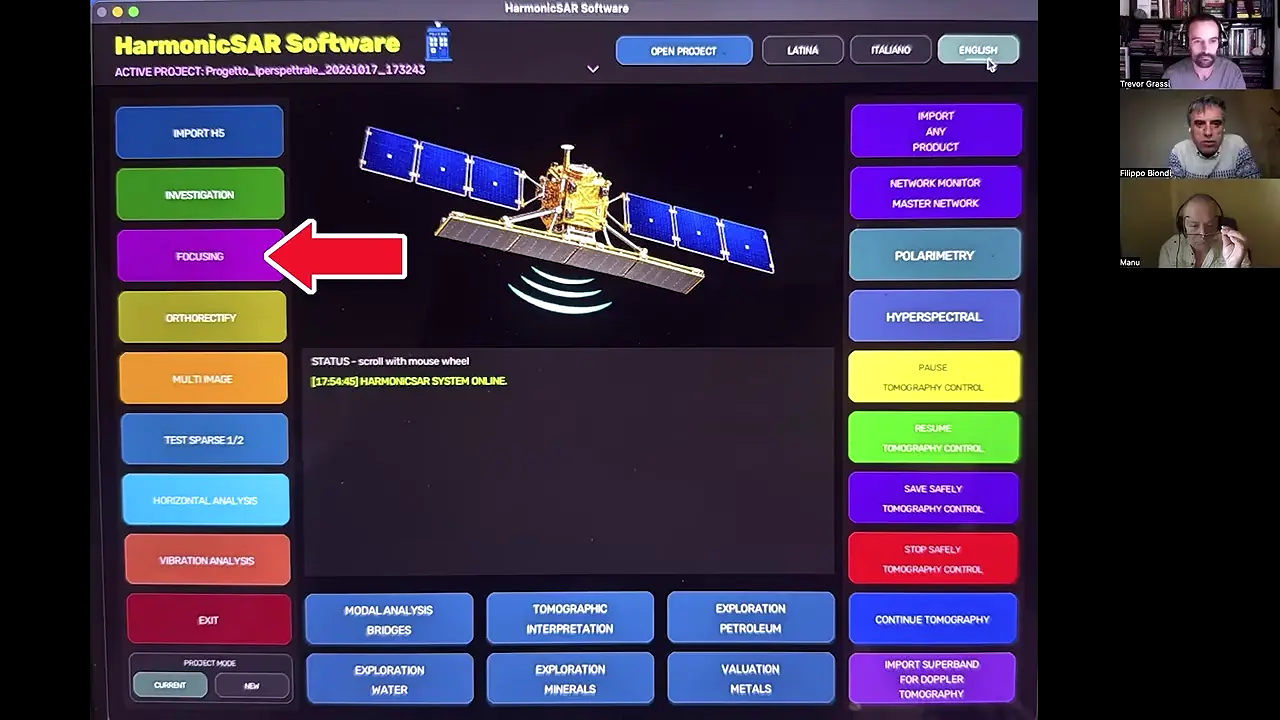
One researcher in the video is building commercial software so satellite radar scans of sites can be processed independently, a workflow needing heavy computing power and bandwidth. The video argues that SAR Doppler tomography, described as a standing-wave inversion, can assess depths beyond earlier methods. The 2022 paper reporting the pyramid application has been retracted. 📡
Commercial SAR software planned; Biondi’s pyramid study retracted
Key facts
- The video says one researcher is developing commercial software to process satellite radar scans of archaeological sites independently; the workflow requires heavy computing power and bandwidth.
- The video describes raw SAR data as noisy and requiring repeated calibration and refinement.
- The published method is Synthetic Aperture Radar Doppler Tomography, based on analyzing micro-movements. The video presents its standing-wave inversion as allowing depth estimates beyond earlier methods, but that is the presenter's claim.
- Biondi argues that SAR can detect underground structures. The video also says a standing wave crossing the pyramid's apex and base can appear compressed in the data.
- The 2022 Remote Sensing paper reporting the pyramid application is marked retracted, so its hidden-structure interpretation and deeper-imaging claims should not be presented as established.
- The search results do not substantiate the claim that this is a standard technique used by a German space station or satellite operators.
Sources
Synthetic Aperture Radar Doppler Tomography Reveals Details of ...ui.adsabs.harvard.edu
ArchaeoSAR Projectarchaeologicalrescue.org
Journal retracts paper claiming network of corridors inside the Great ...retractionwatch.com
Was this story useful?
Keep exploring
Every site on this page sits on the globe, and the people who research them are on the Discord.
3D Globe · Sites by country · Story Archive · Research Library · Weekly Journal · Search
AI-generated text · images from the original sources · always verify with the sources.