

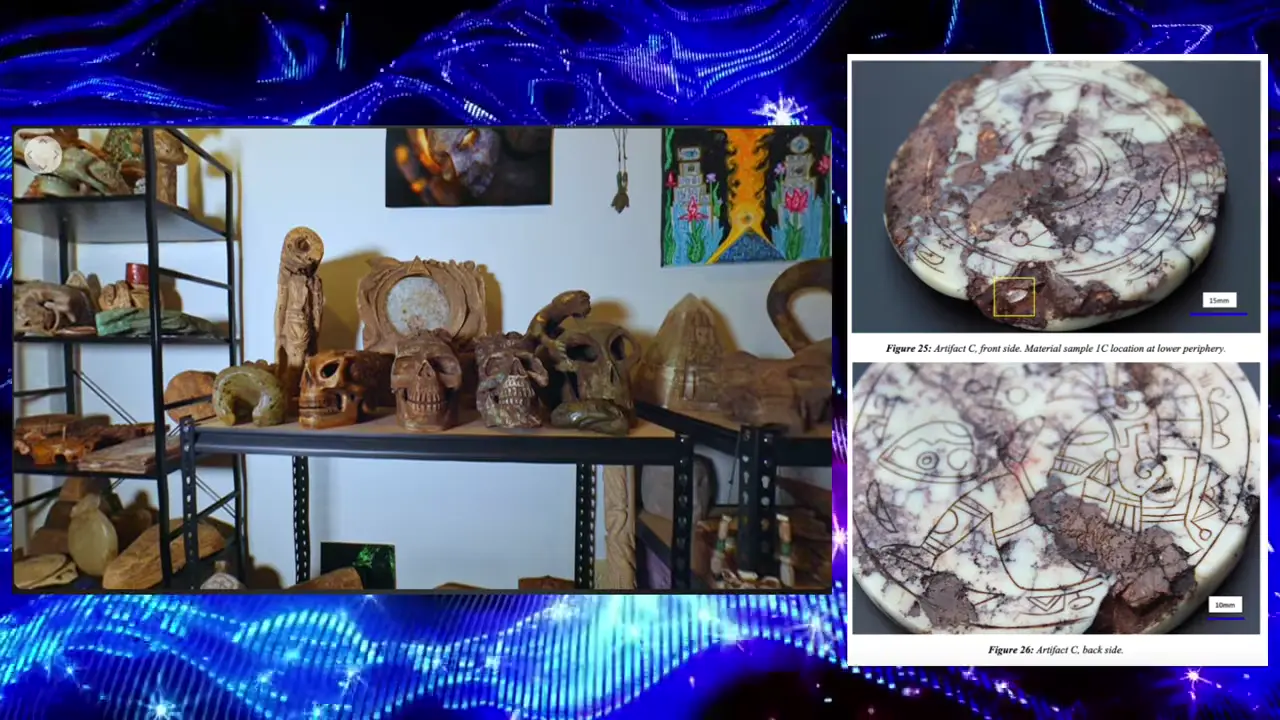
Carbon dating at the University of Georgia Center for Applied Isotope Studies placed organic inclusions in the Atzlan artifacts at approximately 8,600 years old. The plant resin adhesive with aluminum, calcium, and silicon also dates to roughly the same period—significantly predating any known civilization in Jalisco, Mexico.
Carbon dating places Atzlan artifacts at approximately 8,600 years old
Site mentioned
📍 Cerro del Toro
Key facts
- Organic inclusions in the artifacts carbon dated to approximately 8,600 years ago
- Dating was performed at the University of Georgia Center for Applied Isotope Studies
- Samples were collected by research scientist Trevor Hawk, the paper's author
- The adhesive used to bond separate pieces together also dates to approximately the same period (~8,600 years)
- Adhesive is made from what appears to be plant resin as a base, combined with aluminum, calcium, and silicon
- The dates are significantly older than any known civilization in Mexico, where the pieces originate from Cerro del Toro in Jalisco
Was this story useful?
Keep exploring
Every site on this page sits on the globe, and the people who research them are on the Discord.
3D Globe · Sites by country · Story Archive · Research Library · Weekly Journal · Search
AI-generated text · images from the original sources · always verify with the sources.