

Ancient navigators used the Big Dipper to find direction - if the star moves left you're facing north, right south, up east, down west. The constellation rotates ~1° every 4 minutes, effectively working as a clock. Connecting the two stars at the end of the Dipper points directly to the North Star. The Big Dipper rotates around the North Star throughout the year, appearing on its side or even upside down at different times.
Big Dipper navigation technique for direction and time
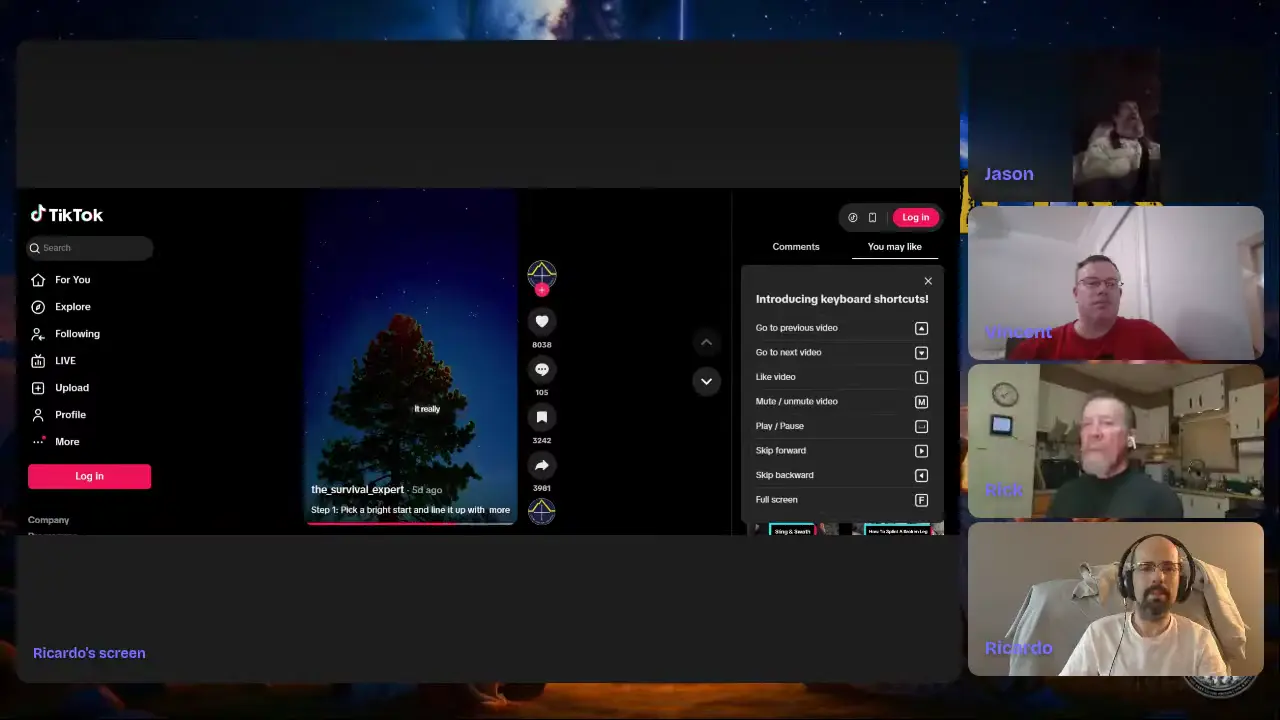
Key facts
- A bright star can be aligned with a fixed object to determine direction - if it moves left you're facing north, right facing south, up facing east, down facing west
- The Big Dipper (Ursa Major) has been traced for 15,000 years as a sign of good luck
- The Big Dipper rotates around the North Star at different times of year, pointing in different directions
- Ursa Major rotates at about one degree every four minutes and can be used as a clock
- Connecting the two stars at the end of the Big Dipper points directly to the North Star
- If Big Dipper isn't visible, look for Cassiopeia (a big W in the sky) to find it
Sources
Constellations: The Ancient GPS? - STEAM Newssteamnews.org
By connecting and extending the end stars of the Big Dipper, Polaris can be located in the Ursa Minor constellation, specifically in the asterism Little Dipper.
Using the Big Dipper to Find North - PreppingToSurvive.compreppingtosurvive.com
Simply trace a line between the last to stars of the “cup” of the Big Dipper. Follow that line approximately 4 and 1/2 times the distance between the two stars.
Star Navigation Guide: How to Navigate by the Starsreplogleglobes.com
And if the star has moved to the left, you are facing north and if it has moved to the right, you are facing south. This method is a simple way to navigate ...
For stargazers, the Big Dipper is a celestial compass, clock ... - Spacespace.com
Once you find Polaris, you're facing due north. Behind you is south; to your left is west and to your right is east. A clock. We can also use ...
Big Dipper - Wikipediaen.wikipedia.org
The Big Dipper (Canada, US) or the Plough (UK, Ireland) is an asterism consisting of seven bright stars of the constellation Ursa Major; six of them are of ...
Was this story useful?
Keep exploring
Every site on this page sits on the globe, and the people who research them are on the Discord.
3D Globe · Sites by country · Story Archive · Research Library · Weekly Journal · Search
AI-generated text · images from the original sources · always verify with the sources.