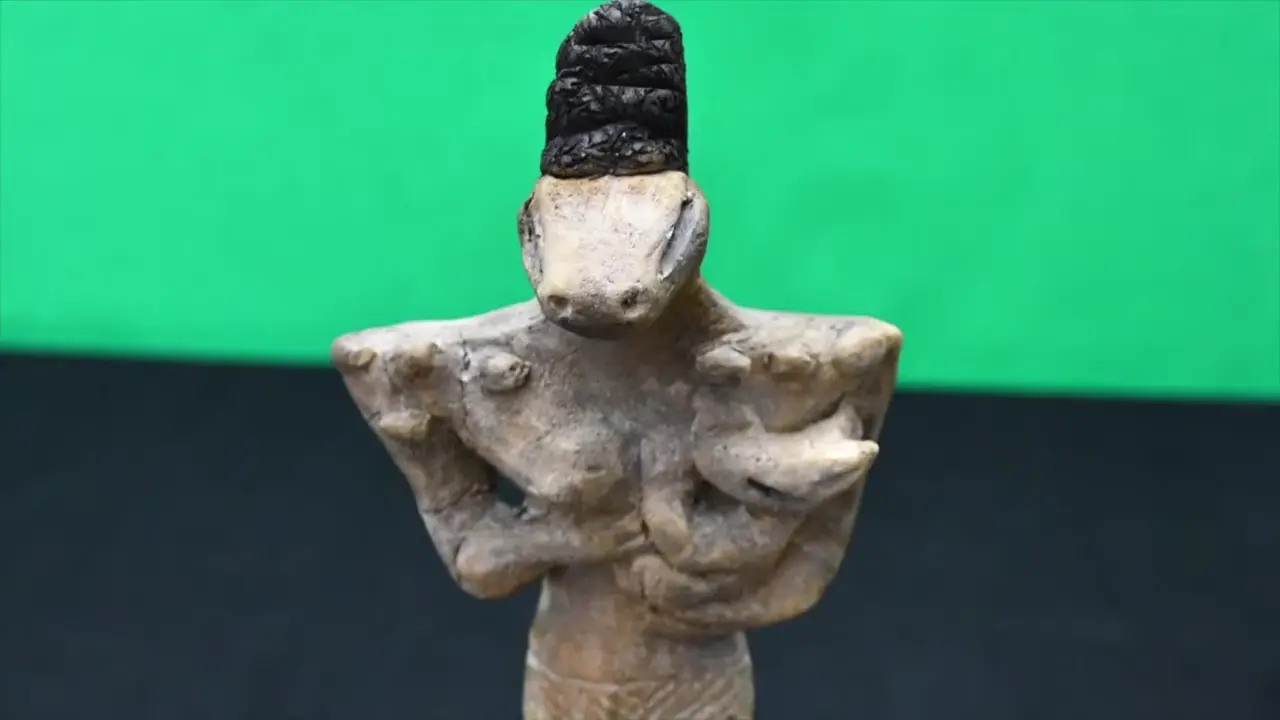
Key facts:
- Terracotta figurines with elongated heads and reptilian features are classified as Ubaid lizard (ophidian) figurines.
- They date to the 5th millennium BC and are associated with the Ubaid culture of southern Mesopotamia.
- Found at sites such as Eridu, many were discovered in domestic contexts, graves, or near temples.
- The figurines are 5–10 cm tall, often slender, and may represent youth, elite status, or ritual objects.
Sources
Enigmatic Ubaid Lizardmen: 7000-Year-Old Artifacts With Reptile ...howandwhys.comEnigmatic Ubaid Lizardmen: 7000-Year-Old Artifacts With Reptile Head Found In Iraq ... What do these lizard statues symbolize then? Some ...
Unraveling the Mystery of the Ubaid Lizard Figurines – Indrosphereindroyc.comNotably, the Lizard Figurines, with their unique reptilian features, suggest complex societal beliefs, including possible connections to ...
What is known about the Ubaid lizard-people figurines?history.stackexchange.comI find the Ubaid lizard-people figurines visually captivating. ... reptilian? (Going by the bug-eyes, snouts, and open nostrils, in the ...
Ubaid figurine resembling alien stumps archaeologists in Kuwaitfoxnews.comA strange alien-like clay head dating back thousands of years has been retrieved from an excavation in Kuwait, stumping archaeologists about how it came to be.
AI-generated text · images from the original sources · always verify with the sources.