

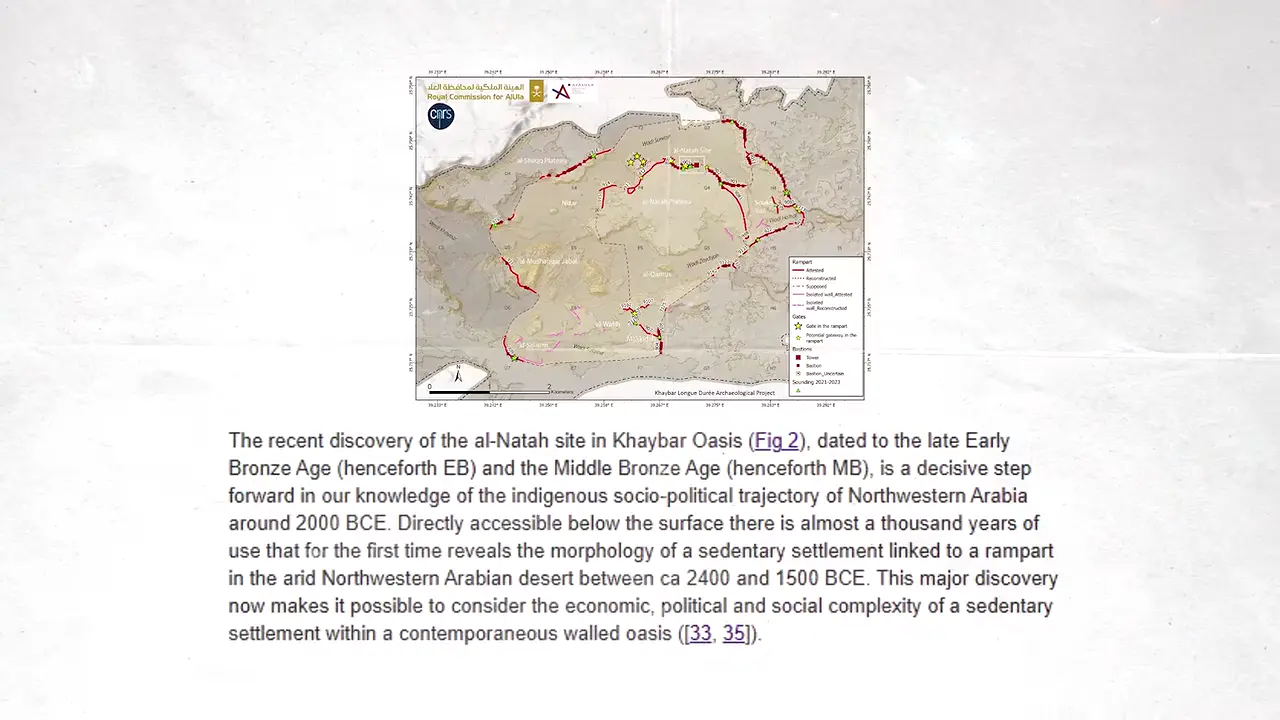
Al-Natah, in Saudi Arabia's Khaybar Oasis, was occupied from 2,400 to roughly 1,300 BC. This 2.6-hectare settlement had 50+ houses and around 500 people, situated within a walled oasis encircled by a some 14km defensive rampart. Standardized homes and no palaces suggest an egalitarian society. Researchers call it "slow urbanization" — a walled town abandoned possibly due to climate change.
Al-Natah fortified oasis settlement reveals walled Arabian society from 2400 BC
Site mentioned
📍 Al-Natah
Key facts
- Al-Natah is located in the Khaybar Oasis in northwest Saudi Arabia
- Occupied from around 2,400 BC until approximately 1,500 to 1,300 BC
- Covers an area of about 2.12 hectares with more than 50 houses and a separate administrative quarter
- Includes a necropolis with tall stepped tower-shaped tombs and a defensive rampart approximately 14 km long
- Peak population estimated at around 500 people
- Plain handmade pottery and standardized house designs suggest a relatively egalitarian society without palaces or royal tombs
- Described as an example of "slow" or "low urbanization" — a small walled town with city-like features on a micro scale
- The nearby walled oasis of Tayma was built in a similar manner, indicating Al-Natah was part of a larger regional civilization
- The settlement was abandoned between 1,500 and 1,300 BC, possibly due to climate change or water supply failure
Sources
archaeologymag.com
Linked in video description
copernicus.eu
Linked in video description
unige.ch
Linked in video description
Was this story useful?
Keep exploring
Every site on this page sits on the globe, and the people who research them are on the Discord.
3D Globe · Sites by country · Story Archive · Research Library · Weekly Journal · Search
AI-generated text · images from the original sources · always verify with the sources.