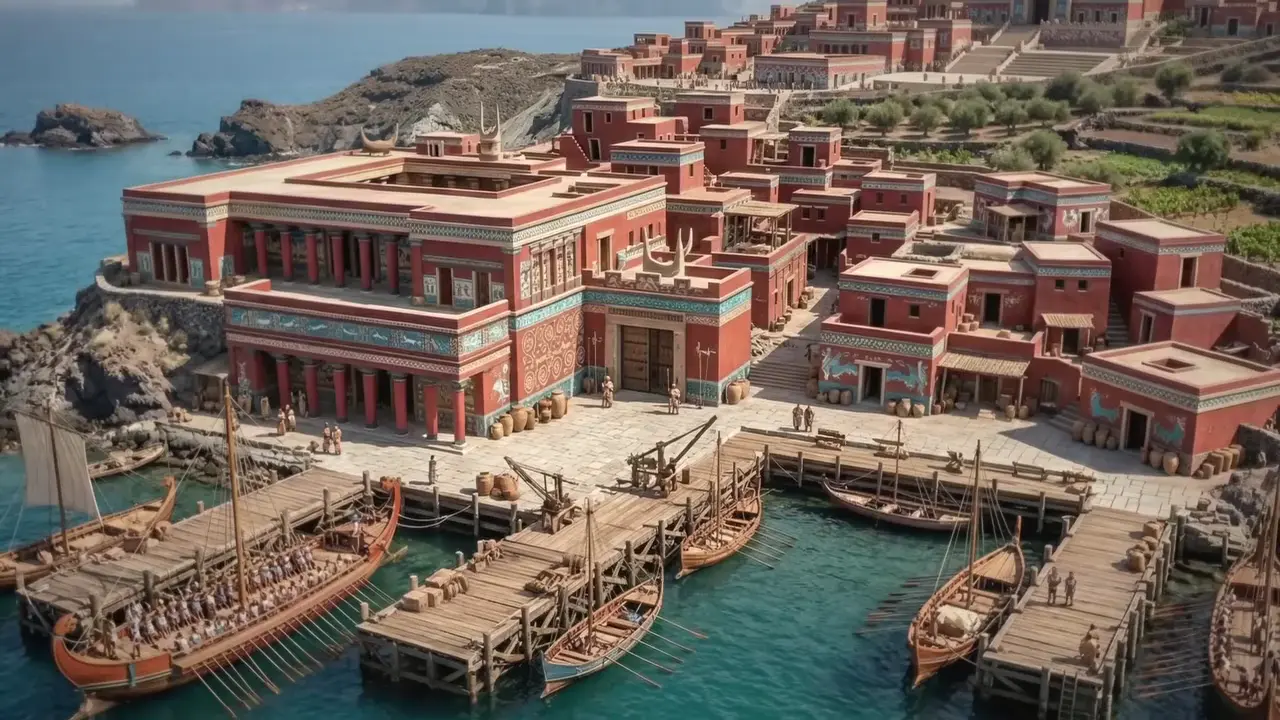
Akrotiri dominated Mediterranean trade from approximately 2600 BC onward, serving as a key redistribution hub for copper, and shipping goods throughout the Aegean. By roughly 2000 BC, it had become one of the wealthiest Bronze Age settlements in the Cyclades, redistributing bronze tools, olive oil, wine, and fine pottery. ⚒️🫒
Key corrections:
- Timeline revised: Akrotiri's peak period was primarily Late Cycladic I-II (c. 2600-2000 BC), with destruction around 1500 BC from a volcanic eruption
- Crete had access to copper sources and was not dependent on Akrotiri for copper supply
- Cyprus was the primary copper producer; Akrotiri served as an Aegean redistribution point rather than the dominant Mediterranean copper hub
Sources
Findings from 3,000-year-old Uluburun shipwreck reveal complex ...source.washu.eduBronze is primarily made from copper and tin. While copper is fairly common and can be found throughout Eurasia, tin is much rarer and only ...
Cyprus and Ugarit: A Tale of Two Late Bronze Age Mercantile Politiesanetoday.orgAmongst the more prominent and key components of materials exchanged between Cyprus and Ugarit are the pottery, metal items, and seals or seal ...
'Judges'-Period Israel a Hub of Mediterranean Trade, Lead Ingots ...armstronginstitute.orgA shipwreck discovery off Israel's coast reveals an ancient connection with Cyprus and Sardinia.
Cyprus—Island of Copper - The Metropolitan Museum of Artmetmuseum.orgCyprus was famous in antiquity for its copper resources. In fact the very word copper is derived from the Greek name for the island, Kupros.
Features - In the Time of the Copper Kings - January/February 2024archaeology.org... Cyprus was the most important producer of copper in the Mediterranean. Cyprus was so synonymous with the metal that the English word “copper” is derived ...
AI-generated text · images from the original sources · always verify with the sources.