

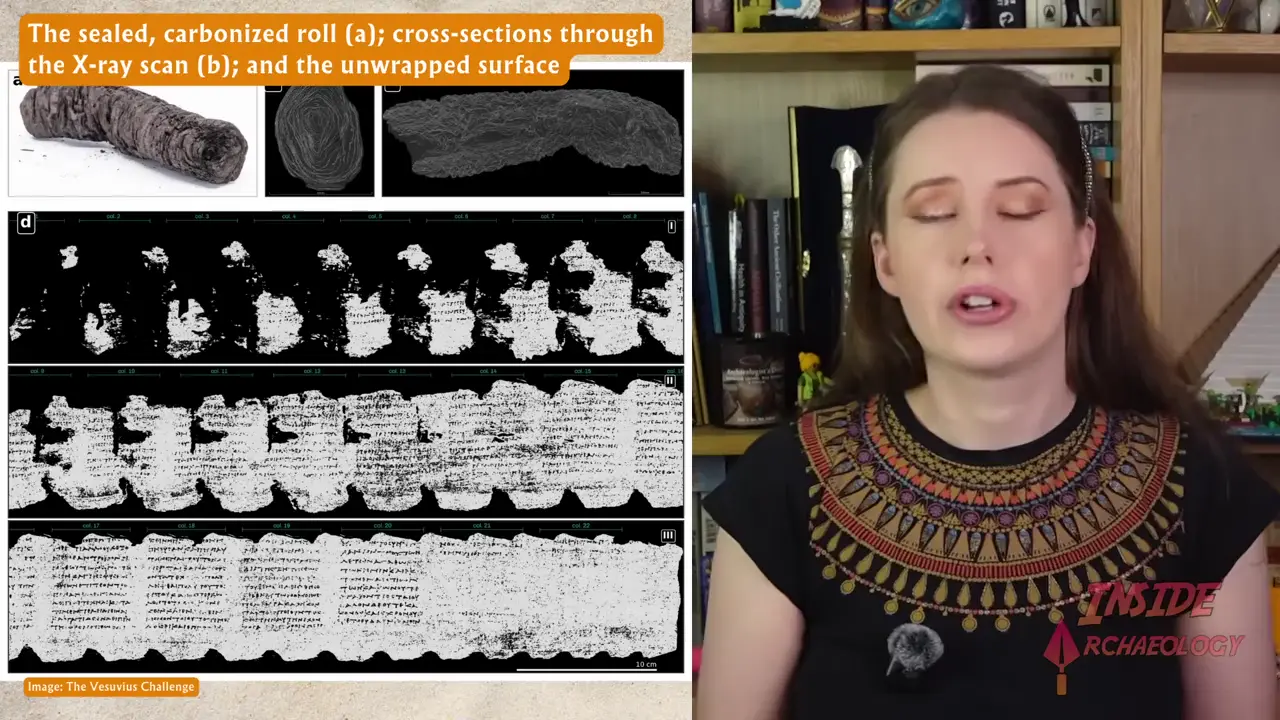
Prof. Brent Seales at the University of Kentucky pioneered virtual scroll unwrapping, launching the Vesuvius Challenge in 2023. X-ray scanning and machine learning now fully read scroll PHerc 1667 from the Villa of the Papyri—a 2nd-century BCE Stoic treatise referencing Aristocreon, nephew of philosopher Chrysippus. It's the first complete Herculaneum scroll read continuously end-to-end.
AI digitally unwraps first complete Herculaneum scroll, reveals Stoic text
Key facts
- The Villa of the Papyri in Herculaneum contains carbonized scrolls preserved since the eruption of Mount Vesuvius nearly 2,000 years ago
- Virtual unwrapping was pioneered by Prof. Brent Seales at the University of Kentucky in 2015, and opened to the world as the Vesuvius Challenge in 2023
- High-resolution X-ray scanning and machine learning were used to read the scroll known as PHerc 1667 end-to-end, the first time a complete Herculaneum scroll has been read continuously
- The recovered text is a Stoic philosophical treatise on ethics from the 2nd century BCE, referencing Aristocreon, nephew and disciple of Chrysippus
- Earlier milestones included identifying the first word 'porphyras' (purple), the title 'Philodemus on Vices Book 1', the location of Plato's grave in Athens, and the revelation that 'On Gods' was a multi-book work
Sources
nature.com
Linked in video description
Was this story useful?
Keep exploring
Every site on this page sits on the globe, and the people who research them are on the Discord.
3D Globe · Sites by country · Story Archive · Research Library · Weekly Journal · Search
AI-generated text · images from the original sources · always verify with the sources.