

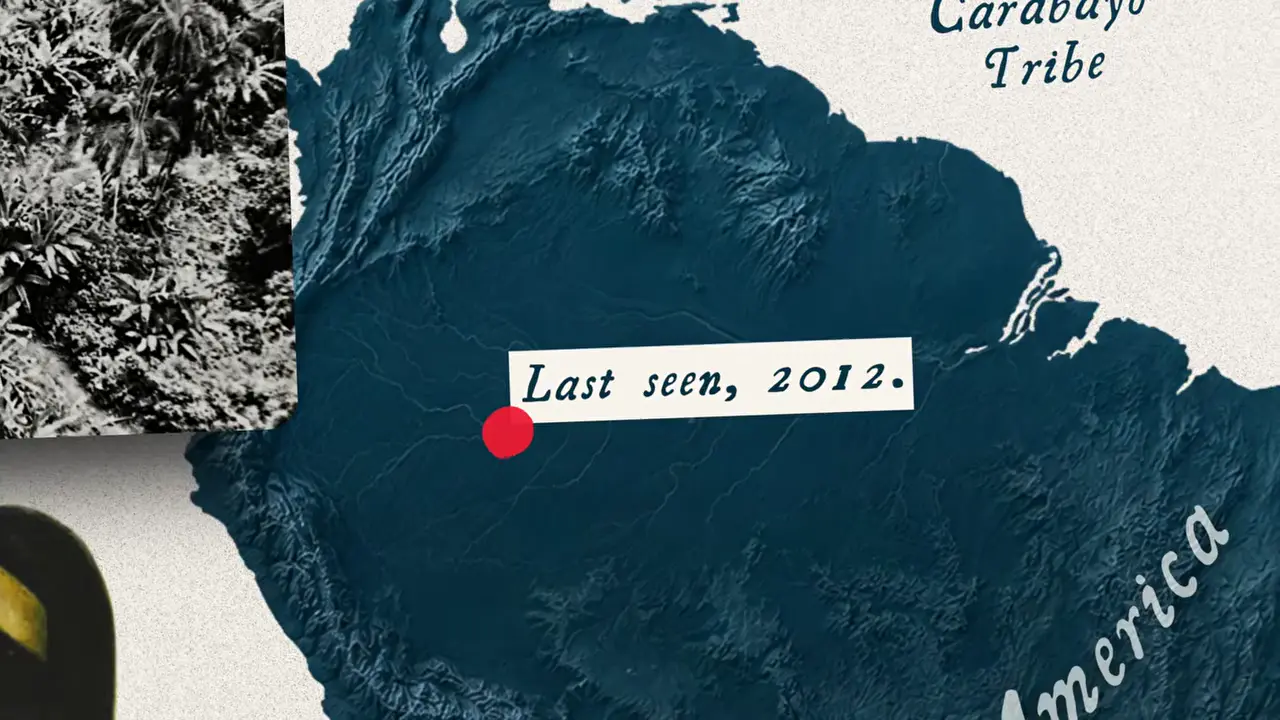
Colombia's national park between the Caqueta and Putumayo rivers was created in 2002 with a stated aim of protecting a people almost nobody had ever seen. The Carabobo are usually seen as descendants of the Yuri, and possibly the closely related Passe, who 18th- and 19th-century travellers described as large populations with their own languages along these rivers. The last known encounter with outsiders was in 1969 and was violent. Then around 2010-2012 aerial surveys spotted a large communal longhouse with a massive thatched roof ringed by small gardens — released in 2012, the first confirmation in decades they were still alive. 🛩️🌿
Aerial photos of Carabobo longhouse confirm group alive in 2012
Site mentioned
📍 Carabobo longhouse settlement
Key facts
- The southern third of Colombia is Amazonian forest; in the Amazonas department the Caqueta and Putumayo rivers flow east into Brazil, and in 2002 the Colombian government made the area between them a national park.
- The park's stated main purpose was to protect a people almost nobody had ever seen rather than to protect wildlife.
- The Carabobo are usually considered descendants of the Yuri and possibly of the closely related Passe; 18th- and 19th-century travellers and naturalists described the Yuri and Passe along these rivers as large populations with their own languages.
- Rubber company abuses along the Putumayo caused an international scandal in the early 1900s, after which the Indigenous groups disappear from the historical record.
- The last known meeting with outsiders occurred in 1969 and was violent: a trader and crew hunting animals for their pelts were confronted, and several people, including children, were captured and taken downriver to a modern settlement.
- Researchers noticed that words used by some captives resembled recorded Yuri vocabulary; some captives were returned to the forest and others are said to have died; there has been no ground contact since.
- Around 2010-2012 park officials and researchers flew over the forest and spotted a large communal longhouse with a massive thatched roof surrounded by small gardens, a house type characteristic of the northwestern Amazon that shelters several families at once.
- Colombia's National Park Authority released the photographs in 2012, the first confirmation in decades that the Carabobo were still alive.
- No official sighting has occurred since 2012.
- The video states their traditional Amazonian way of life has persisted there for at least 8,000 up to 10,000 years.
Sources
Creation and planning of the Yaigojé Apaporis Indigenous Reserve and ...panorama.solutions
Creation and planning of the Yaigojé Apaporis Indigenous Reserve and ...natureforall.global
Yaigojé Apaporis National Park | (Official GANP Page)national-parks.org
Was this story useful?
Keep exploring
Every site on this page sits on the globe, and the people who research them are on the Discord.
3D Globe · Sites by country · Story Archive · Research Library · Weekly Journal · Search
AI-generated text · images from the original sources · always verify with the sources.