

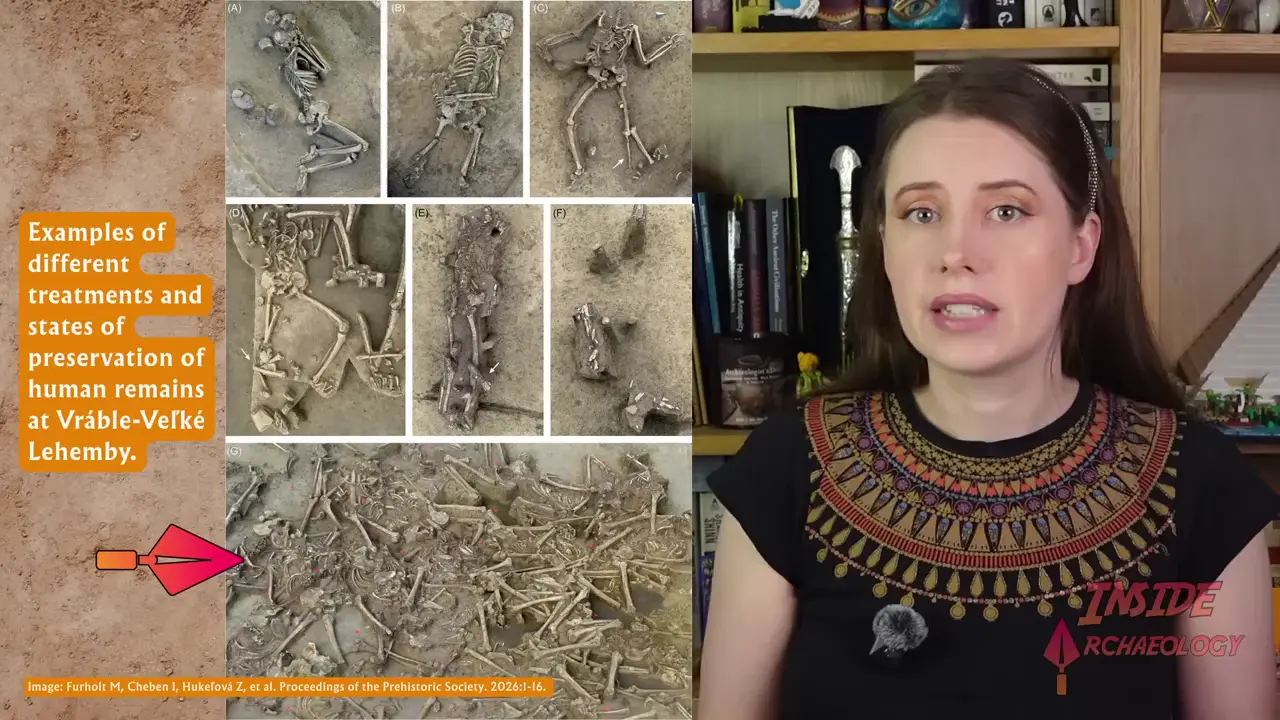
Archaeologists uncovered a mass grave at the Vráble Neolithic site in Slovakia, containing 77 headless skeletons among 78 buried—only a child retained their head. Cut marks suggest skilled post-mortem head removal with sharp knives. Explanations remain open: skull cult rituals, ancestor worship, head-hunting, massacre, or even plague. The lack of grave goods keeps the mystery alive.
7,000-year-old headless skeletons found in Neolithic mass grave in Slovakia
Key facts
- Mass grave discovered at Vráble, Slovakia, at the bottom of an enclosure ditch
- Vráble was occupied between 5,250 and 4,950 BCE and is one of the largest early farming settlements of the Linear Pottery culture in Central Europe, with at least 313 houses in three neighborhoods
- 77 of 78 skeletons were headless; the only exception was a child
- Cut marks indicate sharp knives, not axes, were used to remove the heads, and cervical vertebrae were often correctly aligned, suggesting skilled post-mortem removal rather than violent decapitation
- No grave goods were found; skeletons appear to have been tossed into the ditch in various positions
- Skull cult, ancestor worship, head-hunting, massacre, or plague remain possible explanations
Sources
nature.com
Linked in video description
Was this story useful?
Keep exploring
Every site on this page sits on the globe, and the people who research them are on the Discord.
3D Globe · Sites by country · Story Archive · Research Library · Weekly Journal · Search
AI-generated text · images from the original sources · always verify with the sources.