

Archaeologists uncovered a remarkable 35-meter circular water basin at ancient Pelusium in North Sinai, connected to the Pelusiac branch of the Nile. Used for at least 800 years from the 2nd century BC to 6th century AD, this structure blends Egyptian, Hellenistic and Roman architectural influences in one building. Evidence suggests it was a temple for water-based religious rituals, with a central platform likely supporting a large statue of the god Pelusius. The deliberate import of silt-rich Nile water supports the ritual interpretation, symbolizing themes of fertility, renewal and the cyclic regeneration of life tied to Egypt's agricultural foundation.
35m circular water basin temple discovered at Pelusium with 8 centuries of use
 EgyptExcavationSignificant Find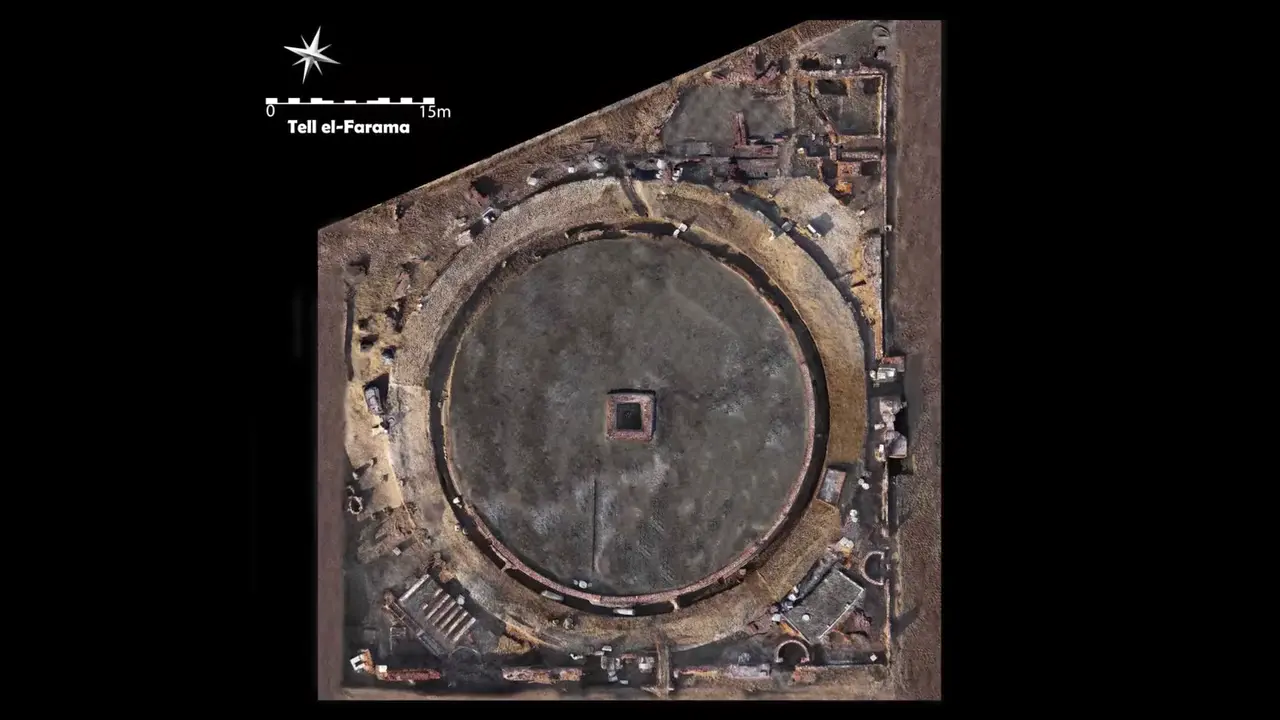
Site mentioned
Key facts
- 35m diameter circular structure discovered at Pelusium in North Sinai
- Structure is a water basin connected to the Pelusiac branch of the Nile
- Basin was filled with silt-rich water associated with god Palucius
- The structure was in use for at least 8 centuries from 2nd century BC to 6th century AD
- Central square platform likely supported a large statue of the god
- Three entrances on east, south, and west sides
- Structure shows Egyptian, Hellenistic and Roman influences combined in one building
- Silt was deliberately brought in, supporting ritual interpretation
- Archaeologists interpret it as a temple for water-based religious rituals
- Symbolized themes of fertility, renewal, and cyclic regeneration of life
- Name of city and god derive from Greek word Pelos meaning mud
- Connected to Nile's fertile sediment fundamental to Egyptian agriculture
Sources
Egypt discovers massive sacred basin and temple in North Sinaiegyptindependent.com
The temple features a massive circular basin, 35 meters in diameter, which was once connected to the Pelusiac branch of the Nile. This basin ...
News - Sacred Water Complex Unearthed in North Sinaiarchaeology.org
In antiquity, the circular basin, which measures 115 feet in diameter and is enclosed by red brick walls, was connected to a branch of the Nile, ...
Ancient temple found in Sinai desert after six years of diggingjpost.com
There, the basin was filled with “water loaded with Nile silt,” symbolically indicating the temple's connection to Pelusius, whose name was ...
Temple complex dedicated to local deity unearthed in Northern Sinaiheritagedaily.com
Archaeologists believe the basin once held water symbolically linked to the Nile's fertile silt, possibly reflecting the identity of the deity ...
A sacred basin in the sands: Pelusium's water temple rewrites historyenglish.ahram.org.eg
Connected to the Pelusiac branch of the Nile, it was filled with silt-rich water symbolically associated with the god Pelusius, whose name ...
Was this story useful?
Keep exploring
Every site on this page sits on the globe, and the people who research them are on the Discord.
3D Globe · Sites by country · Story Archive · Research Library · Weekly Journal · Search
AI-generated text · images from the original sources · always verify with the sources.