

Week of October 5: Harbin Cranium Confirmed as Denisovan by 95 Proteins, Göbekli Tepe Pillars Traced to Local Firat Limestone, and More
Two 2025 studies placed the Harbin cranium — presented in 2021 as Homo longi and at least 146,000 years old — within the Denisovan lineage, yielding 95 endogenous proteins in Science and Denisovan mitochondrial DNA from dental calculus in Cell. Geological study of Göbekli Tepe traced most T-shaped pillars to limestone outcrops roughly 600 m northwest of the oval buildings, with no bedding boundaries inside the pillars suggesting single-bed, horizontal extraction. A BYU survey team reconstructed Egypt's Seila pyramid at over 36 m base and about 23.4 m high, far exceeding the 6.8 m surviving ruin, while Cladh Hallan on South Uist yielded five centuries of domestic debris sampled at millimetre scale. Guyaju's Guantangzi "Golden Temple" emerged as its largest complex with eight chambers across two floors, though the site still has no secure chronology.
Two 2025 studies placed the Harbin cranium — presented in 2021 as Homo longi and at least 146,000 years old — within the Denisovan lineage, yielding 95 endogenous proteins in Science and Denisovan mitochondrial DNA from dental calculus in Cell. Geological study of Göbekli Tepe traced most T-shaped pillars to limestone outcrops roughly 600 m northwest of the oval buildings, with no bedding boundaries inside the pillars suggesting single-bed, horizontal extraction. A BYU survey team reconstructed Egypt’s Seila pyramid at over 36 m base and about 23.4 m high, far exceeding the 6.8 m surviving ruin, while Cladh Hallan on South Uist yielded five centuries of domestic debris sampled at millimetre scale. Guyaju’s Guantangzi “Golden Temple” emerged as its largest complex with eight chambers across two floors, though the site still has no secure chronology.
New Excavations & Fieldwork
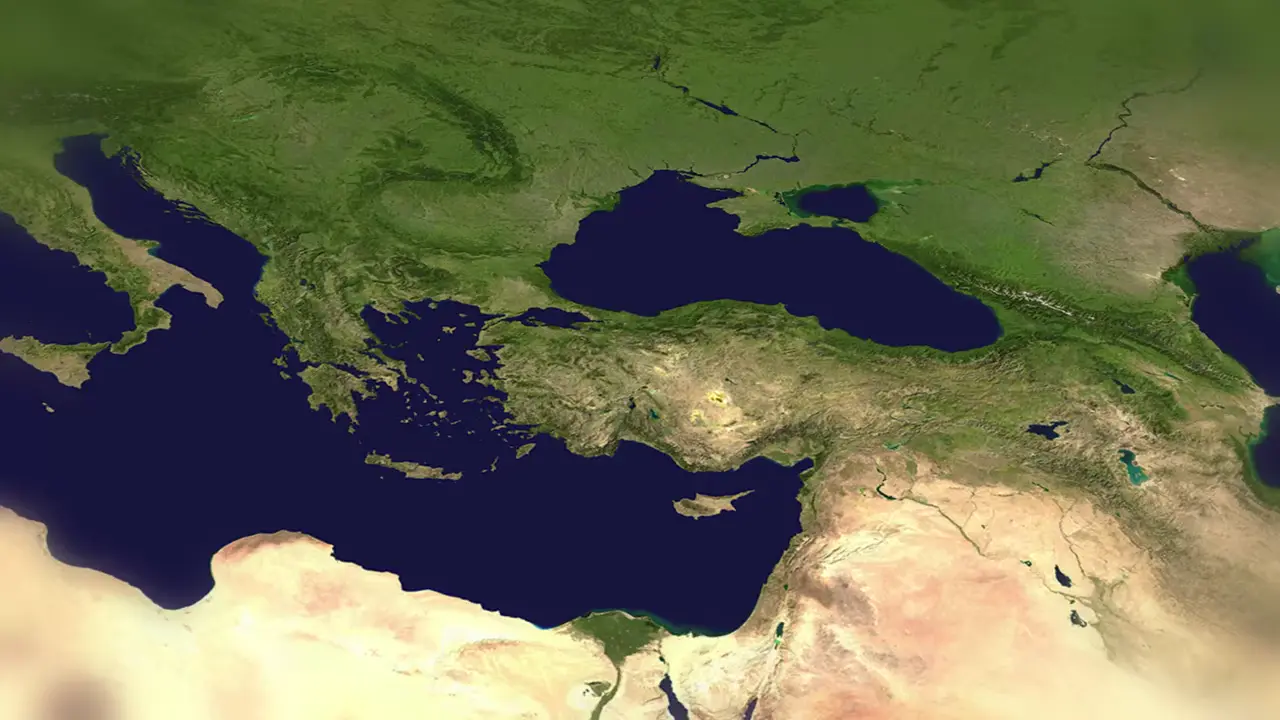
Cladh Hallan’s house floors preserve about five centuries of domestic traces, extending from the Later Bronze Age into the Iron Age, although the evidence does not demonstrate uninterrupted occupation. The reported South Uist recovery strategy combined 100% sampling with flotation on a half-metre grid, geochemical and magnetic sampling, soil micromorphology, and sieving to one millimetre. This assemblage included pottery, butchered mammal bone, shell, carbonised grain, copper, pumice, stone, bone, antler, flint, quartz, fired clay, and bronze—a broad mixture of food remains, artefacts, raw materials, and structural materials available for spatial analysis [V1].

Bioarchaeology & Ancient DNA
The 2025 molecular evidence places the massive Harbin cranium within the Denisovan lineage: a Science study recovered 95 endogenous proteins from the specimen, whose reported minimum age is at least 146,000 years, and used proteomic analysis to associate the individual with Denisovans [V2]. A separate 2025 Cell study reported Denisovan mitochondrial DNA from dental calculus associated with the Harbin individual [1]. These are distinct, complementary evidence streams—not one combined assay or an independent replication—and together they support assigning this particular individual to the broader Denisovan lineage without formally synonymizing Homo longi with Denisovans or establishing Denisovan ancestry for every fossil assigned to that name [2].
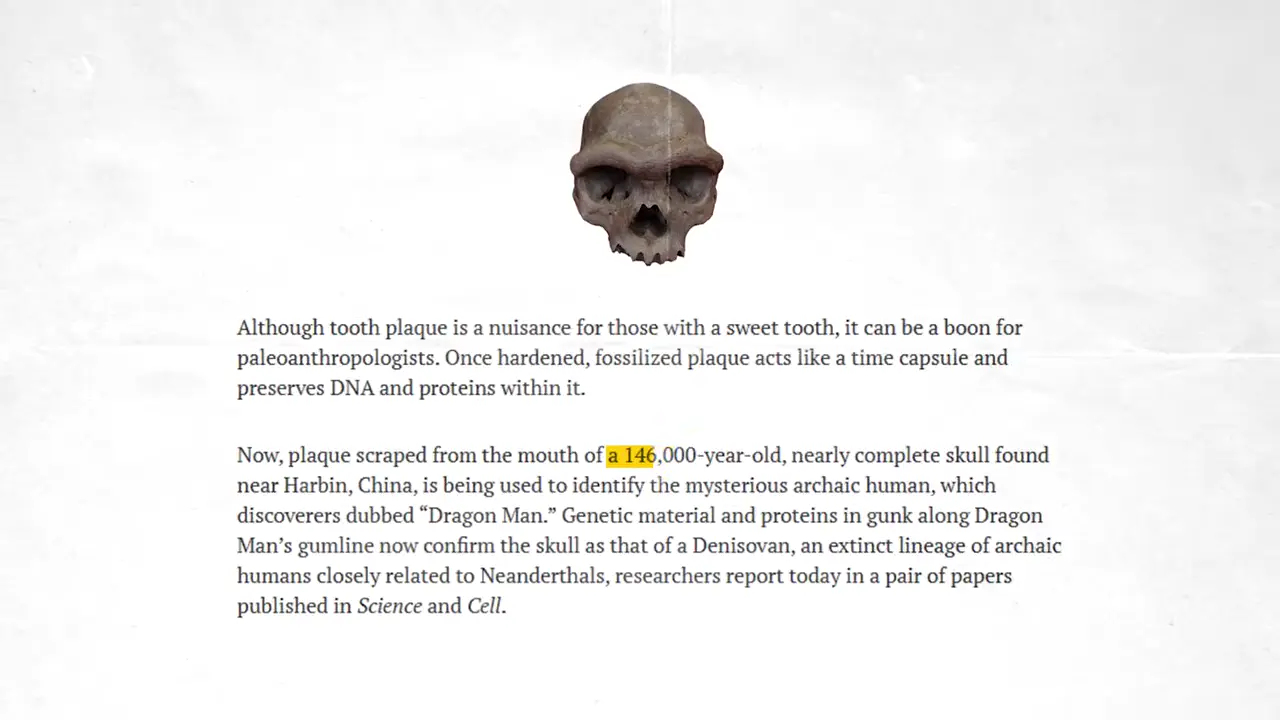
The tested fossil is the nearly complete cranium presented in 2021 as Homo longi. Its endocranial capacity was estimated at approximately 1,420 millilitres, making it larger than other known archaic-human crania, and the 2021 primary article was already titled “Late Middle Pleistocene Harbin cranium represents a new Denisovan” [4]. Later coverage described significant morphological similarities between the Harbin specimen and Denisovan remains [3]. The 2025 protein result therefore strengthens a morphological proposal that preceded it, while remaining an individual-level molecular assignment rather than a universal taxonomic conclusion.
Architecture & Monuments
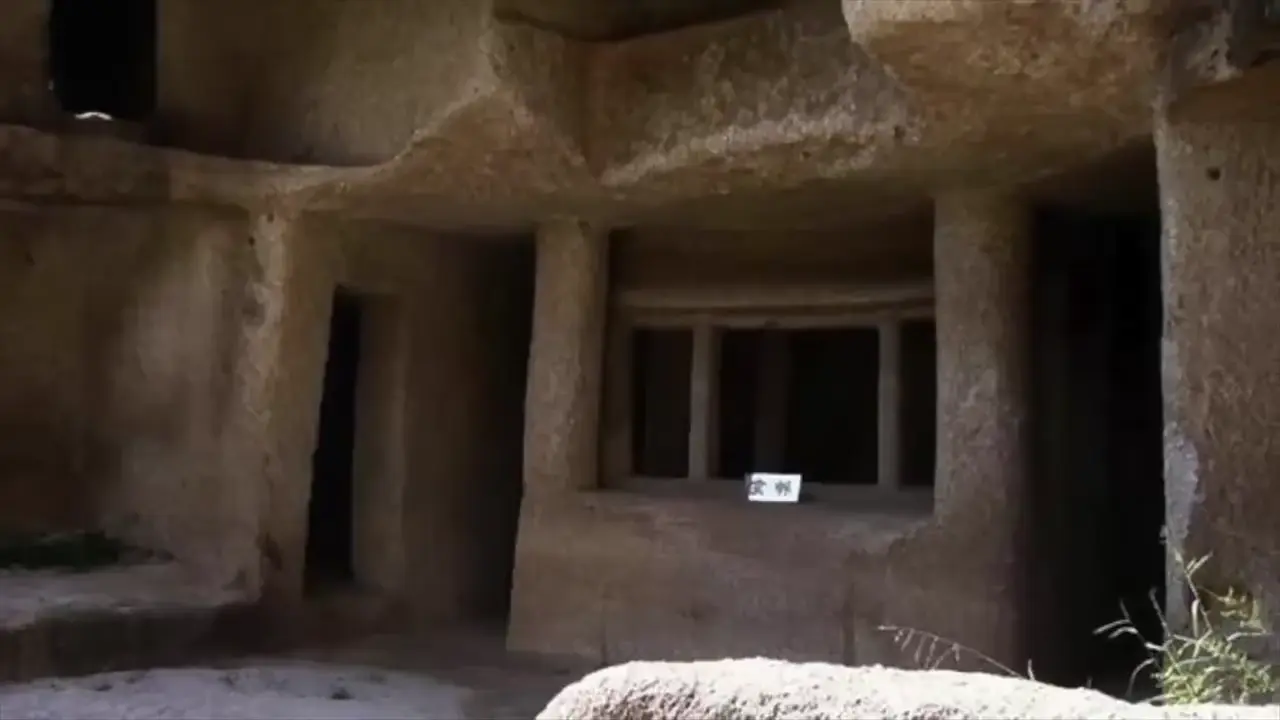
Guyaju’s defining mystery is chronological: within the supplied record, the site has no secure construction or occupation chronology and no dating consensus. A 1,000–2,000-year estimate, an “over 1,000 years old” headline, and a Tang attribution supply no calibrated dating evidence [V3]. Guantangzi (“Golden Temple”) is more clearly defined in architectural terms. It is consistently described as Guyaju’s largest or main complex, stands at the highest point, and comprises eight chambers across two floors. Beyond it, Guyaju is an extensive cliff-dwelling complex—called China’s largest known example as of 2016 and reported at approximately 100,000 square metres in one account [5].
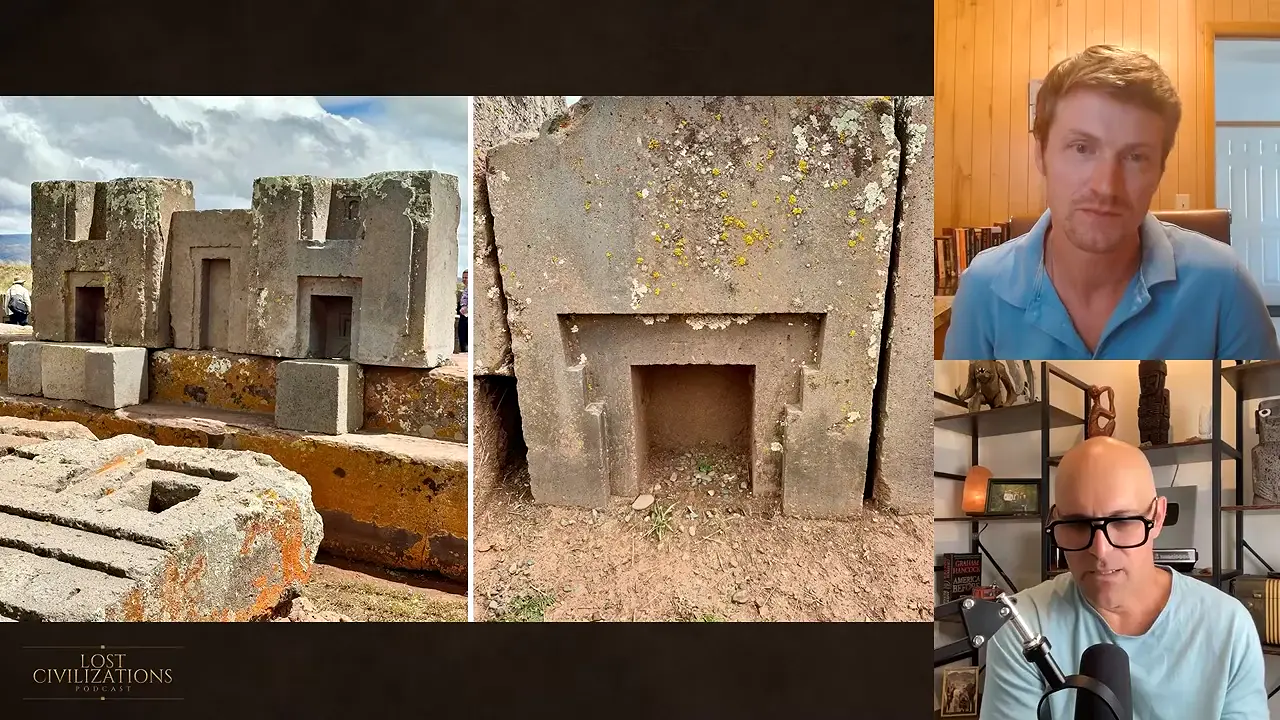
The supplied evidence does not justify treating claims of 100–500 tons for Pumapunku’s larger quarry blocks as confirmed weights. Finished andesite blocks are commonly estimated at approximately 20–40 tons, with some grey andesite blocks separately reported at 40 tons; crucially, the available record does not establish whether these figures were measured, calculated, or conventional estimates [V4]. Provenance is similarly uncertain. A quarry roughly 10 km away is reported to have supplied the red sandstone, but no petrographic, geochemical, or direct quarry-provenience evidence confirms that attribution. The Copacabana claim concerns grey andesite rather than all Pumapunku stone and remains a possibility rather than a demonstrated provenience. The distant and nearby sources therefore cannot be combined into a single established origin for the site’s masonry.
In Brief
The clearest conclusion is that Göbekli Tepe’s T-shaped pillars were carved from limestone obtained on the plateau adjoining the site, indicating a local raw-material source [V5] [V6]. This stone belongs to the Early Miocene Fırat Formation, a shelf-edge-bank or reef-type carbonate interpreted at formation scale as transgressing from north to south; the pillar material is white to cream, porous, and medium- to thick-bedded. The formation’s beds near the plateau range from approximately 10 to 130 cm thick and thicken upward, with the uppermost 90–130 cm beds proposed as the most suitable for extraction. Slightly inclined or nearly horizontal beds around the plateau margins are crossed by vertical and horizontal fractures, while dissolution along joints, cracks, and bedding planes has produced karst cavities, sinkholes, and springs.
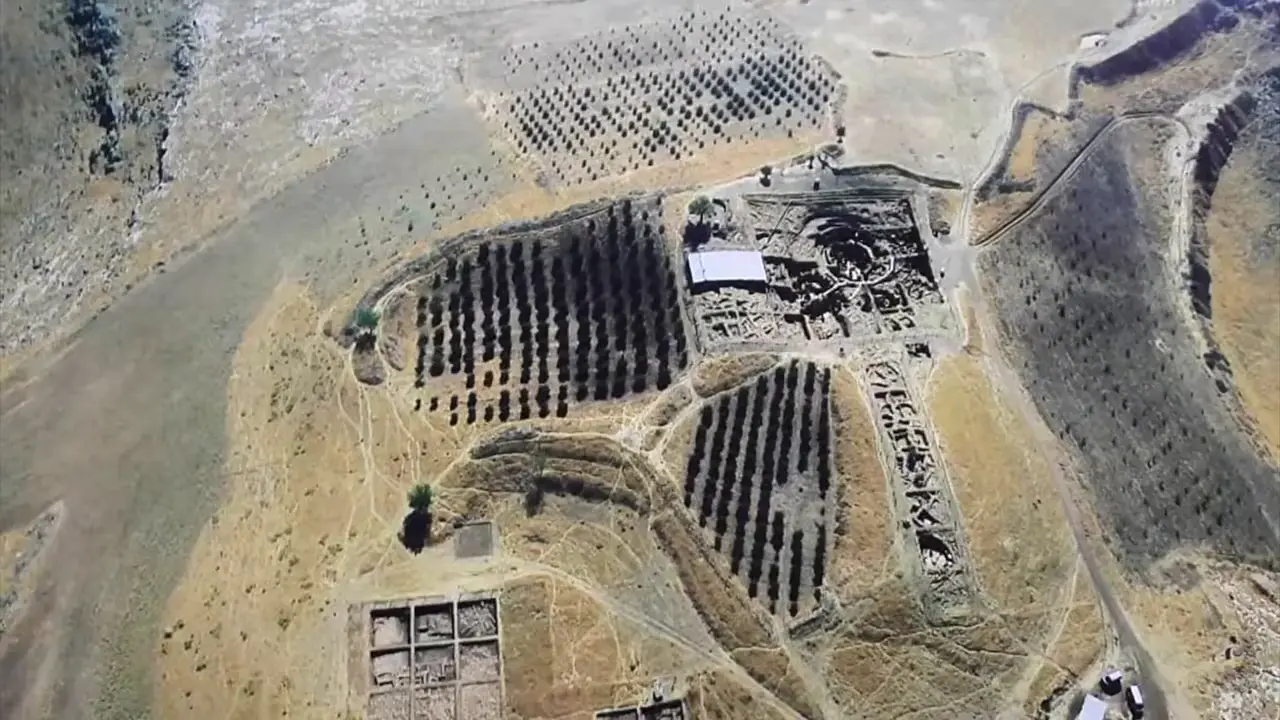
Most T-pillars are reported to have come from outcrops roughly 600 m northwest of the oval buildings. A summary of the 2022 geological study states that no bedding boundaries were identified inside the pillars, suggesting that each came from a single bed and was extracted horizontally rather than vertically; however, the primary observations and criteria were unavailable for evaluation. The proposed quarrying method involved shaping the top and one long side at an exposure, trenching down to a natural bedding plane, and using wooden wedges and beams to detach and lever out the block. Flint tools occur around quarry areas but are not directly associated with individual extraction events. Porosity may have facilitated working when saturated under wet Early Holocene conditions but made the stone extremely hard when dry, although this contrast lacks mechanical measurement. For scale, the central pair in Enclosure D is reported to measure 5.5 m and weigh approximately 8–10 metric tonnes [6].
Hisarlık’s identification with Troy owed its earlier archaeological investigation to Frank Calvert, not Heinrich Schliemann. A transaction in 1857 covered 2,000 acres described as including the site called “Ilium Novum,” while supplied accounts date Calvert’s exploratory work to 1860 and his excavation of ancient remains to 1863 and 1865. Although specialists disagree about the precise beginning of his work, they agree that Calvert explored Hisarlık before Schliemann arrived and deliberately tested it as Homeric Troy [7]. He then showed Schliemann the site; Schliemann financed and directed the major excavation, with Calvert participating, and the supplied accounts characterise the later campaign as primarily Schliemann-led.
The excavations and their successors exposed ruined fortification walls and, according to one summary, a large fortified citadel accompanied by a substantial lower town. That account also reports roughly 4,000 years of occupation and extensive destruction of archaeological evidence [V7]. These claims about the lower town, occupation duration, and destruction of archaeological evidence lack corroborating excavation reports in the supplied material, while visible wall or mound outlines in a modern image cannot establish a wall’s function, date, construction sequence, or destruction history [V8]. The Wilusa connection remains less firmly documented here: Hittite records are said to name Wilusa, identify it as the linguistic counterpart of Greek Ilios, and support a later scholarly identification with Troy, but the other snippets do not independently establish that textual and linguistic chain.
Petrie’s “relative geometry” makes precision relational rather than dependent only on flat surfaces or 90-degree corners. The term describes how precisely opposing faces correspond, how features align with one another, and how those relationships are proportioned to the object’s scale [V9]. For hardstone vessels, this means examining relationships among fitted-sphere centres and vessel centrelines, alignment among handles modelled as cylinders and toroids, and the relationship between a vessel bottom and a top reference plane—not merely whether an individual surface is flat or two edges meet at a right angle. In a hands-on metrology exercise, hardstone-vase wall thickness was consistent within “a couple thousandths of an inch” around the vessel body, providing a particularly fine measure of coordinated form.
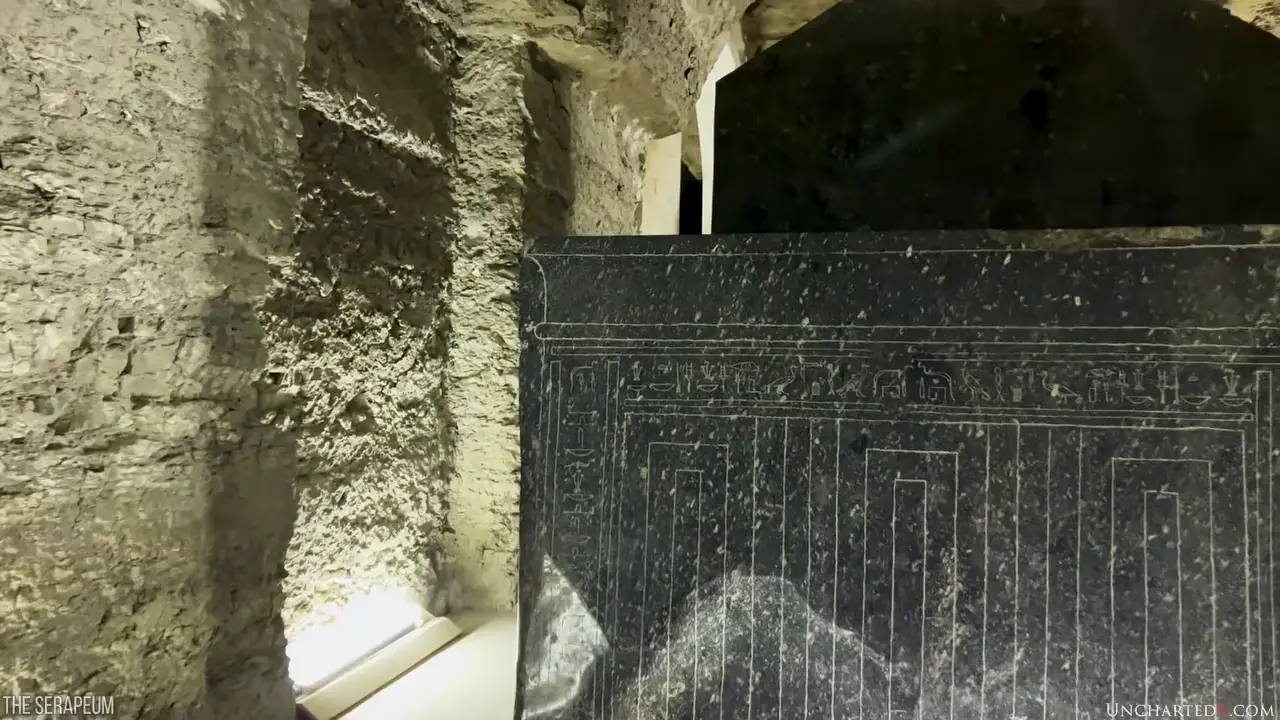
VaseCAN puts this approach at scale: the project has scanned roughly 200 ancient Egyptian hardstone vases at micron-level detail and fitted portions of them to spheres, toroids, cylinders, and cones. These segment-to-primitive relationships allow precision to be assessed across complex curved forms, while the scanning corpus extends beyond its initial set to vessels in the British Museum, the Museum of Fine Arts, Boston, and private collections. Thick, impermeable walls also had a practical role in preserving ointments and cosmetic oils [8], but that functional advantage does not by itself establish manufacturing precision or intentional geometric accuracy. Relative geometry therefore emerges not as a single linear measurement but as a coordinated assessment of centres, centrelines, curved components, and reference planes across a whole vessel.
Claims about winter-solstice illumination at Structure AB remain unverified: a supplied reconstruction reports an upright blade of light appearing beside the wall head after ten minutes, but the record contains no measurements or continuous observations establishing the presenter’s claimed 45-minute sunrise effect [V10]. The substantial bedrock-cut chamber measures approximately 7 by 6 metres and is 3.5 metres deep; a staircase connects it with neighbouring Structure AD [9].
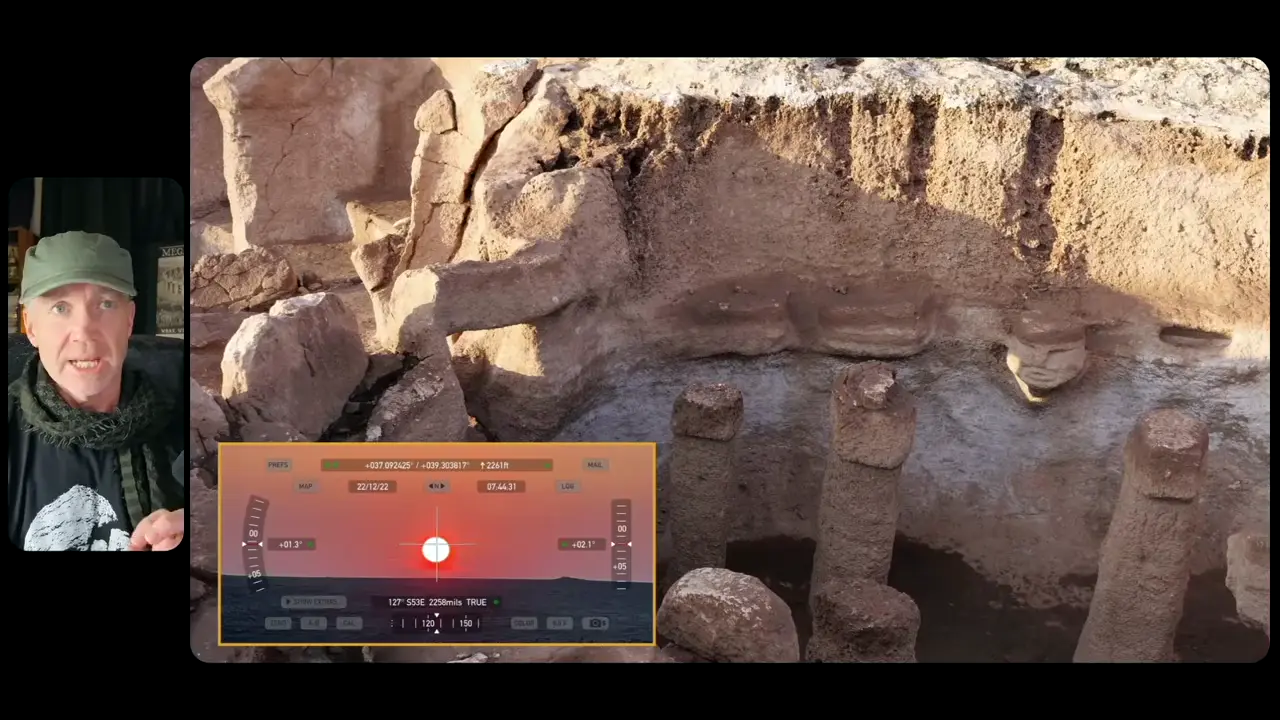
Phallus-shaped upright bedrock elements and a distinct carved wall or human head are repeatedly reported, but labels such as “pillar shrine,” “Pillar Room,” and “pillared gallery” do not establish a ritual or astronomical function. Even the number of uprights is unsettled: several descriptions report ten, another reports eleven, and the snippets do not resolve whether a separately inserted element explains the discrepancy. Chronology is similarly unclear: reconstruction material calls the alignment 11,400 years old, while another source gives a site-use interval of 9,400–8,200 BC, without explaining whether the dates concern different construction or use phases [10]. The description of Karahan Tepe as the “oldest known” alignment, including the asserted lead over Stonehenge, is likewise not independently substantiated by comparative data or archaeological measurements.
The Russell–Séguin “dinosauroid” was not a discovered fossil organism or an established evolutionary prediction, but a provocative alternative-evolution thought experiment [11]. Their 1982 paper presented a hypothetical Stenonychosaurus descendant and a documented, life-size model intended to stimulate debate and invite competing evolutionary solutions [12]. The video depicts the model as bipedal, with an enlarged skull, forward-facing eyes and grasping hands, although the supplied primary-paper excerpt does not independently establish every feature [V11].

The reconstruction began with a fragmentary Stenonychosaurus inequalis skeleton from Alberta’s Cretaceous Oldman Formation, interpreted as a small, probably fast bipedal theropod closely related to Saurornithoides mongoliensis [13]. That paper inferred relatively developed cerebral hemispheres, large eyes, fleet bipedalism, and raptorial forelimbs in Stenonychosaurus and its relative, but not the stronger assertion that it had the largest dinosaur brain-to-body ratio then known. Russell and Séguin attributed the taxa’s rarity to habitats seldom preserved in the stratigraphic record, although this remains their taphonomic interpretation rather than an independently demonstrated landscape reconstruction. Later scholarship disputes whether the model was scientific extrapolation or speculative fiction and notes Russell’s acknowledgement of possible design bias [14]. The video’s scenario—in which a surviving troodontid lineage attains human-like intelligence within a few million years—is not a finding of the 1982 study and lies outside accepted scientific consensus. A later reassessment also designates Troodon a nomen dubium, warranting caution when applying that genus to fossils underlying the reconstruction [15].
The clearest result is a reconstructed original, not a measurement of what survives: GPS mapping and structural analysis are said to indicate that Seila’s presumed fully cased pyramid exceeded 36 m at the base and stood about 23.4 m high [V12]. A four-person BYU team—three engineers and a student—mapped Seila and Meidum in 2009, although the supplied academic account does not include the survey results or reconstruction calculations [16]. Aeolian sand and removal of a western layer obscured the monument’s profile, making it look more rectangular and mastaba-like; Petrie’s roughly 7.6 m estimate and tentative Twelfth Dynasty attribution therefore concerned a damaged remnant rather than the proposed pyramid [18].
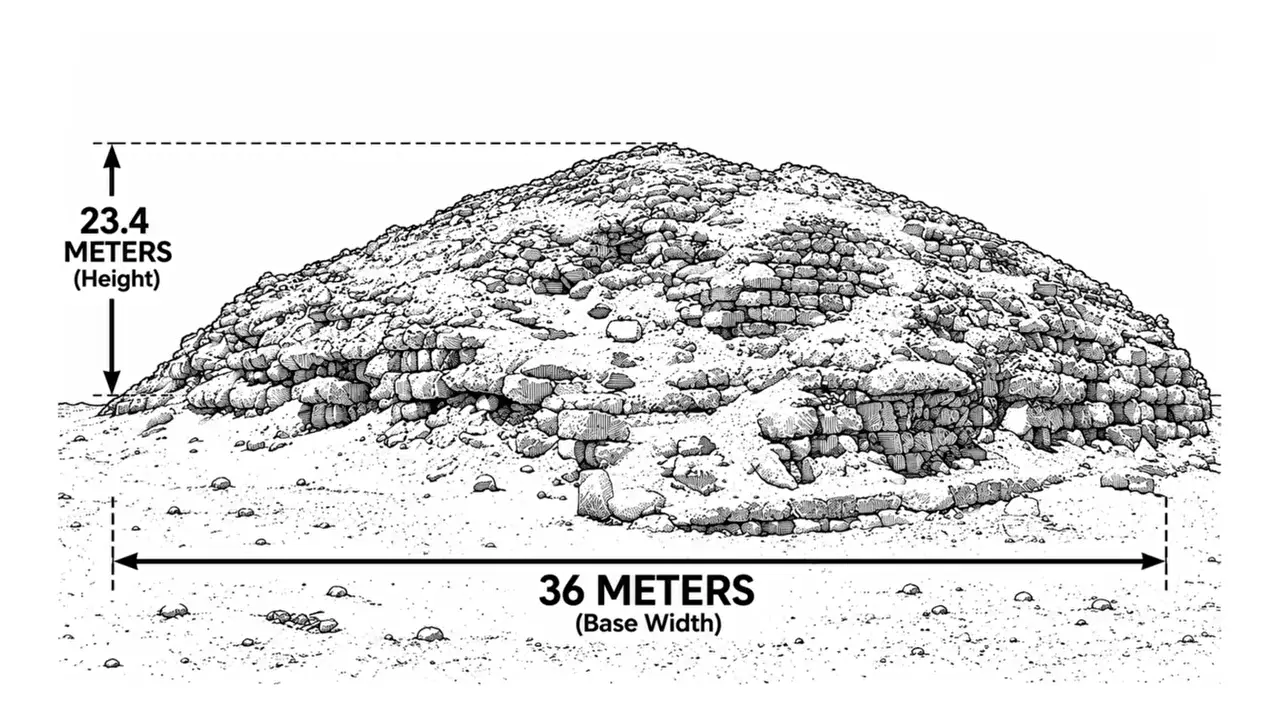
Standing on elevated terrain of Gebel el-Rus, on the eastern to northeastern side of the Fayoum between the oasis and Nile Valley, Seila is roughly 10 km west of Meidum. The exposed ruin is recorded at 6.8 m high, underscoring the difference between surviving fabric and reconstructed form. Excavation evidence indicates ritual activity on both the northern and eastern sides, including a northern altar, statue, and offering table, but the supplied excerpt gives neither their contexts nor construction phases [17]. Seila is often assigned to Sneferu and the early Fourth Dynasty; here, however, no royal inscription or independent dating evidence is supplied. A catalogue also places it among seven small step pyramids, but the excerpt offers no detailed architectural or excavation basis for that classification.
Hancock’s proposed connection is an argument, not a demonstrated event chain: he dated the Younger Dryas catastrophe to 12,800 years ago, linked it to cosmic impact, and invoked the 198 Tunguska event as an analogy [V13]. He described Tunguska’s meteorite as coming from a so-called “torrid meteor stream” and said it devastated 2,000 square miles of Russian forest; a separate profile reports only the broader comet-impact attribution, not the stream or damage estimate. Hancock extended the analogy to present-day risk, citing Randall Carlson’s work on impact frequency over the last million years and calling Earth-crossing objects a “highway” crossed with eyes closed. No recurrence rate, orbital calculation, or NASA programme record is supplied; the NASA history source gives only general Tunguska-style hazard context, not the stream or a Younger Dryas–Tunguska connection [20].

The Younger Dryas Impact Hypothesis describes a proposed extraterrestrial event around 12.8–12.9 thousand years ago—about 10,835 calibrated BCE—that may have initiated cooling and contributed to ecological and cultural changes. Supportive studies report anomalous boundary materials at about 50 Clovis-age North American sites, at Lake Cuitzeo, and at Abu Hureyra, including microspherules, meltglass, soot, carbon spherules, and iridium-bearing grains. Critical studies offer terrestrial, biological, taphonomic, or non-unique explanations; other work finds no lonsdaleite or nanodiamond spike and identifies no known Younger Dryas crater or direct impact indicator [19] [21]. The hypothesis remains sharply disputed, with no verified physical chain connecting Younger Dryas and Tunguska.
The video’s central claim is that polygonal masonry offered no construction-time advantage over ashlar: because each new stone had to be shaped only after its predecessor had been fitted, multiple teams could not prepare stones in parallel. It compares this scheduling bottleneck to the saying that nine women cannot make a baby in one month and argues that the technique’s payoff comes only after an earthquake or flood, when the extra labour is supposedly justified. These are attributed interpretations, not independently validated engineering results, and the supplied studies do not quantify that post-disaster benefit [V14].
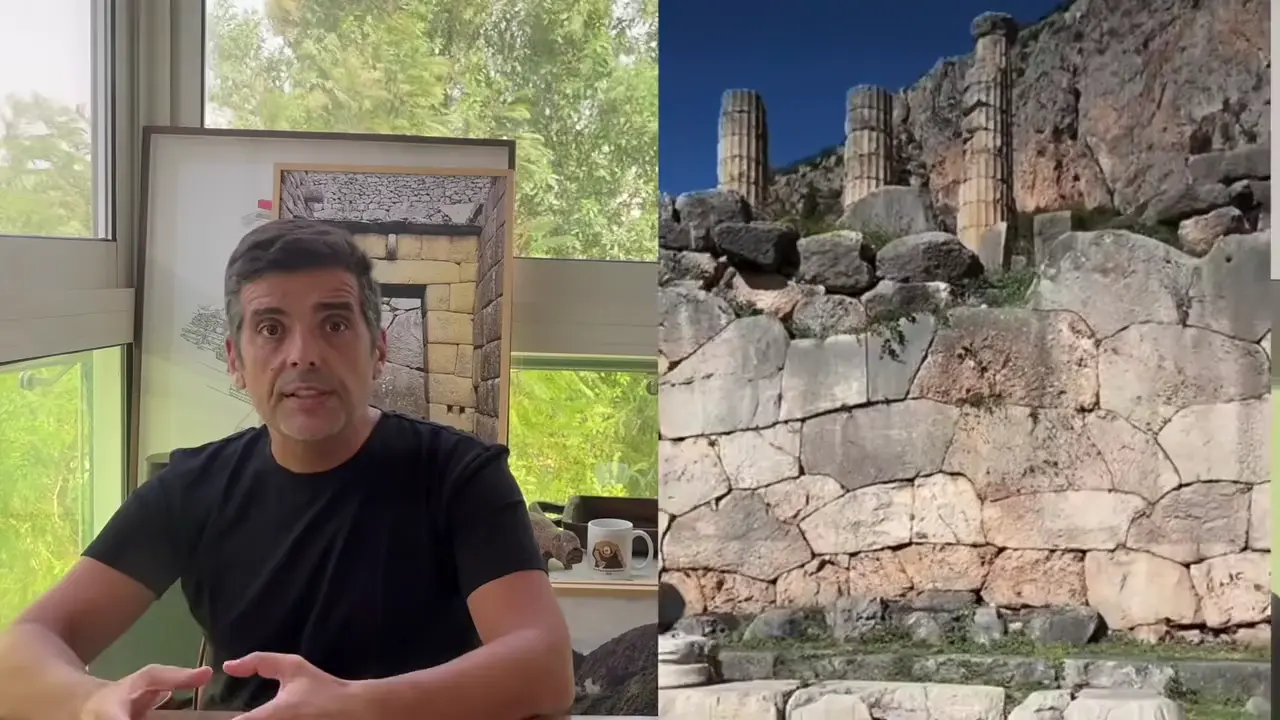
Evidence is firmer for ordered placement than for universal sequential shaping. A fabrication account describes large polygonal blocks assembled sequentially, with numbers identifying installation order, while reconstruction research treats sequence as a geometric design problem; a 2024 ASME paper proposes defining block shapes around installation order [24] [26]. At least one account describes lead-strip templates made from blocks already laid and used to guide the fitting of later stones, indicating a dependence on preceding geometry but not ruling out parallel preparation elsewhere [22]. The enormous, closely fitted blocks in the Peruvian examples—weighing from hundreds of kilograms to several tons, with curved interfaces meeting almost seamlessly—provide geometric context for sequence-sensitive fitting yet do not establish actual workflow or productivity [23] [25].
Sources
- Denisovan mitochondrial DNA from dental calculus of the > …
- The humanity of a new Denisovan
- Key evidence links Harbin individual’s nearly complete …
- Late Middle Pleistocene Harbin cranium represents a new …
- Guyaju Caves (Ancient Cliff Dwellings) - Beijing
- How did they do it? Making and moving monoliths at Göbekli …
- Frank Calvert and Heinrich Schliemann at Hisarlík
- A SMALL NAGADA HARD STONE VASE
- Karahantepe | Taş Tepeler
- Reconstructing Karahan Tepe’s 11400-year-old Winter …
- Dinosauroid
- Art, anatomy, and the stars: Russell and Séguin’s dinosauroid1
- A new specimen of Stenonychosaurus from the Oldman Formation (Cretaceous) of Alberta
- Russell and Séguin’s Dinosauroid - TSpace
- Art, anatomy, and the stars: Russell and Séguin’s …
- Excavations at the Seila Pyramid and Ritual Ramifications
- New Evidence from the Seila Pyramid
- Excavations at the Seila Pyramid and Ritual Ramifications
- Comprehensive analysis of nanodiamond evidence relating to the Younger Dryas Impact Hypothesis
- 115 Years Ago: The Tunguska Asteroid Impact Event
- The Younger Dryas impact hypothesis: a cosmic catastrophe
- Polygonal masonry - Wikipedia
- (PDF) Peruvian polygonal masonry: how, who, when and …
- (PDF) Fabrication Methods of the Polygonal Masonry …
- (PDF) Peruvian polygonal masonry: how, who, when and …
- Finding Installation Sequence of Polygonal Masonry …
Videos
V1. The Prehistory Guys — “Cladh Hallan: Living with the Dead in the Bronze Age Outer Hebrides” V2. Michael Button — “Something Doesn’t Add Up About the Denisovans” V3. Ancient Architects — “UNSOLVED MYSTERY: The Unknown Origins of the Guyaju Caves in China” V4. Matthew LaCroix — “One Symbol Connects Bolivia, Turkey, India and Egypt” V5. Ancient Architects — “MYSTERY SOLVED: How the Göbekli Tepe T-Pillars were Quarried & Made” V6. Ancient Architects — “MYSTERY SOLVED: How the Göbekli Tepe T-Pillars were Quarried & Made” V7. Michael Button — “Ancient Myths Are Hiding Something We Didn’t Expect” V8. Viking Superpowers — “UFOs and Contact in the Ancient North” V9. UnchartedX — “Precision machined granite artifacts on the Giza Plateau - the Cornice and Couch blocks!” V10. MegalithomaniaUK — “Join me in Austin for the Quest for Ancient Civilizations Conference | Hugh Newman” V11. The Archivist’s Journal — “David Grusch: Reptilians Are At WAR With The Grays & Humans Are Stuck In The Middle” V12. Anyextee — “Sneferu’s Forgotten Fourth Pyramid: Egypt’s Pyramid Mystery” V13. DeDunking — “Graham Hancock, Georges St Pierre Tyler Engle Discussion GSP” V14. One-eyed giant building walls — “Why Ancient Civilizations Suddenly “Evolved Backwards” 🗿📉”
Keep exploring
Every site on this page sits on the globe, and the people who research them are on the Discord.
3D Globe · Sites by country · Story Archive · Research Library · Weekly Journal · Search