

Week of August 31: 476,000-Year-Old Wooden Structure Found, Dire Wolf Pups Born, and More
Archaeologists at Kalambo Falls on the Zambia-Tanzania border uncovered the oldest known wooden structure, with two interlocking notched timbers dated to approximately 476,000 years ago. Colossal Biosciences announced the birth of three genetically engineered dire wolf puppies, while Chinese researchers identified 232 carved symbols across more than 1,000 ceramic vessels from the Lianshi site in Hubei province, dated to approximately 5000 BC. A Griffith University team led by Paul Taçon also documented 14 new thylacine paintings in Arnhem Land, some depicting the animals as hunting partners.
Archaeologists at Kalambo Falls on the Zambia-Tanzania border uncovered the oldest known wooden structure, with two interlocking notched timbers dated to approximately 476,000 years ago. Colossal Biosciences announced the birth of three genetically engineered dire wolf puppies, while Chinese researchers identified 232 carved symbols across more than 1,000 ceramic vessels from the Lianshi site in Hubei province, dated to approximately 5000 BC. A Griffith University team led by Paul Taçon also documented 14 new thylacine paintings in Arnhem Land, some depicting the animals as hunting partners.
Artifact Discoveries
At Kalambo Falls Site A, on the Kalambo River at the Zambia-Tanzania border near the southeast end of Lake Tanganyika, archaeologists have uncovered the oldest known wooden structure [2] [V1] [4] [1] [3]. Two timbers, deliberately notched to interlock, date to approximately 476,000 years ago, placing the find firmly in the Middle Pleistocene. Published in Nature in 2023 by L. Barham and colleagues under the title “Evidence for the earliest structural use of wood,” the find reveals that pre-sapiens hominins engaged in deliberate planning and woodworking. Researchers tentatively interpret the structure as a platform that may once have stood beside a water source.

Although wood had been recovered from Kalambo’s Acheulean horizons during 1950s–1960s excavations, taphonomic processes had stripped those earlier specimens of any evidence of deliberate working [2]. Because the deposits exceed the range of radiocarbon dating, luminescence techniques have been used to establish the site’s chronology, with the oldest sedimentary package containing Mode 2/3 horizons dating to roughly 500–300 thousand years ago. Kalambo Falls preserves an occupation record spanning over 447,000 years, bridging the Acheulean (Mode 2) and early Middle Stone Age (Mode 3) within a Middle Pleistocene technological context.
Remote Sensing & Technology
Among the anomalies identified, Akers interpreted a large isolated feature near the center of the scans as a freestanding metallic object approximately 40 m (130 ft) long. The smooth outline of this object led to informal comparisons with “tic tac”-shaped UFOs, though no extraterrestrial claim was formally made. Akers’ scanning technology is described as military-grade and was later deployed in a year-long research project at Montana Megaliths with Andrew Barker. It is worth noting that a separate, academic-style expedition, funded by NRIAG and Ghent University, also reportedly “re-discovered” the lost labyrinth at Hawara — an effort distinct from the Akers/Merlin Burrows satellite-scan work [5].

Bioarchaeology & Ancient DNA
On April 7, 2025, Colossal Biosciences, a Dallas-based de-extinction company, announced the birth of three genetically engineered puppies described as dire wolves, with two born on October 1, 2024 and a third on January 30, 2025 [6] [V2]. Notably, under Colossal’s own definition, de-extinction can include producing an organism that merely resembles an extinct species, so visible resemblance alone does not constitute a complete test of species identity. The New York Times reports that the animals will remain in captivity, and Colossal frames this work as part of molecular paleontology involving the recovery of ancient proteins and other biomolecules from fossils.

Architecture & Monuments
Tucked into the grounds of Ōshiko Jinja shrine in Takasago, Hyōgo Prefecture, in the eastern Kakogawa Estuary of Harima, Japan, sits a colossal monolith carved directly from local bedrock [8] [7]. A rough consistency check using these dimensions and a typical tuff density of about 2.0 t/m³ yields a mass near 525 tons, broadly matching the lower bound. Archaeological surveys and LiDAR scanning place the carving in the late Kofun period, roughly 1,400 years ago [V3]. The stone bears a chiseled nub on one side and is widely interpreted as an unfinished stone chamber, abandoned mid-quarry.
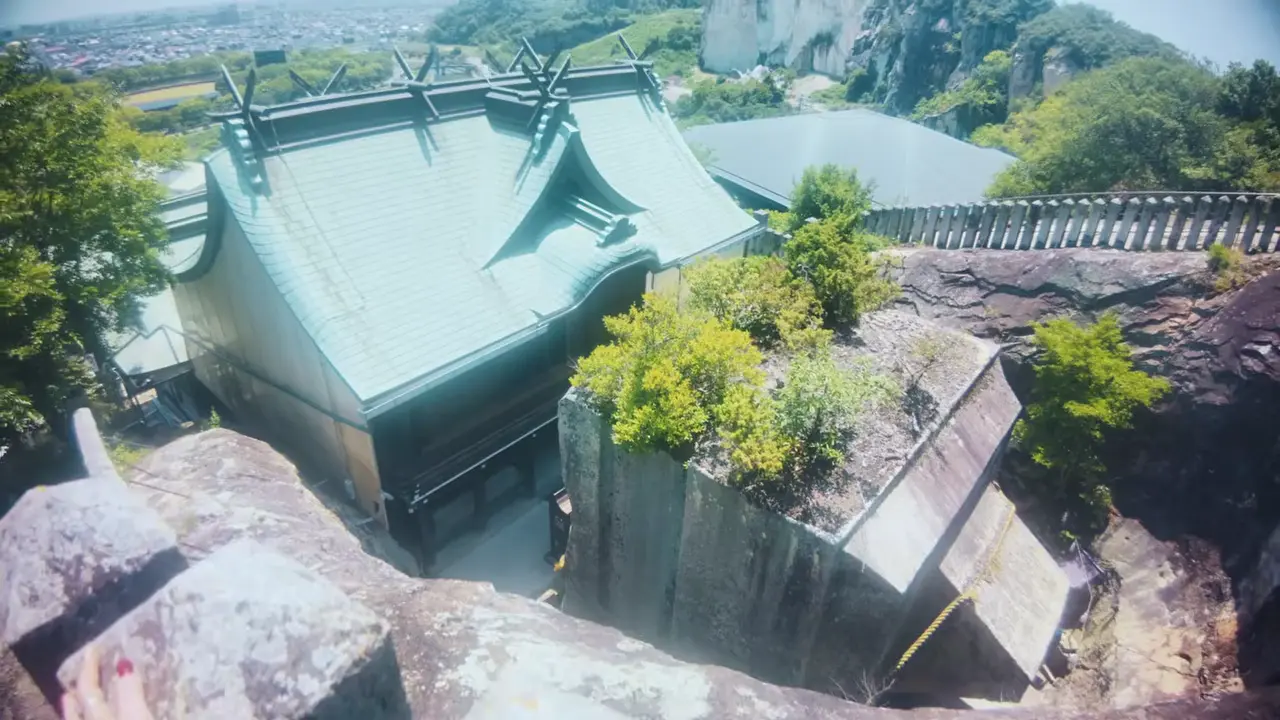
This optical effect is reflected in the site’s poetic alternative name, Ame no Ukiishi (天の浮石), or “floating stone of heaven” [V3]. Centuries after the carving ceased, an 8th-century shrine was established at the site to venerate the stone [9]. The meaning of the name “Hōden” remains unsettled: it is glossed as “heirloom” in one popular source, but is more conventionally read in Japanese as “treasure hall,” with no academic adjudication between the two readings.
Located on the western edge of Tell es-Sultan in the West Bank, the tower was part of a fortified settlement whose occupation history extends back to the Natufian Culture by at least 10,000 BC. The tower contained an internal staircase, and Ancient Jericho itself featured formidable defenses of stone foundations and mudbrick walls added to and rebuilt across many centuries of occupation [V4]. Remarkably, for roughly 5,000 years after its construction, this tower remained the tallest known man-made structure in the world, until approximately 2650 BC. UNESCO has recognized the site as one of the oldest known monumental buildings, exemplifying shared architectural traditions from the 9th to 8th millennium BC.
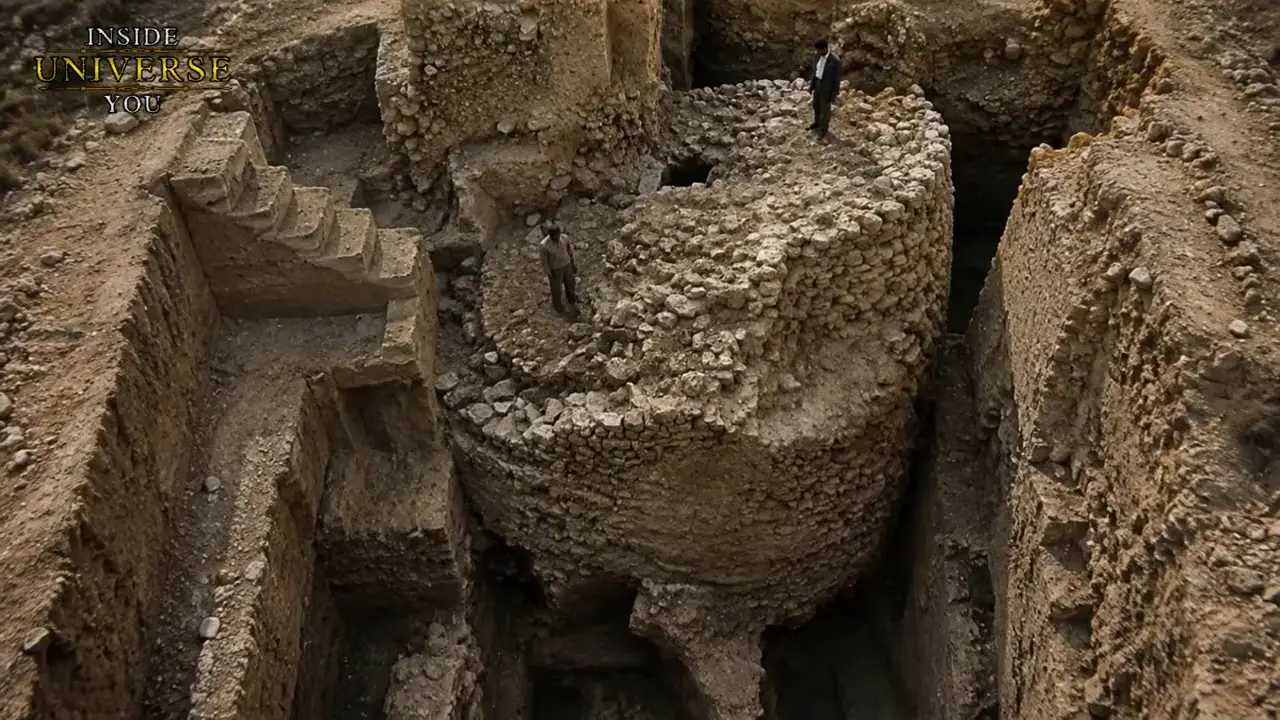
The staircase is specifically oriented toward a nearby mountain and appears to align with the setting sun around the summer solstice, suggesting the structure may have been built to exploit symbolic shadow phenomena and the Neolithic residents’ primeval fears of seasonal darkness [V4].
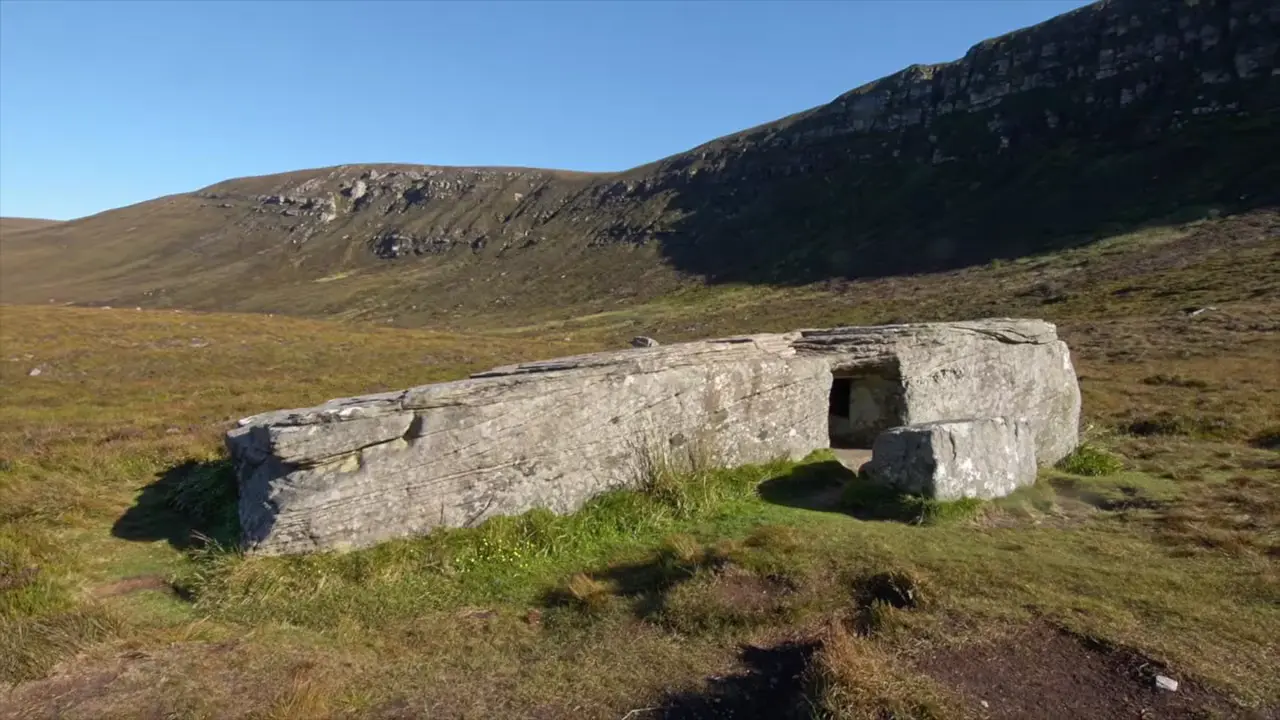
Despite its significance, no archaeological excavation has ever been undertaken at the site, leaving questions about its period and purpose largely unanswered. A peer-reviewed paper specifically addressing these questions exists in the Proceedings of the Society of Antiquaries of Scotland (vol. 70), though its substantive content could not be assessed. About 30 m behind the tomb lies a separately dressed sandstone block, approximately 1 m wide with a finely worked face, which may represent an unfinished entrance-blocking stone [12] [10]. The interior side compartment contains a stone “pillow” bearing graffiti, the earliest dated inscription being ‘H Ross’ from 1735, alongside a notable engraving by geologist Hugh Miller from 1846 [11].

Inscriptions & Texts
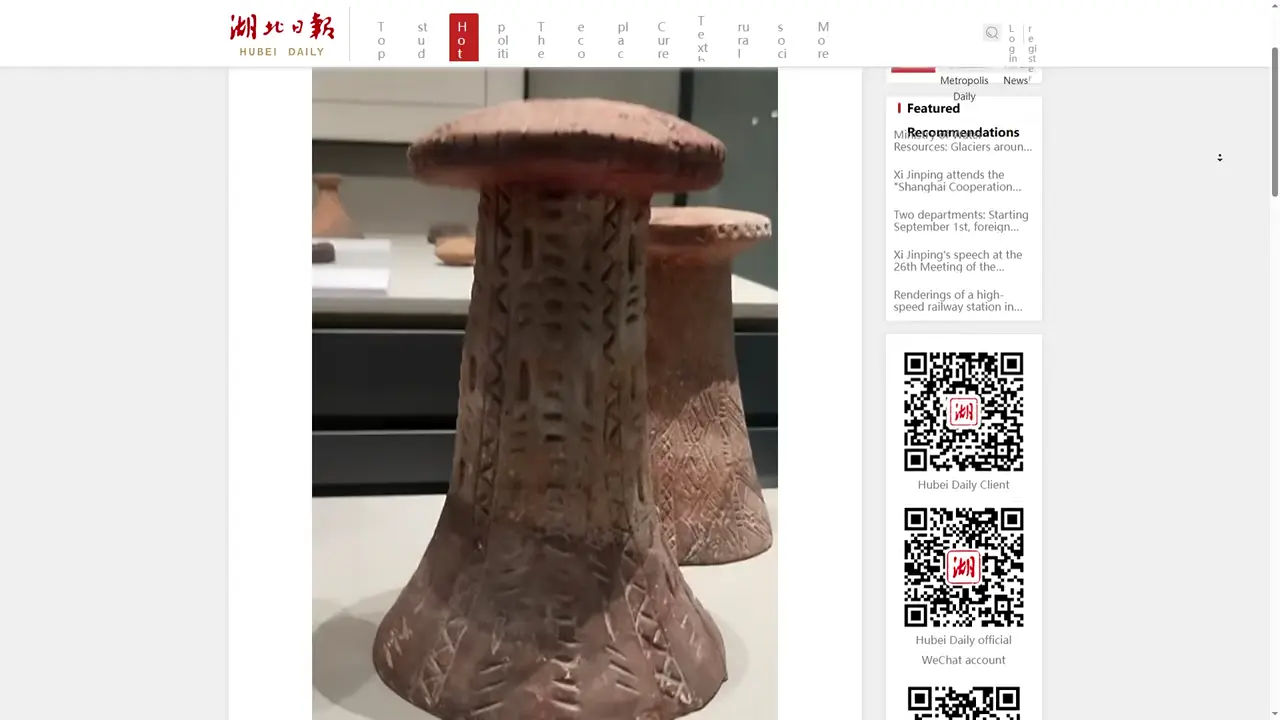
In October 2025, Chinese researchers announced the identification of 232 carved symbols across more than 1,000 ceramic vessels from the Lianshi site in Zhuguang County, Hubei province, dated to approximately 5000 BC [V5]. The pottery was originally excavated in 1998 and 1999 as rescue work ahead of flooding for the Three Gorges Reservoir, then stored for decades before researcher Fang Xi led systematic analysis of the assemblage, with results reported through Hubei Daily and Global Times. Located several hundred kilometers south of Jiahu along the middle Yangzi, Lianshi now occupies the same broad chronological neighborhood as that famous site.
Ancient Art
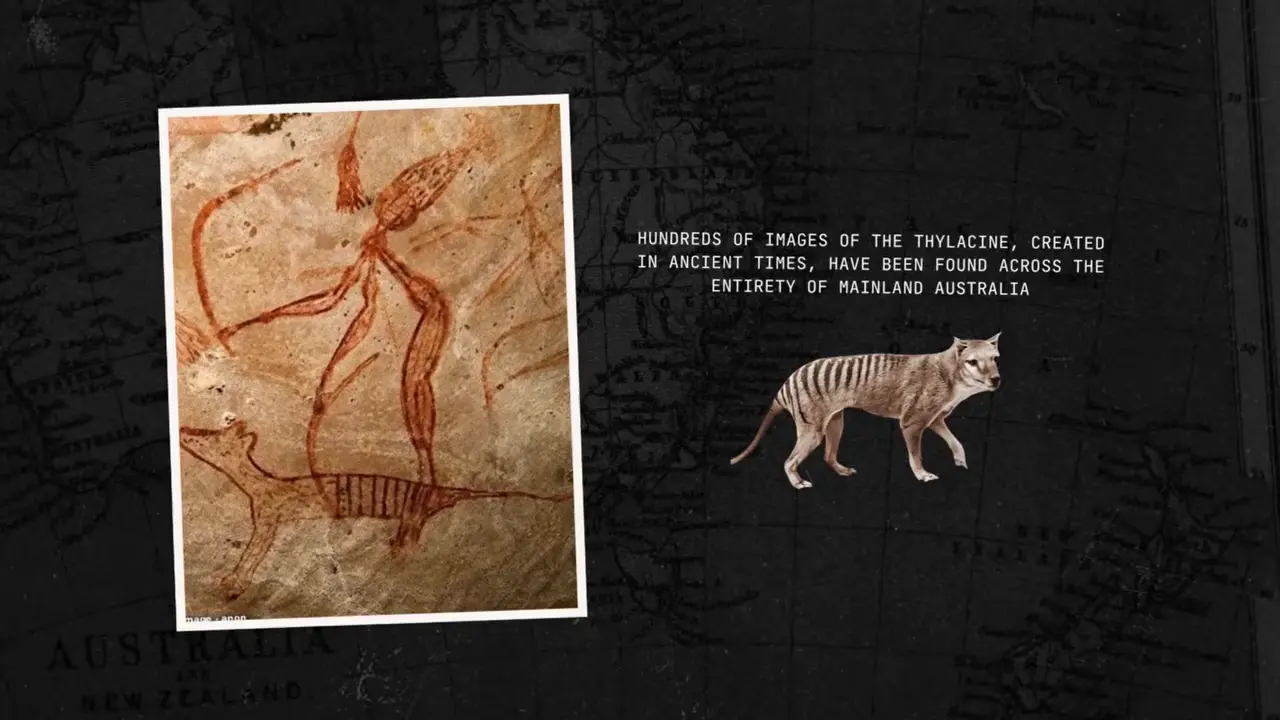
Aboriginal Australians lived alongside the thylacine for tens of thousands of years, and some rock art styles depicting the animal have been carbon-dated to shortly before European arrival [V6]. A Griffith University team led by Professor Paul Taçon, working in partnership with Traditional Owners, recently documented 14 new thylacine paintings and 2 Tasmanian devil paintings across sites in north-west Arnhem Land, Northern Territory, adding to decades of ongoing documentation in the region [13]. These newly documented Arnhem Land works are significant not only for their number but also for their content: some depict thylacines as hunting partners rather than solely as prey, and they appear alongside other powerful figures such as the rainbow serpent.
Aboriginal oral tradition independently confirmed thylacine behaviour, with communities telling European explorers in the 1850s that the animals could swim, a claim later corroborated by paleontologists [V6]. Radiocarbon dating of mud wasp nests overlying and underlying pigment offers a viable method for anchoring rock art styles to the terminal Pleistocene (~12,000 years), suggesting further chronological refinement of thylacine depictions may yet come.

In Brief
Lovelock Cave’s archaeological history was transformed by guano mining. In 1911, miners David Pugh and James Hart began extracting bat guano for fertilizer, uncovering Native American artifacts and human remains beneath the layer. Artifacts and mummified human remains were found under 3 to 6 feet of guano. The mining nearly destroyed the cave as an archaeological site, and miners did not notify archaeological authorities until 1912 [15]. Most recovered artifacts, especially textiles and weapons, were regarded as low value at the time and discarded by the miners. In 1912, an archaeologist visited but only dug exploratory test holes, not a full systematic excavation. Despite these losses, about 10,000 Northern Paiute artifacts were recovered, including the world’s oldest tule duck decoys, nets, sandals, and baskets, some over 2,000 years old; the decoys are preserved at the Smithsonian.
Now called the “Cradle of Great Basin Archaeology,” the cave is also listed on the National Register of Historic Places [14]. The record also raises a question about Eric K. (Kellerman) Reed’s reported 1967 paper, “An unusual skull from near Lovelock, Nevada,” which allegedly no longer appears at its original online academic host [V7]. The site is tied to Northern Paiute oral traditions about the Si-Te-Cah (Saiduka), described in some accounts as a cannibalistic group whom the Northern Paiutes reportedly defeated in a final battle at what became Lovelock Cave; the later “giants” descriptor appears to be a post-contact elaboration.
On a recent episode of The Shaman and The Philosopher podcast, a host formally retracted his earlier proposal that Göbekli Tepe was buried by a catastrophic flood rather than by human activity [V8]. The reversal hinged on a simple chronological problem: the site was already buried by the time a lake higher up the mountain overflowed, so the flood cannot have caused the burial. While the lake did indeed overflow and scour sediment from the mountainside, that event postdates the site’s interment, meaning it cleared material away from rather than deposited it onto the monuments.
Even with the retraction, the question of how Göbekli Tepe came to be buried remains unsettled. The dominant interpretation among archaeologists has long been that the distinctive enclosures were deliberately backfilled, possibly as a ritual decommissioning, though natural slope-slide processes cannot be ruled out as a contributing depositional mechanism [16]. Broader geoarchaeological work in the region has identified phases of intensified geomorphodynamic activity around ca. 7.4–7.0 ka BP and ca. 5.8–3.3 ka BP, broadly coinciding with demographic and climatic shifts across southern Turkey and the Levant [17]. Environmental reconstructions further indicate that the surroundings during occupation were markedly greener and more sediment-covered than the arid landscape visible today. Separately, the recovery of human remains at the site has prompted some researchers to suggest that parts of Göbekli Tepe may have served as a Neolithic burial ground, a consideration distinct from but entangled with the broader backfilling debate [18].
The “Megalithic Road” tour song catalogs a distinctive set of Irish megalithic monument types — wedge tombs, court tombs, portal tombs, and passage tombs — alongside dolmens, stone circles, and ancient chambers set into hillsides [V9]. They represent the final phase of megalithic tomb construction in Ireland, dating to approximately 2500–2000 BC [21], and are considered a monument type peculiar to the island. The term “dolmen” is sometimes used interchangeably with “wedge tomb” to describe single-chamber tombs of vertical stones supporting a capstone.
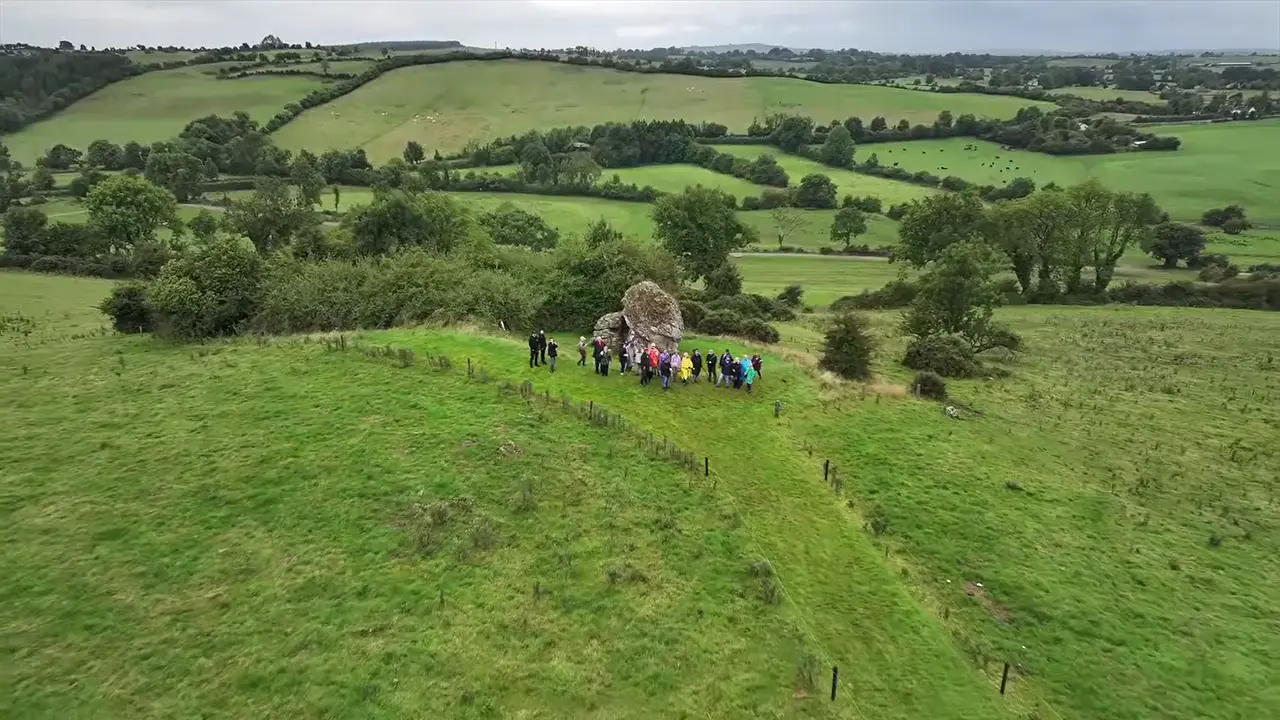
Passage tombs span an earlier period, roughly 3750 to 2500 BC, with around twenty clusters recorded across the island [19]. Newgrange, built around 3100 BC within the Brú na Bóinne complex alongside Knowth and Dowth, is ringed by a stone circle and features a roofbox that admits winter solstice sunlight — and predates both Stonehenge and the Egyptian pyramids [20]. Yet excavation has lagged behind discovery: only 19 of 387 known wedge tombs had been excavated, meaning the bulk of the typology rests on morphology rather than excavated data, though Monumental Ireland separately cites more than 500 — a discrepancy likely reflecting differing inventory dates or inclusion criteria [22].
In Norse mythology, the gods are biological, mortal beings whose continued youth depends on the goddess Iðunn’s golden apples — a striking departure from the inherent immortality of many other pantheons [V10]. Iðunn guards and dispenses these apples to the Æsir, granting them sustained youth and beauty, and when she is absent or kidnapped, the gods age rapidly, demonstrating that their vitality is not self-sustaining.

That the Norse gods are mortal is underscored by their deaths in the canonical sources, principally the Poetic Edda and Snorri Sturluson’s Prose Edda (c. 1220) — both written in the 13th century, more than two centuries after the Viking Age. These works attest that multiple deities perish at Ragnarök, including Odin, Thor, Týr, Freyr, Heimdall, and Loki. Baldr is killed by mistletoe wielded by his blind brother Höðr under Loki’s guidance, after Frigg extracted oaths from all objects except the mistletoe; his death is portrayed as a prelude to the gods’ destruction, though he is said to return in a renewed age [23]. Snorri’s Prologue further frames the gods as deified historical mortals through a euhemerizing lens. His telling of Baldr’s death, however, diverges substantially from that of the contemporary Dane Saxo Grammaticus. Scholars such as Lindow have linked Baldr to dying-and-returning deities like Osiris, while emphasizing that the parallel “has nothing to do with fertility.”
Earth’s orbit crosses the Taurid meteoroid complex twice each year: around late June, in the radar-observed daytime Beta Taurids—an encounter not directly observable from the ground and therefore not establishable as a pre-modern sighting—and in late October or early November, when the Northern and Southern Taurids are visible at night. The stream takes its name from Taurus and can be seen whenever the constellation is above the horizon during September–November [24]. In autumn, a “Pleiades-centered” radiant should be tied to a specific branch, because Southern and Northern identifications vary slightly between sources.
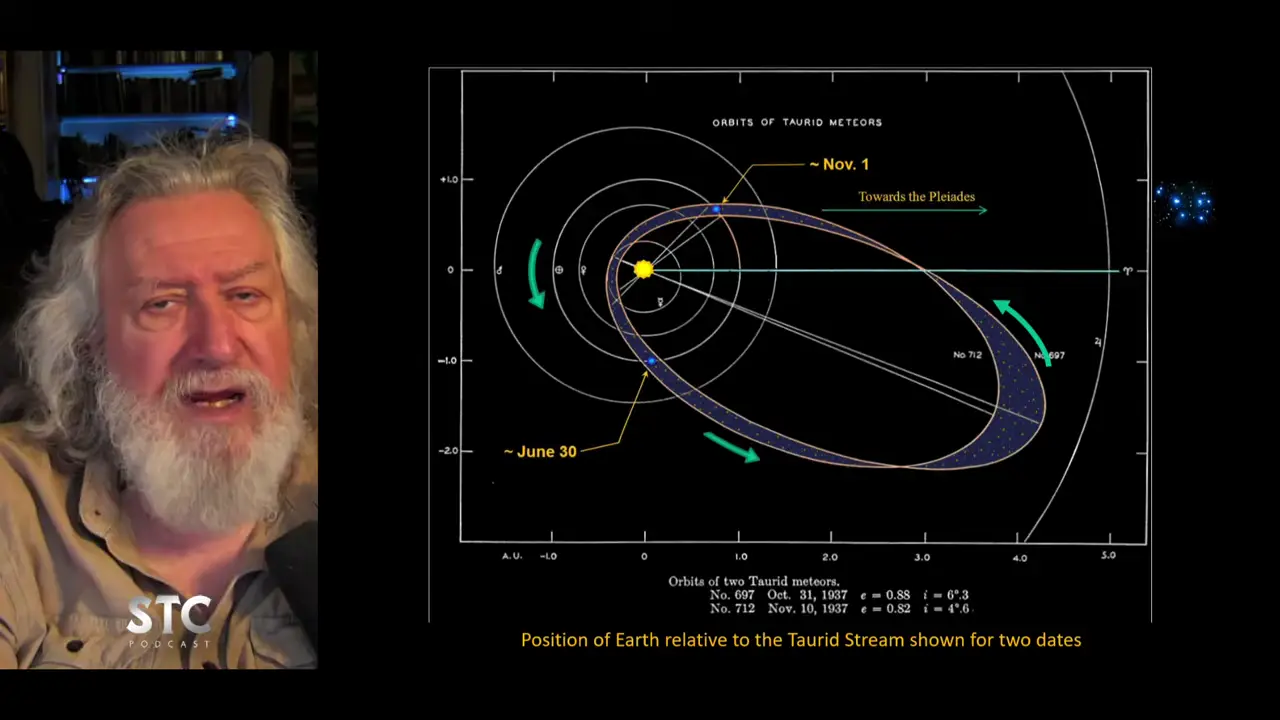
No available evidence demonstrates a causal correlation: the source set contains no systematic cross-cultural correlation analysis, peer-reviewed evidence, ethnohistorical record, or archaeological impact-layer data, and its only purported narrative bridge is an uncorroborated Jewish legend in which the lost seventh Pleiades star, Kima, was thrown at Earth and caused the Great Flood [V11]. The astronomical crossings and seasonal Pleiades association are therefore well specified, but any connection to ancient flood traditions remains unproven.
Sources
- Archaeologists unearth oldest known wooden structure in …
- Evidence for the earliest structural use of wood at least …
- Combretum zeyheri
- Half-million-year-old wooden structure unearthed in Zambia
- The ‘Lost’ Labyrinth, Egypt.
- Colossal Biosciences Dire Wolf De-Extinction
- Ishi no Hōden - Wikipedia
- Ishi no Hōden | ExploreHere
- Ishi no Hoden a Mystery Object 1 360 Panorama - Japan - 360Cities
- Dressed block nr Dwarfie Stane, Hoy, Orkney
- Graffiti in Dwarfie Stane, Hoy, Orkney
- Dressed block nr Dwarfie Stane, Hoy, Orkney
- Tasmanian tiger lives on in Arnhem Land rock art - Griffith News
- Lovelock Cave Historic Site - Nevada
- Si-Te-Cah
- FAQ – Tepe Telegrams
- Sediment cascades and the entangled relationship between human impact and natural dynamics at the pre‐pottery Neolithic site of Göbekli Tepe, Anatolia
- The Göbekli Tepe Ruins and the Origins of Neolithic Religion
- Passage tombs in Ireland
- Newgrange
- Irish Megaliths: Henges, Portal & Passage Tombs & Stone Circles
- Expedition Magazine | The Megalithic Tombs of Ireland
- Murder and Vengeance among the Gods: Baldr in Scandinavian Mythology
- The Taurid Swarm is Upon Us! - NASA
Videos
V1. Michael Button — “Humanity’s Greatest Achievement May Be Lost Forever” V2. Luke Caverns — “Extinctions Through Time: Full Series (+1 Hour Supercut)” V3. Wandering Wolf — “The Ancient Side of Japan You Don’t Get to See | Megaliths & Mysteries” V4. Universe Inside You — “Ancient Megastructures Described in the Bible” V5. Timeless with Fred Snyder — “9,000 years of Chinese Writing” V6. Luke Caverns — “Extinctions Through Time: Full Series (+1 Hour Supercut)” V7. DeDunking — “Genetic Causes for Giants with 2 Rows of Teeth Explained #science #archaeology #neandertais” V8. Institute for Natural Philosophy — “The Shaman and The Philosopher - Ep. 38” V9. MegalithomaniaUK — “‘The Megalithic Road’ Ireland Tour Song | Megalithomania” V10. Viking Superpowers — “The Dragons of Eden – how to set up your own religion!” V11. The Randall Carlson — “The World Has Ended Before. It Will End Again”
Quality Audit — 10/10 ✓
Quality Dimensions
✓ spelling✓ week date✓ proper nouns✓ source quality✓ citation format✓ section balance✓ summary accuracy✓ citation coverage✓ academic citations✓ screenshot placementResearch Clusters
Keep exploring
Every site on this page sits on the globe, and the people who research them are on the Discord.
3D Globe · Sites by country · Story Archive · Research Library · Weekly Journal · Search