

Week of August 24: 25 Turtle Figurines in Turkish Cave, World's First Brand, and More
Archaeologists recovered 25 turtle figurines from Turkey's Gedikkaya Cave suggesting a 14,500-year-old Epipaleolithic ritual site, while researchers identified Qurayyah Painted Ware in northwestern Saudi Arabia as possibly the world's earliest known branded commodity from approximately 3,600 years ago. A 2026 PNAS paper found Aurignacian symbolic notation remained standardized across hundreds of miles for roughly 10,000 years, and Lazio research dated Italian cyclopean platforms to before 800 BC.
Archaeologists recovered 25 turtle figurines from Turkey’s Gedikkaya Cave suggesting a 14,500-year-old Epipaleolithic ritual site, while researchers identified Qurayyah Painted Ware in northwestern Saudi Arabia as possibly the world’s earliest known branded commodity from approximately 3,600 years ago. A 2026 PNAS paper found Aurignacian symbolic notation remained standardized across hundreds of miles for roughly 10,000 years, and Lazio research dated Italian cyclopean platforms to before 800 BC.
New Excavations & Fieldwork
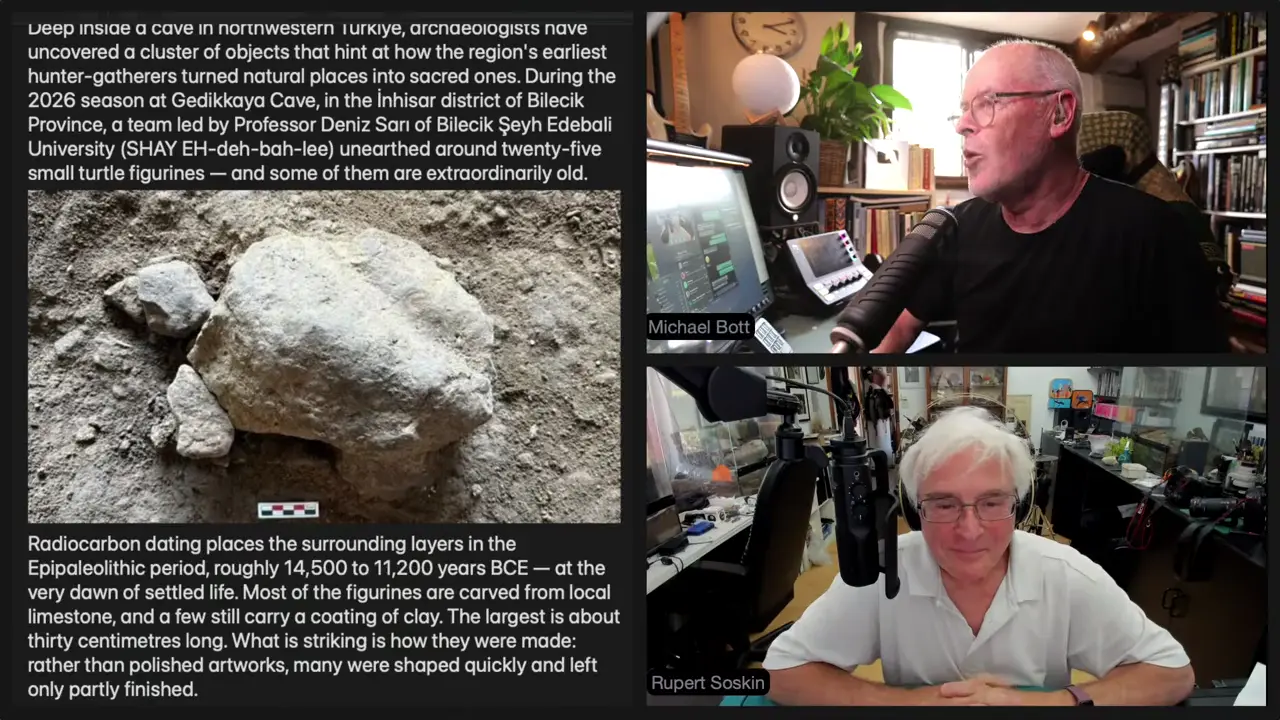
During the 2026 excavation season at Gedikkaya Cave in northwestern Turkey’s Bilecik province, archaeologists recovered approximately 25 small turtle figurines that the excavation team interprets as evidence of a possible Epipaleolithic ritual site [V1] [1]. Led by Prof. News headlines calling the objects “16,500 years old” and the primary-source range refer to the same underlying date expressed in different units, not to genuinely conflicting chronologies.
A sealed chamber tucked into a corner of Building BH at Karahan Tepe is set to be opened during the 2025 excavation season [V2].
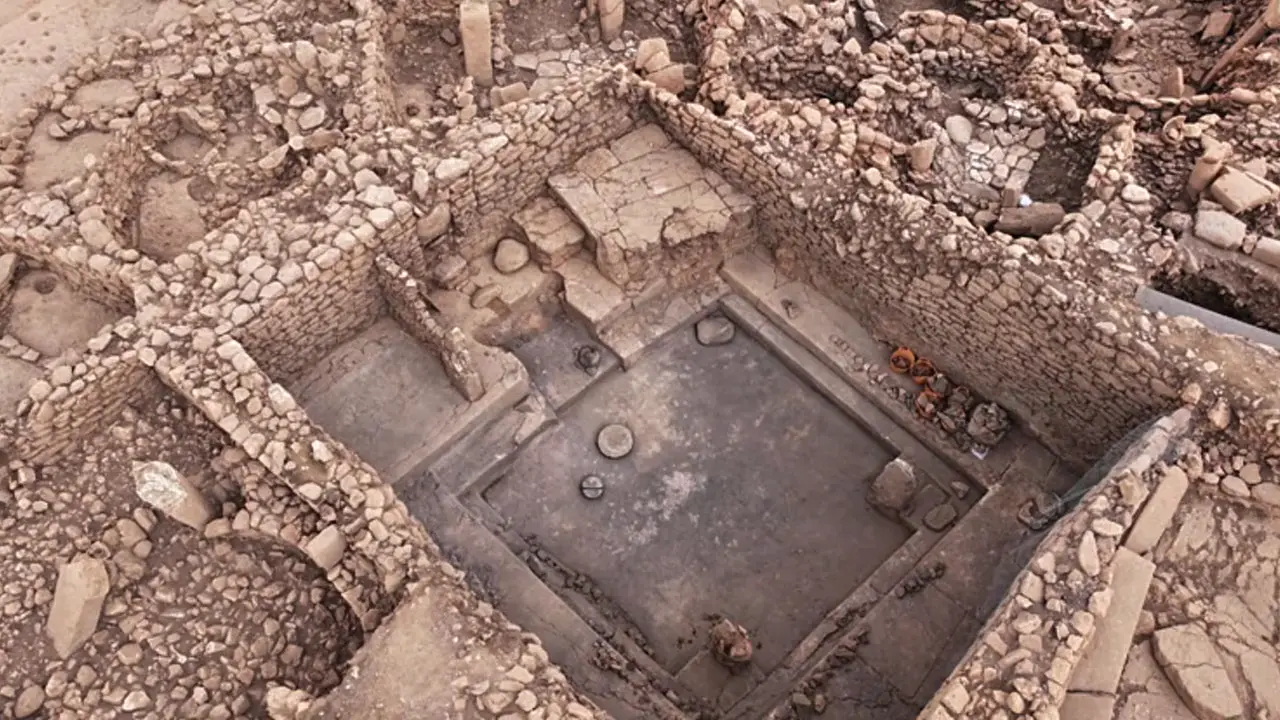
Building BH itself, first excavated in 2025, sits at the heart of the site and measures 9 by 7 metres, with walls surviving up to 3.5 metres in height [V2]. Traces of plaster and mud brick at the wall bases indicate the structure was originally plastered throughout. Together, these features point to a communal structure likely used for ceremonies, offerings, or ritual practices.
Artifact Discoveries
In a remote oasis settlement in northwestern Saudi Arabia, archaeologists have identified what may be the world’s earliest known branded commodity: a distinctive painted ceramic tradition designated ‘Qurayyah Painted Ware,’ whose production began approximately 3,600 years ago (~1,600 BCE) and whose fully developed iconographic program of stylized animals and ritual or human scenes was in place by roughly 3,200 years ago [V3] [3].
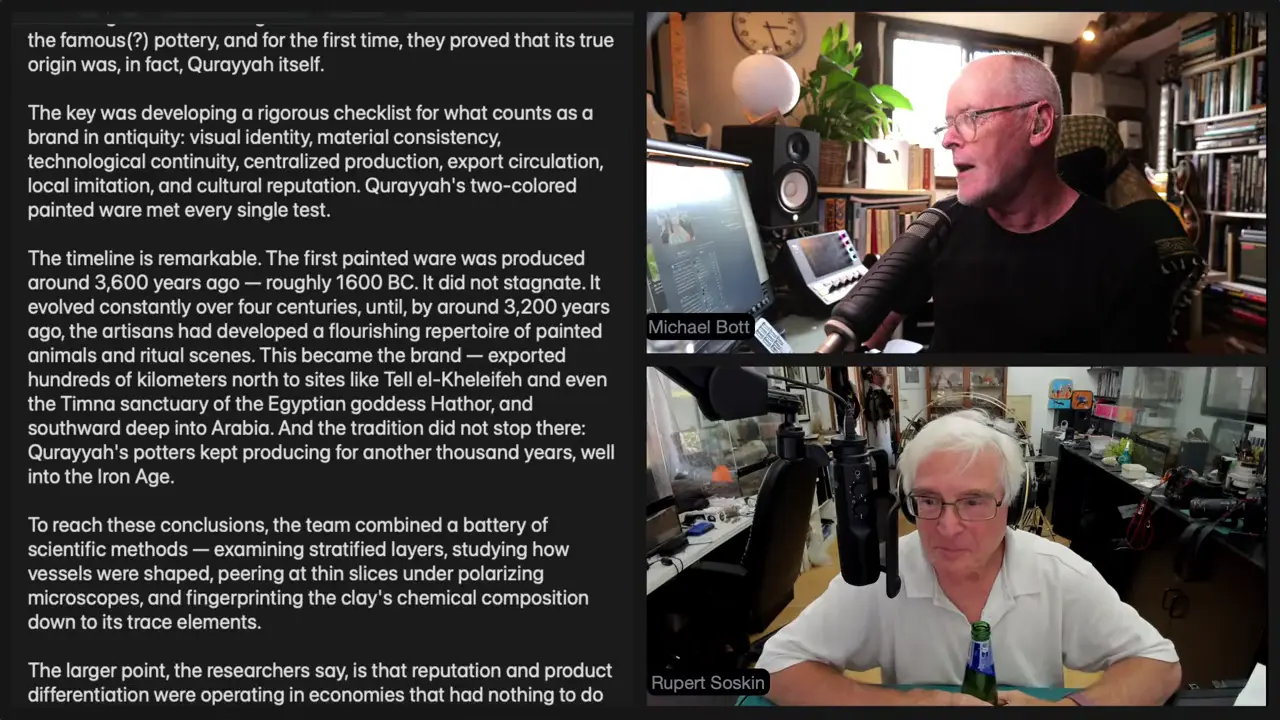
That non-Qurayyah communities actively imitated these vessels—using their own clays but replicating the Qurayyah aesthetic—demonstrates sustained consumer demand and deliberate cultural signaling through the brand [V3]. Painted-ware production at Qurayyah persisted for roughly another millennium after the canonical ~3,200-year-old phase, extending into the Iron Age. One source dates the same vessels to 3,000 years old, a minor chronological discrepancy left unexplained [2]. Separately, Qurayyah has been proposed as a possible center of the biblical land of Midian, where, according to Exodus, Moses encounters Jethro’s family [4].
Bioarchaeology & Ancient DNA
Led by Dr. Maya Lev of Kiel University with Prof. Mina Weinstein-Evron and Prof. Yuval Rasharani of the University of Haifa, the research was published in PNAS [V4]. Microscopic examination of the reptile bones enabled researchers to identify repeated butchery and handling marks alongside species-level identifications.
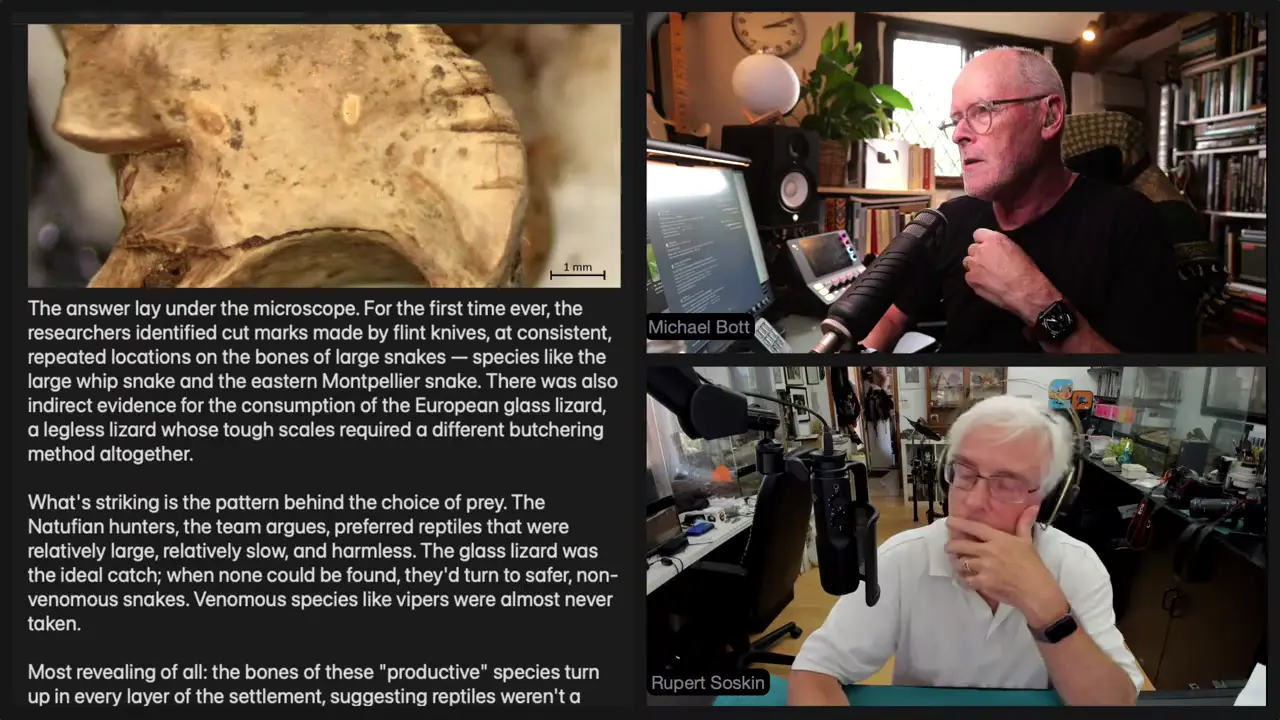
14.8–13.1 ka [V4]. Squamate remains document continuous reptile consumption spanning more than three millennia, with large-bodied snakes and lizards as a persistent dietary component. The site also reflects a broader pattern of Natufian exploitation of coastal wetland habitats, with hunters taking waterfowl alongside reptile prey.
Architecture & Monuments
Archaeological research at cyclopean platforms in Lazio, south of Rome, has produced findings that challenge the traditional chronology of these massive stone structures on the Italian mainland [V5].
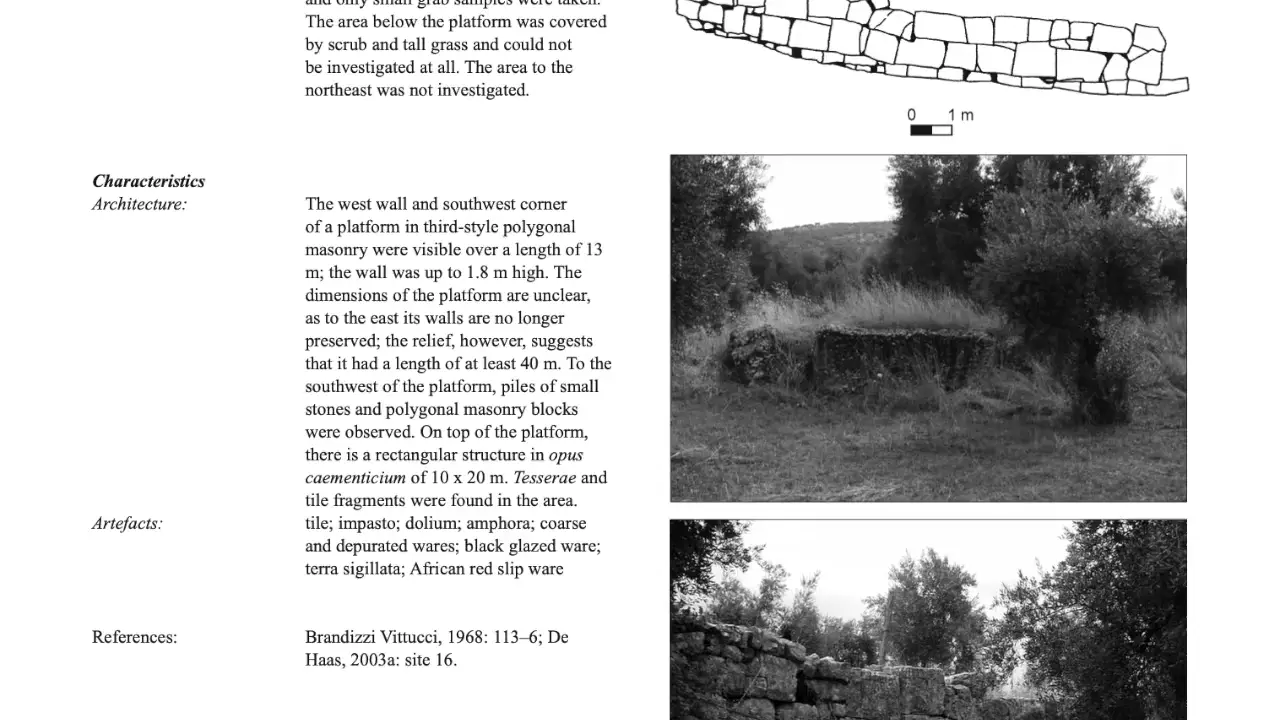
1300 BC), a comparison that has long fueled speculation about far greater antiquity. At Segni, a town in Lazio, well-preserved polygonal masonry walls remain accessible through the historic Porta Saracena gate, confirming a durable architectural footprint south of Rome [5]. The 8th-century BC dating receives partial support from an account describing the walls as dated “on the basis of archaeological finds and ancient script mentions to as early as the 8th century B.C.” [V5], though the Lazio research and this popular source do not explicitly cross-reference each other.
Inscriptions & Texts
A 2026 paper published in PNAS by C. Bentz and colleagues analyzes over 200 mobile artifacts from the Aurignacian culture—the earliest known culture of modern humans in Europe—dated to roughly 43,000 to 34,000 years ago and bearing several thousand geometric signs [7]. Signs were used more densely on certain object categories, with ivory figurines bearing more marks than tools. The corpus includes pendants, tools, and mammoth ivory figurines from sites such as the Ach and Lone valleys, among the earliest known symbolic expressions worldwide [6]. However, the authors caution that while Aurignacian sign sequences share statistical properties with those on the earliest protocuneiform tablets, this does not prove the Paleolithic marks actually encoded language-like information. At least some signs appear to have served functional, indexical purposes—for example, notches on flutes marking where holes should be cut—rather than purely symbolic communication.
Ancient Art
Cave emergence iconography appears on megalithic altars at La Venta and San Lorenzo, even though no natural caves exist in the swampy Olmec heartland. Sources frame this emergence setting variously as “a cave or the mouth of a fantastic creature” [8] or as being born “out of the aquatic mass”—complementary characterizations of the same scene.

The motif’s geographic roots appear to lie in the western Olmec periphery. At Chalcatzingo in Morelos and Teopantli quantitlan in Guerrero, caves and earth monster motifs are actual landscape features [V6]. Chalcatzingo Monument 1 was carved directly inside a cave mouth (900–500 BCE), while Oxtotitlan cave mural 1—redated in 2017 to 1200–900 BCE—depicts an earth monster face matching Altar 4, pushing the chronological anchor earlier than the heartland monuments. Nick Rider interprets the motif as Olmec priests or priest-lords emerging from the Underworld, set within a water cosmology of rain deities, sacred water-source caves, and aquatic monsters. The Altar 4 figure also grasps a rope wrapping around the altar’s base, a compositional detail beyond the emergence scene [8].
The rock art of Tassili n’Ajjer in southeastern Algeria constitutes one of the world’s most important concentrations of prehistoric imagery, with more than 15,000 drawings and engravings first discovered in 1910 and surveyed in the 1930s. These works span roughly 12,000 years, extending from the late Pleistocene through the Holocene, and are organized into distinct stylistic periods—the Bubaline, Iheren-Tahilahi, and Bovidian eras—that correspond to shifting environmental conditions across the Sahara. The imagery offers some of the most compelling visual evidence that the Sahara was once substantially greener and wetter than today’s hyper-arid desert [10]. Among the most striking depictions are fauna requiring persistent water, such as a life-sized crocodile more than two metres long, engraved walking alongside its hatchling in the central Sahara [9]. This aligns with the broader African Humid Period, which began approximately 14,600–14,500 years ago and ended 6,000–5,000 years ago, when North Africa supported lakes, rivers, and human settlement [11].

Satellite-based studies reinforce this picture, identifying palaeo-oases, dried riverbeds, alluvial fans, and upland plateaux whose geomorphological features indicate formerly wetter conditions. Within Tassili, the Iheren-Tahilahi group of paintings, exemplified at the Tikadiouine shelter, depicts richly adorned human figures alongside zoomorphic subjects, recording the lifeways of a once-habitable Sahara. It is worth noting that modern researchers have sponged Tassili’s rock walls with water to enhance photographic reproduction of the images—a documentation technique that should not be confused with ancient evidence of water-filled caves [12].
In Brief
A January 2023 study in Science Advances has revealed that the architecture of the Gulf Coast Olmec encodes a sophisticated astronomical calendar centuries older than any known Mesoamerican written record. Ivan Šprajc, Takeshi Inomata, and Anthony F. Aveni measured alignments at 415 ceremonial complexes mapped by LiDAR and found that nearly 90 percent were oriented to face sunrise on two specific dates: February 11 and October 29 [V7]. The findings demonstrate that the astronomical and calendrical principles underlying later Mesoamerican sites were already embedded in the earliest monumental architecture of the region, and that these orientations also show meaningful regional variability [13].

A 2026 study by Antonopoulos and colleagues has demonstrated that refluxing pulverized Claviceps purpurea sclerotia in pH 12.5 lye (wood-ash solution) for 120 minutes chemically transformed toxic ergopeptides into psychoactive lysergic acid amide (LSA) and isolysergic acid amide (iso-LSA), as confirmed by 1H-NMR and UHPLC/Q-TOF-HRMS analysis. At the 120-minute timepoint under 5% w/v conditions, the mixture yielded 0.54 mg LSA and 0.48 mg iso-LSA per gram of ergot, and the protocol was explicitly designed to model techniques and materials plausibly available to priestesses at Eleusis [14].

Popular press coverage has tended to use stronger, more affirmative language than the cautious academic phrasing, often invoking historical initiates like Cicero and Marcus Aurelius [15].
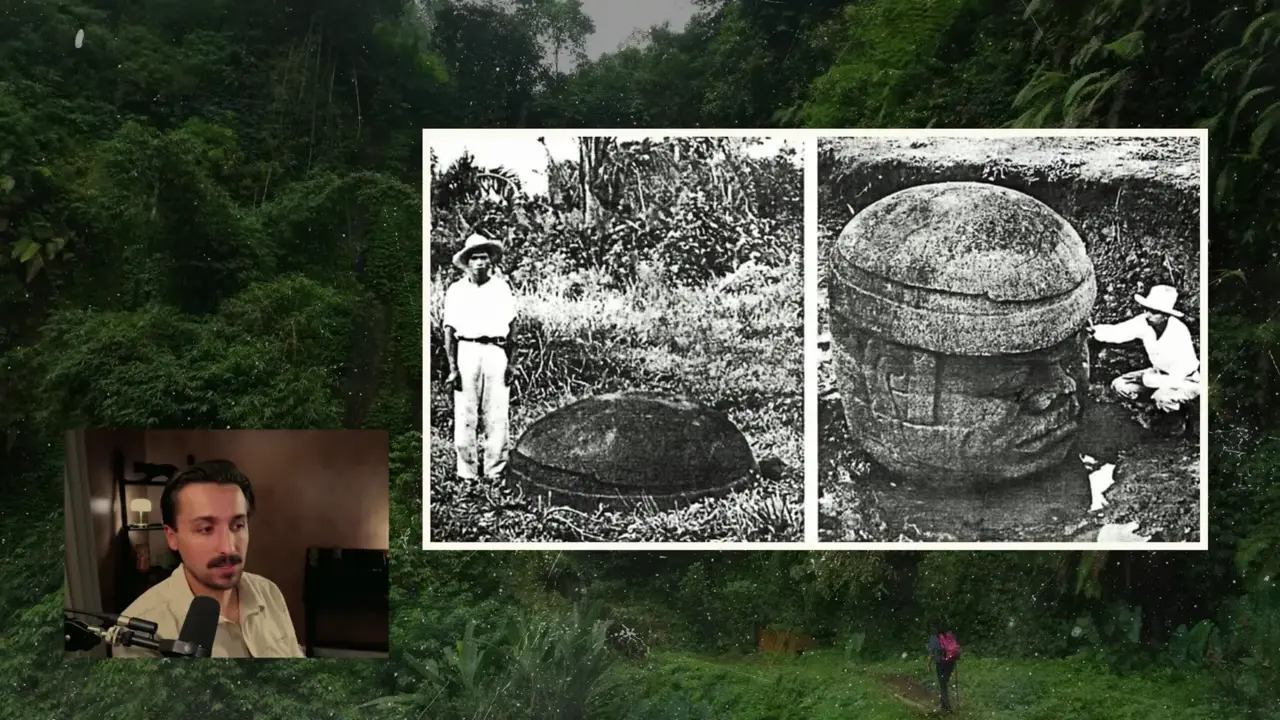
The first Olmec colossal head ever documented was recorded by Mexican traveler and writer José María Melgar y Serrano at Tres Zapotes in 1862 [16] [17] [18]. This discovery predates by decades any other known encounter with these massive stone portraits, which range from roughly 1.47 to 3.4 meters tall and weigh between 6 and 25.3 tons across the 16 known examples. He did not publish his formal description until 1869, seven years after the initial encounter.
Roughly seven or eight decades later, archaeologist Matthew Stirling re-excavated the same head at Tres Zapotes, bringing renewed scientific attention to the Olmec tradition [V8]. Because Tres Zapotes was one of the final Olmec cultural centers, Monument A is chronologically among the younger of the colossal heads. 1.
Seismic reflection surveys across eight of the eleven Finger Lakes provided the stratigraphic framework for this basin-fill record, revealing sediment sequences 1–5 that accumulated rapidly between 14,400 and 13,900 years ago, with the Valley Heads Moraine marking a key stratigraphic boundary [V9]. A detailed bedrock elevation and drift-thickness map has been produced for Schuyler County, which Seneca Lake bisects, offering further resolution of the underlying topography [19].

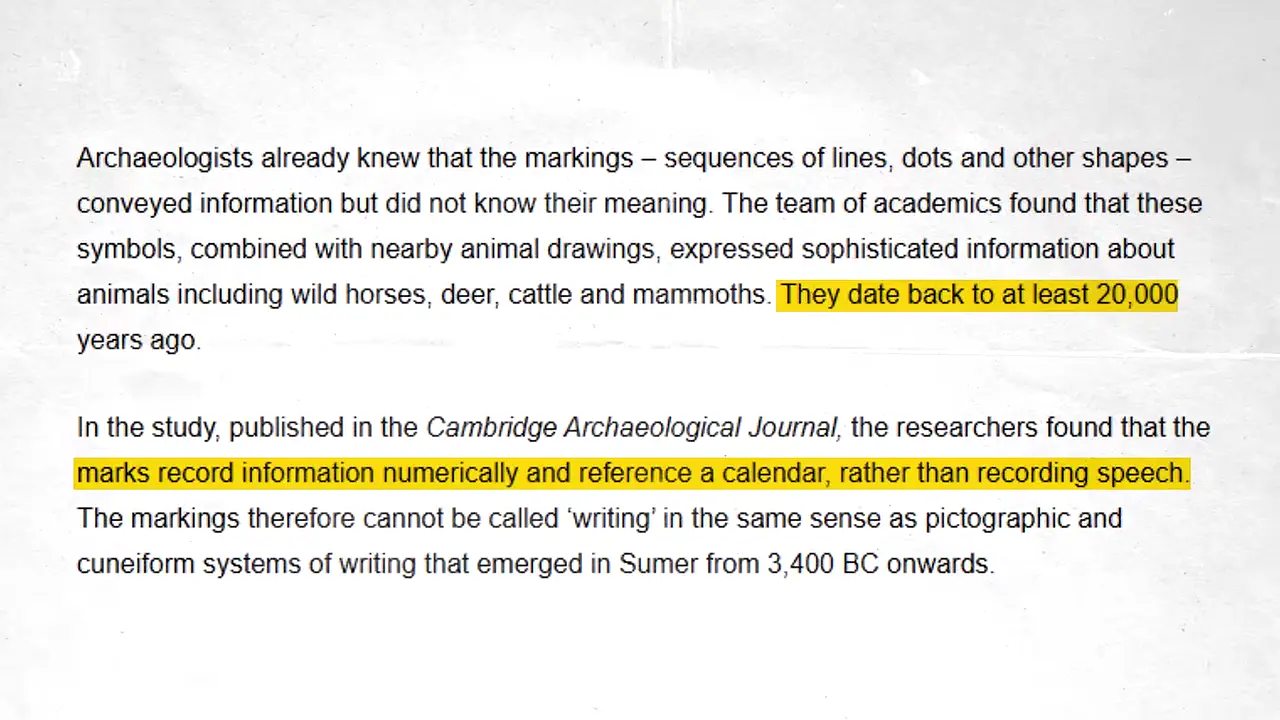
In 2023, London furniture conservator and amateur archaeologist Bennett Bacon—working with academic co-authors from Durham University and UCL including Professor Paul Pettitt—published a paper in the Cambridge Archaeological Journal proposing that dots and lines painted beside animal figures in Upper Palaeolithic cave art encode a lunar calendar of animal mating seasons [V10]. Titled “An Upper Palaeolithic Proto-writing System and Phenological Calendar,” the study reported strong correlations between the number of marks beside each animal and the lunar months in which that species is known to mate [20].

One contested source claims that hundreds of olive trees were planted directly atop unexcavated megalithic pillars, though mainstream coverage of the planting does not quantify the grove in those terms [21].
Sources
- Ancient turtle figurines reveal possible ritual site in Türkiye
- This 3000-Year-Old Pottery May Have Been One of …
- At 3200 Years Old, These Painted Ceramics May Be The …
- The Oasis of Qurayyah
- The Porta Saracena and the Cyclopean Walls, Segni - Italia.it
- Early symbolism in the Ach and the Lone valleys of …
- Humans 40,000 y ago developed a system of conventional signs
- La Venta - Wikipedia
- Rock Art in the Green Sahara (video) - Khan Academy
- Prehistoric rock art in North Africa - Smarthistory
- African humid period
- Running Horned Woman, Tassili n’Ajjer, Algeria
- Astronomy, Architecture, and Landscape in the Olmec Area and …
- Investigating the psychedelic hypothesis of kykeon, the sacred elixir of the Eleusinian Mysteries
- Did ancient Greek priestesses brew a mind-bending potion drunk by Cicero and Marcus Aurelius?
- Museo de Sitio de Tres Zapotes - Lugares INAH
- Tres Zapotes
- Olmec Heads, The Giant Stone Sculptures Of Early Mesoamerica
- drift thickness of schuyler county, new york
- Do Cave Paintings From 20,000 Years Ago Show Symbolic …
- Olive trees planted on Göbekli Tepe causing damage to …
Videos
V1. The Prehistory Guys — “LIVE ~ PREHISTORIC ARCHAEOLOGY NEWS From Around the World | 27/08/2026 02:00PM BST” V2. Ancient Architects — “Karahan Tepe Secret Chamber to be Opened + NEW STATUE Discovered” V3. The Prehistory Guys — “LIVE ~ PREHISTORIC ARCHAEOLOGY NEWS From Around the World | 27/08/2026 02:00PM BST” V4. The Prehistory Guys — “LIVE ~ PREHISTORIC ARCHAEOLOGY NEWS From Around the World | 27/08/2026 02:00PM BST” V5. One-eyed giant building walls — “The 3,000-Year-Old “Pointless” Ruins History Ignores. 🤯👁️” V6. Archaeologist Ed Barnhart — “Olmec Deep Dive” V7. Michael Button — “Something Was Very Strange About the Olmecs” V8. Luke Caverns — “The First Photos of Olmec Heads (that we know of)” V9. The Randall Carlson — “Nepal Flood Explained: 600x Smaller Than the Missoula Flood” V10. Michael Button — “Ancient Humans Left Us a Message We Can’t Read”
Quality Audit — 10/10 ✓
Quality Dimensions
✓ spelling✓ week date✓ proper nouns✓ source quality✓ citation format✓ section balance✓ summary accuracy✓ citation coverage✓ academic citations✓ screenshot placementResearch Clusters
Keep exploring
Every site on this page sits on the globe, and the people who research them are on the Discord.
3D Globe · Sites by country · Story Archive · Research Library · Weekly Journal · Search