

Week of May 25: Great Pyramid's Natural Earthquake Protection, Pompeii Construction Site, and More
Researchers discovered the Great Pyramid of Giza vibrates at 2.3 Hz while its foundation oscillates at 0.6 Hz, providing natural earthquake protection through this frequency separation. Excavations in Pompeii's Regio IX uncovered an intact 79 CE construction site preserving unfinished masonry, paving in progress, and fresh plastering left by workers. MIT analysis revealed Romans used a 'hot-mixing' technique with quicklime and volcanic pozzolana to create self-healing concrete superior to modern Portland cement. Meanwhile, Dr. Ed Barnhart's algorithm debunked balsa wood raft theories for transporting Olmec colossal basalt heads—the rafts couldn't fit through the Coatzacoalcos River's narrow stretches.
Researchers discovered the Great Pyramid of Giza vibrates at 2.3 Hz while its foundation oscillates at 0.6 Hz, providing natural earthquake protection through this frequency separation. Excavations in Pompeii’s Regio IX uncovered an intact 79 CE construction site preserving unfinished masonry, paving in progress, and fresh plastering left by workers. MIT analysis revealed Romans used a ‘hot-mixing’ technique with quicklime and volcanic pozzolana to create self-healing concrete superior to modern Portland cement. Meanwhile, Dr. Ed Barnhart’s algorithm debunked balsa wood raft theories for transporting Olmec colossal basalt heads—the rafts couldn’t fit through the Coatzacoalcos River’s narrow stretches.
Architecture & Monuments
Two competing explanations exist for why the heads were inverted.
In Brief
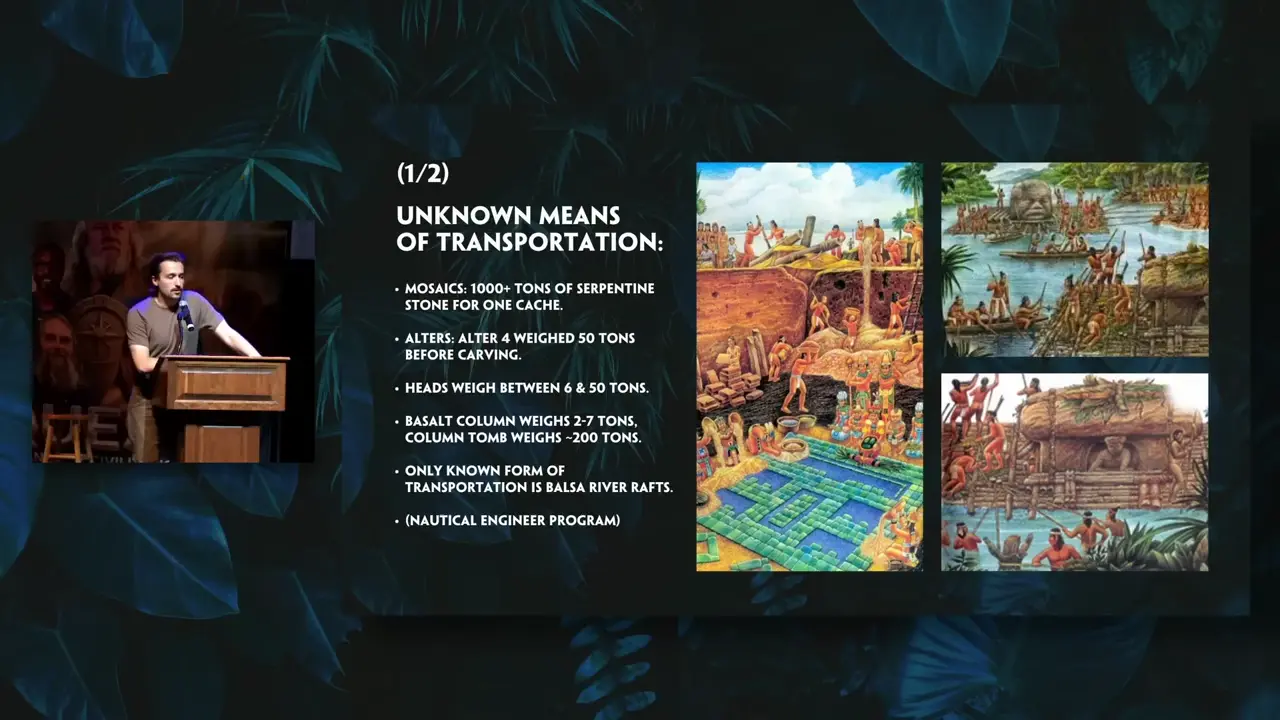
The transportation of Olmec colossal basalt heads from their volcanic source to archaeological sites across the Gulf Coast region remains a puzzle for archaeologists [V1]. Approximately 16 to 17 massive basalt heads have been discovered distributed across three main sites in the Olmec world. The basalt for these heads originated in the Sierra de Los Tuxtlas volcanic belt, some 90 kilometers from the La Venta site. Nautical engineer Dr. Ed Barnhart developed an algorithm to test the feasibility of this hypothesis against the physical constraints of the Coatzacoalcos River, which would have been the logical route for water transport. His calculations revealed that the minimum raft size required to carry even a 5-ton head could not physically fit through the narrow stretches of the river, rendering the balsa wood raft theory unworkable.
Excavations in Pompeii’s Regio IX uncovered an intact ancient construction site preserved in the precise state it was in when Mount Vesuvius erupted in 79 CE [5] [2] [1] [V2] [4]. The site retained evidence of active work: unfinished masonry, paving in progress, fresh plastering, and raw material piles left behind by workers. This exceptional preservation has provided researchers with unprecedented insight into Roman building practices.
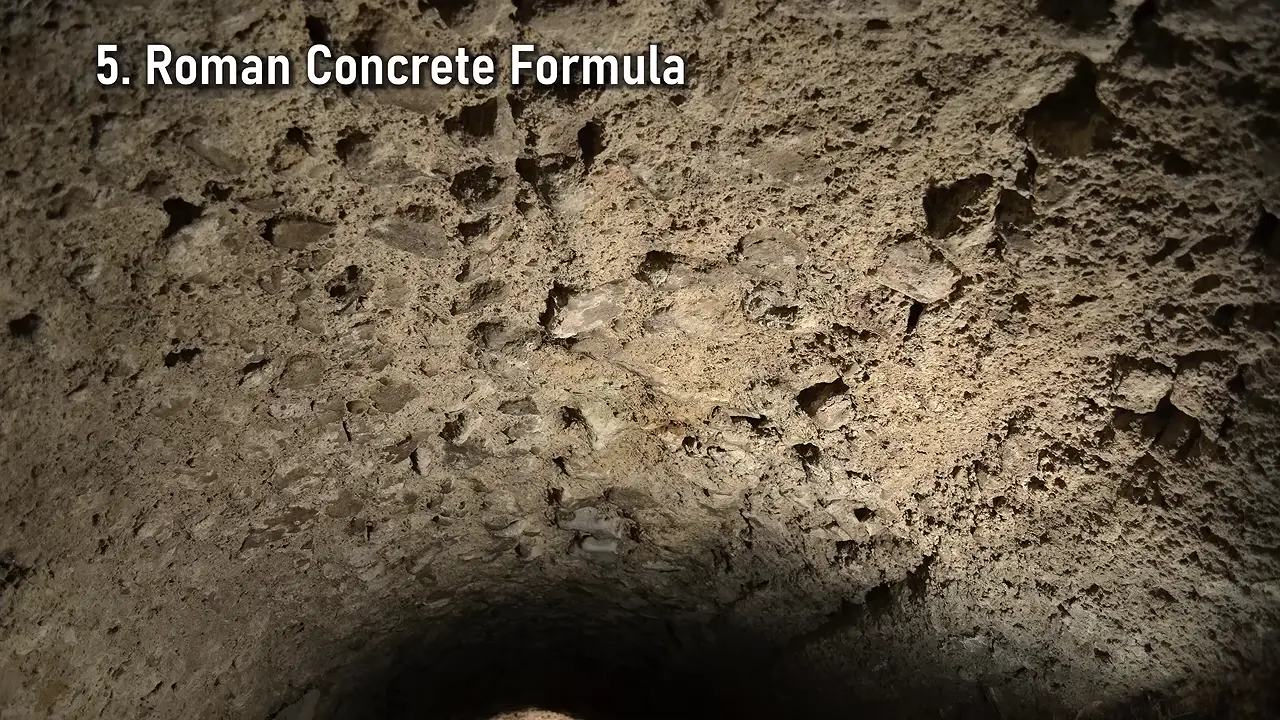
MIT researchers analyzing samples from the site determined how Romans produced their exceptionally durable concrete. Roman builders employed a ‘hot-mixing’ technique, premixing quicklime (calcium oxide) with dry pozzolana (volcanic ash) before adding water, creating an intense exothermic reaction [V2] [3]. This process caused calcium from the dissolving lime to migrate outward and re-mineralize as calcium carbonate polymorphs, allowing the concrete to continue chemically evolving after setting with self-healing properties. The hot-mixing technique produced concrete with superior durability compared to modern Portland cement-based concrete.
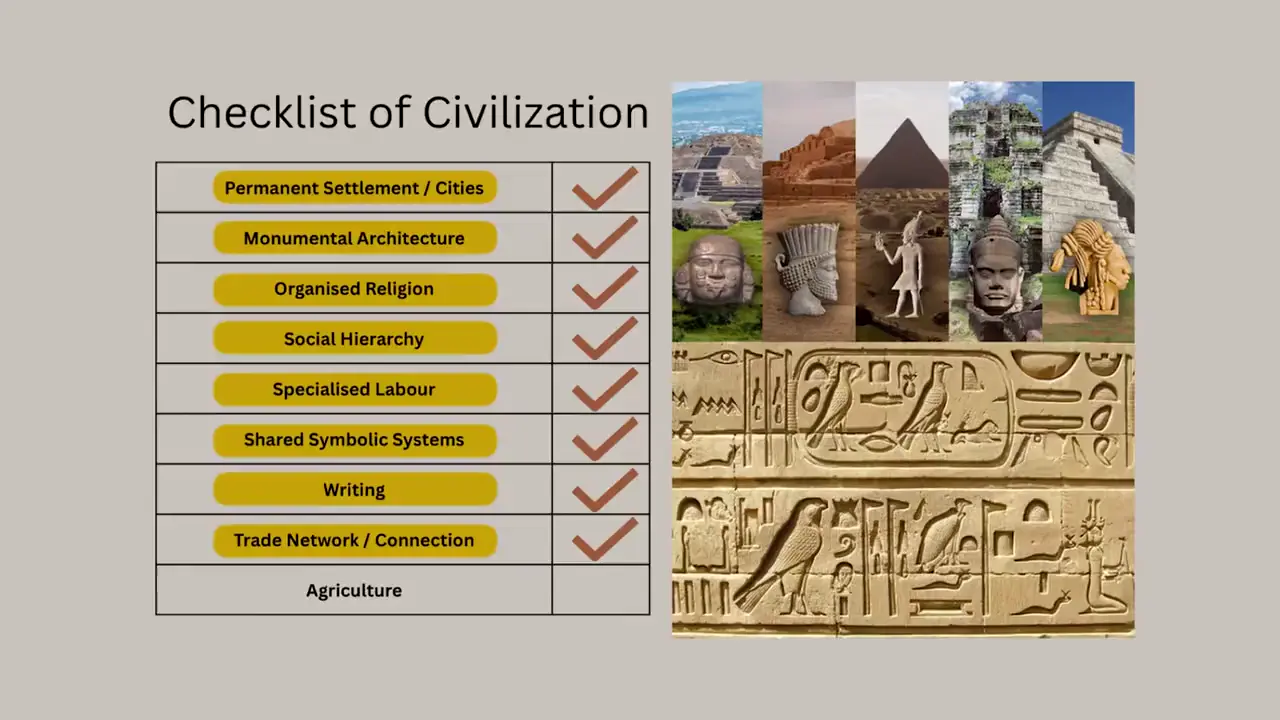
Taş Tepeler culture meets nearly all standard criteria for civilization, yet archaeologists remain cautious about applying the label [V5]. The Göbekli Tepe site features T-shaped limestone pillars standing 5–6 meters tall, weighing 10–20 tons each, quarried from bedrock, transported significant distances, and arranged into precise circular enclosures fifty times larger than Stonehenge [V3]. The same imagery and symbols appear across dozens of sites spanning hundreds of kilometers, confirming regional networks. Only about ten percent of Göbekli Tepe has been excavated [V4]. Recent findings have revealed domestic structures, extensive cereal processing, water supply systems, and tools associated with daily life—contradicting the previous interpretation of the site as a sanctuary used by nomadic groups. Göbekli Tepe was inhabited from approximately 9500 BCE to at least 8000 BCE during the Pre-Pottery Neolithic and is now a UNESCO World Heritage Site demonstrating creative human genius in early Pre-Pottery Neolithic societies. However, archaeologists hesitate to definitively call Taş Tepeler a civilization due to the absence of confirmed agriculture.
Robert Bauval, an Egyptian-born Belgian structural engineer, first noticed in the early 1980s that the Giza pyramids appear to mirror the three belt stars of Orion’s constellation [V6]. Additionally, the Giza pyramid complex’s position relative to the Nile mirrors Orion’s Belt position relative to the Milky Way, strengthening the proposed correlation.
The Orion correlation theory requires a 180-degree rotation of the celestial map to overlay Orion’s Belt stars on the Giza pyramids [6]. Internal shafts inside the Great Pyramid are aligned to point toward Orion’s Belt at the time of construction [V6]. However, the theory has faced criticism from mainstream scholarship [7].
“Gylfaginning” has long been rendered as “The Fooling of Gylfi” in standard translations, yet scholars recognize multiple valid interpretations of this Old Norse phrase. Alternative translations including “The Deluding of Gylfi,” “the scamming,” and “indoctrination of Gylfi” offer distinctly different framings of the text’s meaning [V7]. This translation choice matters because the Gylfaginning takes the form of a dialogue between King Gylfi and three divine figures on thrones in Asgard—High, Just-As-High, and Third—raising questions about whether the narrative represents genuine instruction or deliberate deception. The term “fjölkunnig,” commonly translated as “sorcerer” or “witch,” more accurately describes practitioners of paranormal powers and esoteric knowledge, suggesting that translation decisions have obscured the nature of practices described in these texts.
Beyond individual word choices, broader interpretive frameworks have shaped how Old Norse literature reaches modern audiences. Academic translations frequently present Norse narratives as myths, fairy tales, or expressions of pagan religion rather than as historical accounts, a tendency that some scholars attribute to Christian bias when texts are rendered as “heathen superstition” [V7]. Early English editions of Gylfaginning introduced Norse mythology to European and American readers in abridged, simplified forms that established enduring interpretive conventions. Popular adaptations continue this pattern, often paraphrasing and cutting material from original Old Norse texts. These layered decisions about what to translate, how to frame it, and what to omit have accumulated over centuries, raising questions about how well modern readers access the original meanings of these texts.
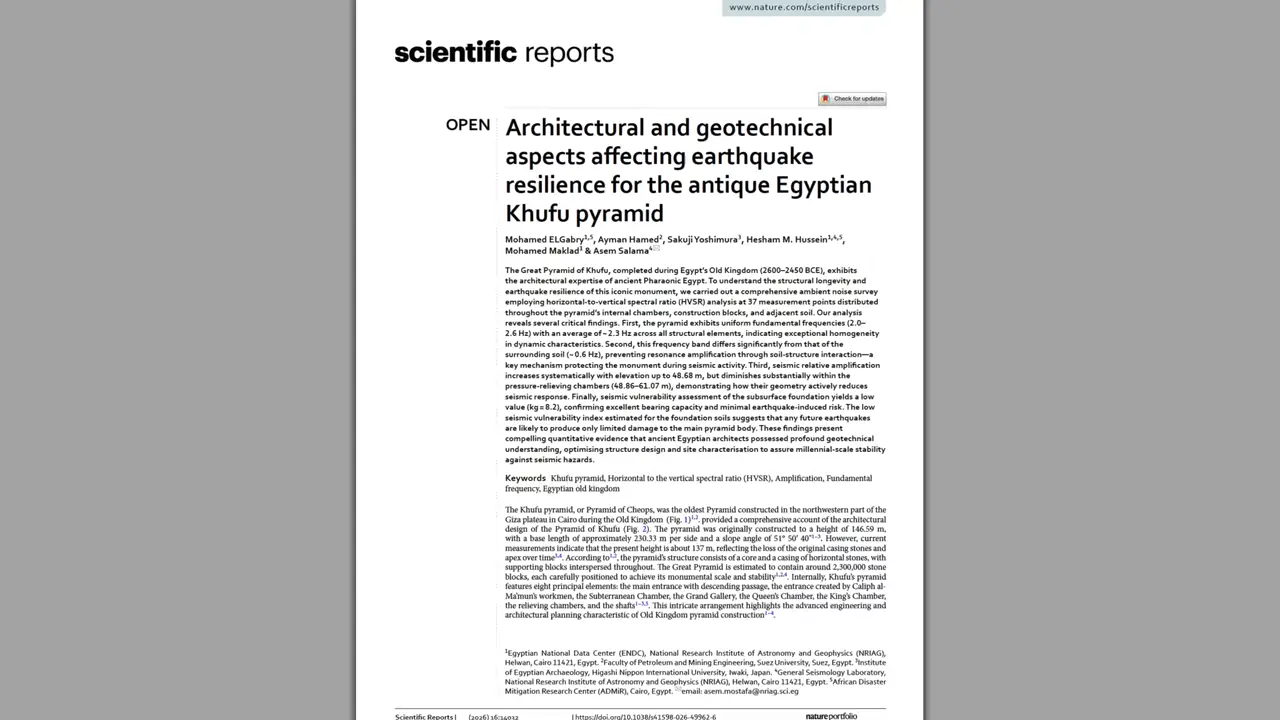
The Great Pyramid of Giza vibrates at approximately 2.3 Hz while the underlying ground oscillates at just 0.6 Hz—a frequency separation that prevents resonance amplification and provides natural earthquake protection [9] [V8]. This fundamental discovery, published in Scientific Reports on February 25, 2026, was the first to measure the monument’s natural frequencies through ambient vibration measurements, led by Mohamed El-Gabry of Egypt’s National Research Institute of Astronomy and Geophysics. The uniform frequency range of 2.0–2.6 Hz across all structural elements indicates exceptional homogeneity in the pyramid’s dynamic characteristics. Researchers employed Horizontal-to-Vertical Spectral Ratio analysis at 37 measurement points distributed throughout the pyramid’s internal chambers, construction blocks, and adjacent soil, finding that seismic amplification increases with elevation up to 48.68 m but diminishes substantially within the pressure-relieving chambers at higher elevations. The subsurface foundation exhibits a low seismic vulnerability index of kg = 8.2, confirming excellent bearing capacity and minimal earthquake-induced risk.
Sources
- An unfinished Pompeian construction site reveals ancient Roman …
- Scientists discover secrets of ancient Roman concrete at Pompeii
- Discovery at Pompeii reveals the secrets of ancient Roman concrete
- Archaeologists in Pompeii Find Ancient Construction Site …
- An unfinished Pompeian construction site reveals ancient Roman …
- Archaeoastronomical Study of the Main Pyramids of Giza, Egypt
- Pyramids Aligned with Stars: Ancient Egyptian Sky Secrets
- Architectural and geotechnical aspects affecting earthquake resilience for the antique Egyptian Khufu pyramid
Videos
V1. Luke Caverns — “The Olmec Mystery (Live Presentation)” V2. World of Antiquity — “10 Ancient Technologies Newly Discovered (2026)” V3. Michael Button — “This Discovery Is a Huge Problem for Historians” V4. Michael Button — “This Discovery Is a Huge Problem for Historians” V5. Michael Button — “This Discovery Is a Huge Problem for Historians” V6. MegalithomaniaUK — “Robert Bauval | Nabta Playa and the Origins of Egypt | Megalithomania Interview | AUDIO” V7. Viking Superpowers — “Will The Real Viking Gods Please Stand Up!” V8. Ancient Architects — “NEW DISCOVERY: The Great Pyramid is Earthquake-Proof!”
Quality Audit — 10/10 ✓
Quality Dimensions
✓ spelling✓ week date✓ proper nouns✓ source quality✓ citation format✓ section balance✓ summary accuracy✓ citation coverage✓ academic citations✓ screenshot placementResearch Clusters
Keep exploring
Every site on this page sits on the globe, and the people who research them are on the Discord.
3D Globe · Sites by country · Story Archive · Research Library · Weekly Journal · Search