

Week of March 30: 12th Century Sword in Stone Verified Genuine, Göbekli Tepe Porthole Door, and More
Material analysis has confirmed that the sword embedded in stone at Tuscany's Chapel of Montesiepi dates to the 12th century, with Saint Galgano (1148-1181) attributed as the owner of the blade driven into rock during his religious conversion. Ancient DNA analysis has pushed back evidence of dog domestication to approximately 15,800 years ago, with remains found at Pinabashi in Turkey and Goff's Cave in the UK representing the oldest genetic confirmation of Paleolithic dogs that spread across Western Eurasia alongside human hunter-gatherers. Researchers at Göbekli Tepe have documented the most impressive porthole door in the archaeological record—a larger, more ornate example featuring two doors and flanked by guardian beasts that likely served as the entrance to a ceremonial center.
Material analysis has confirmed that the sword embedded in stone at Tuscany’s Chapel of Montesiepi dates to the 12th century, with Saint Galgano (1148-1181) attributed as the owner of the blade driven into rock during his religious conversion. Ancient DNA analysis has pushed back evidence of dog domestication to approximately 15,800 years ago, with remains found at Pinabashi in Turkey and Goff’s Cave in the UK representing the oldest genetic confirmation of Paleolithic dogs that spread across Western Eurasia alongside human hunter-gatherers. Researchers at Göbekli Tepe have documented the most impressive porthole door in the archaeological record—a larger, more ornate example featuring two doors and flanked by guardian beasts that likely served as the entrance to a ceremonial center.
New Excavations & Fieldwork
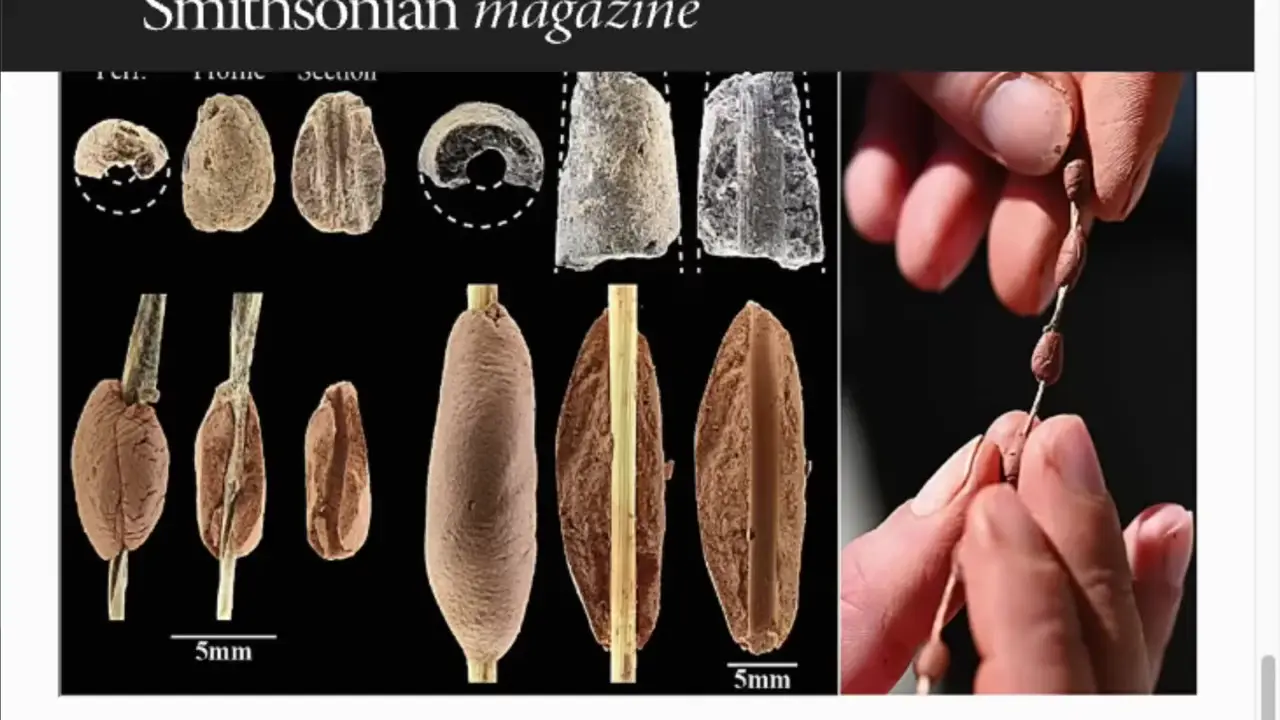
Archaeologists examining 142 clay ornaments recovered from four Natufian sites in Israel—Elwad, Nahal Oren, Hayanim, and Anan Malaha—have identified fingerprints and palm prints preserved on the surfaces of these artifacts, including prints made by children, indicating that both children and adults participated in manufacturing the ornaments [V1] [8] [4] [3] [1]. The ornaments were shaped by hand into cylinders, discs, and ellipses and span approximately three millennia within the 12,000–15,000-year date range of the sites [7]. Led by Dor Lauron of the Hebrew University of Jerusalem, whose research was published in Science Advances, the team concluded that symbolic expression and social learning among Natufian hunter-gatherers predated the emergence of agriculture by thousands of years [5] [2] [6].
At Python Cave in Botswana’s Tsodilo Hills, archaeologist Sheila Coulson of the University of Oslo uncovered what researchers initially described as the world’s oldest ritual site [V3] [V2] [13] [12] [9] [11] [16] [10]. The centerpiece was a 6-meter-long quartzite rock painstakingly carved to resemble a python snake, featuring a visible mouth, eye, and hundreds of man-made notches that gave it a lifelike appearance [15]. Excavations yielded approximately 13,000 artifacts, including spearheads crafted from multicolored stones transported from distant sources, along with 22 red stone spearheads bearing marks of deliberate burning and damage—interpreted as ritual destruction. Tsodilo Hills is the only rock outcrop for over 100 kilometers in any direction, with permanent freshwater springs that made it a unique geographic magnet for human activity.

However, widely reported claims of a 70,000-year-old ritual site require significant revision. In her 2011 academic paper, Coulson clarified that 2006 media stories attributing such an age to the site were misleading journalism, not derived from her research [V2]. The cave was occupied during the Middle Stone Age, but precise dating remains uncertain—the artifacts could be 70,000 years old or considerably younger. Coulson adopted more conservative conclusions, establishing only that the cave was occupied sometime before 25,000 years ago and continued serving as a focal point for ritual activity over many centuries. Local San oral traditions may lend cultural context: accounts describe a giant horned snake at Tsodilo Hills, recounted by community members to researchers [14].
Archaeologists working at Göbekli Tepe have documented a unique porthole stone that stands apart from similar discoveries at this site and at Karahantepe [V4]. This particular stone is larger and more ornate than other known examples, featuring two doors and flanked by guardian beasts. The artifact likely served as the entrance to a ceremonial center and has been described as the most impressive porthole door in the entire archaeological record.
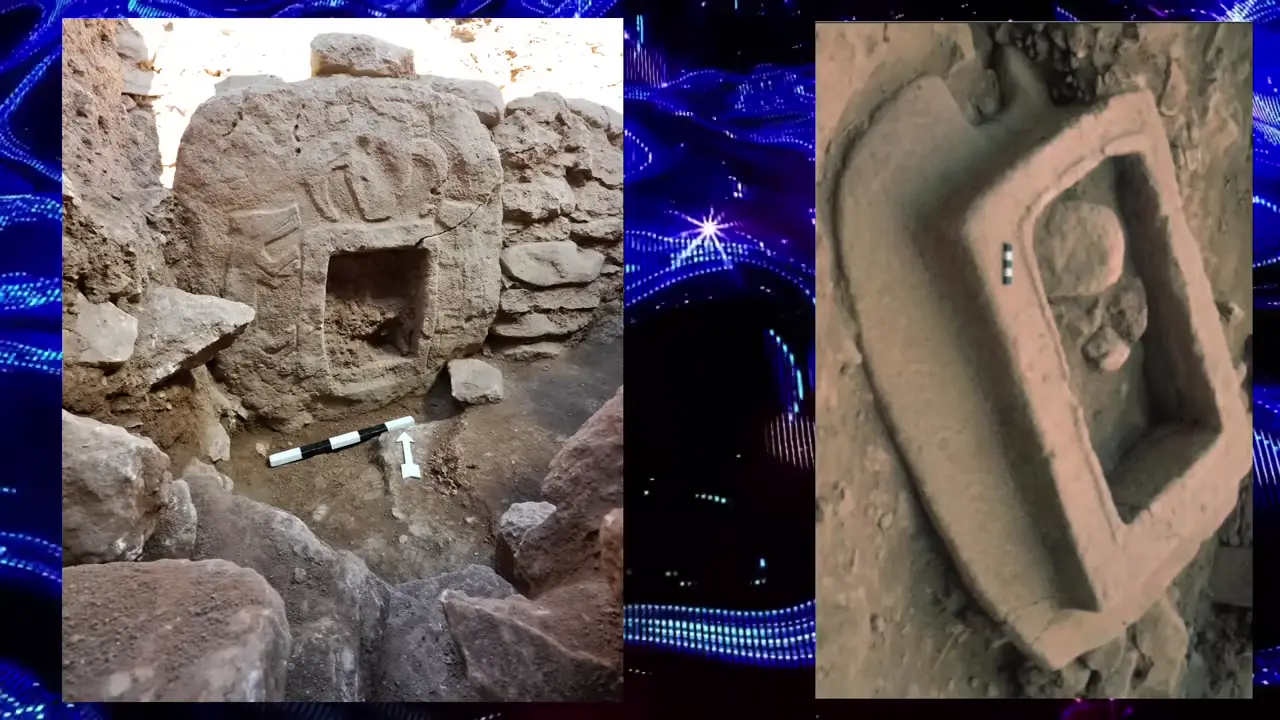
This discovery comes against a troubling backdrop. In 2010, a statue depicting a human head with a vulture perched on top was stolen directly from the ground during excavation—not from a museum—at Göbekli Tepe [V4]. The theft was suspected to be an inside job involving someone who worked at the site, and the incident resulted in Klaus Schmidt, who was then leading the excavations, being fined approximately $10,000 by the Turkish government. Lee Clare now serves as the current archaeologist in charge of the excavations.
Following the theft, archaeologists wrapped the porthole stone in plastic, sifted through the burial dirt, and reburied it in situ at its original discovery location [V4]. Multiple porthole stones from Enclosure B have similarly been reburied for approximately 15-16 years. The ongoing reburying practice has prevented scientists from conducting further tests or gathering new information from these artifacts. The source notes the paradox that artifacts left in underground locations may actually prove more accessible to thieves than if they were stored in secure facilities.
Material analysis has conclusively dated the sword embedded in stone at the Chapel of Montesiepi in Tuscany to the 12th century, with no evidence of modern alloys [V5] [21] [20] [18]. When chemist Luigi Garlaschelli from the University of Pavia drilled into the rock, he confirmed that the exposed blade and its hidden portion within the stone are metallurgically continuous, constituting a single weapon. The sword is attributed to Saint Galgano (born 1148), a Tuscan knight who reportedly drove the blade into stone during a religious conversion, dying in 1181 [17] [19]. Ground penetrating radar has also detected a hidden cavity approximately 2m by 1m beneath the stone, which investigators speculate may be a grave. The legend predates the famous Arthurian account—the first written record of someone pulling a sword from stone appears around 1200 CE, decades after Saint Galgano’s death in 1181.

Remote Sensing & Technology
The Great Sphinx and Second Pyramid at Giza may together constitute an astronomical marker aligned to the summer solstice sunset, according to research by Mark Norden. His analysis proposes that the Sphinx and Second Pyramid create an “horizon” (arket) symbol, with a proposed second Sphinx site at a 296° bearing aligning to summer solstice sunset around 6,500 BCE. The opposite direction (116°) aligns to winter solstice sunrise from the same period [V6]. Andrew Collins employs a Giza grid measurement system based on “reads” (10.5 ft units), with the distance between the existing Sphinx and proposed second site measuring exactly 378 reads. The broader Giza grid system reportedly spans from Jebel Gibli in the southeast to the Tomb of the Birds in the northwest.

It should be noted that the proposed solstice alignments and grid system described here derive primarily from alternative research sources rather than peer-reviewed Egyptological literature, and these hypotheses remain contested within the broader academic community.
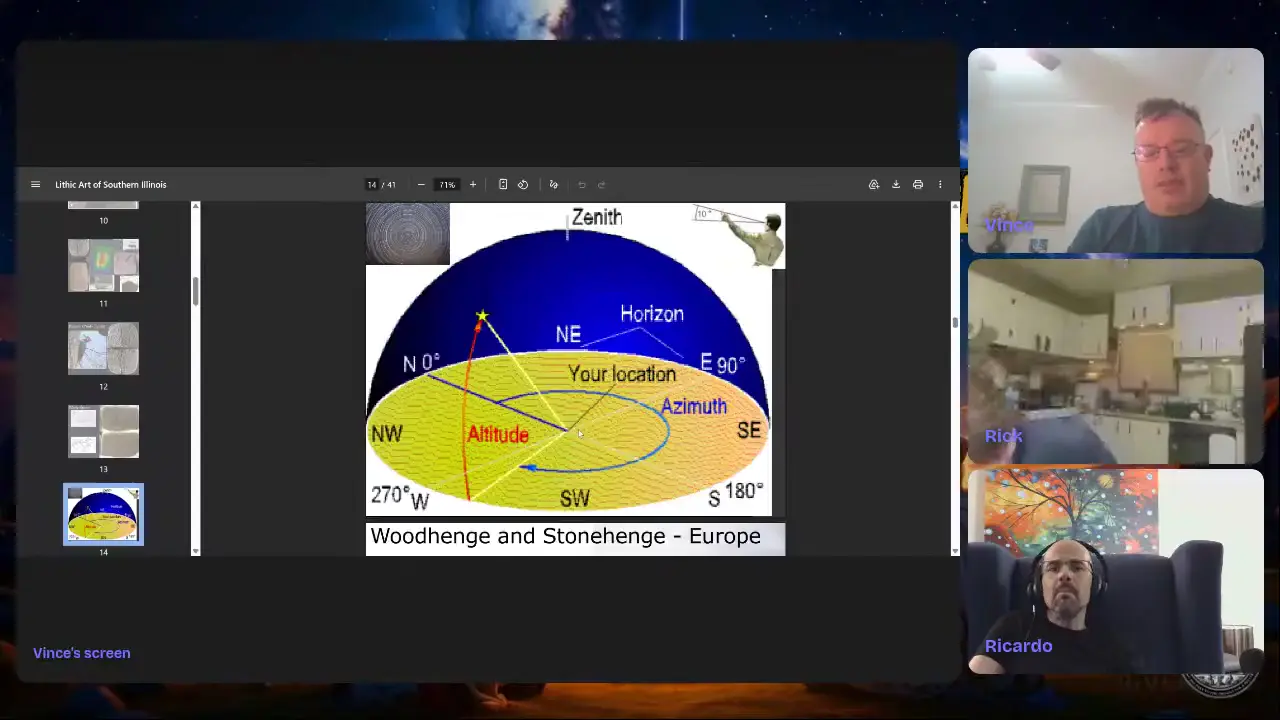
Large-scale surveys of hundreds to thousands of effigy mounds across Wisconsin and surrounding states have employed modern remote sensing techniques to examine these ancient earthworks [V7]. Researchers at Luther College have utilized geophysical methods to study subsurface features at Effigy Mounds National Monument, revealing previously unknown architectural details beneath the ground surface. These recent investigations represent a significant departure from earlier survey approaches that relied primarily on compass-based measurements.

Previous surveys documented baseline accuracy levels limited to “a couple of degrees” [V7], providing a foundation for understanding how ancient builders achieved their remarkable results. The gap between these earlier documented limitations and the precision now being revealed highlights the sophistication of the engineering knowledge possessed by effigy mound builders. The remote sensing data suggests that these ancient constructions achieved alignment and geometric relationships of exceptional accuracy, potentially comparable to other monumental structures built during the same era elsewhere in the ancient world. However, the precise degree of accuracy to the nearest minute of arc remains an ongoing area of research that requires additional analysis of the geophysical survey data.
Bioarchaeology & Ancient DNA
Ancient DNA analysis has identified domestic dog remains in Anatolia dating to approximately 15,800 years ago, representing the oldest genetic evidence of domesticated dogs and pushing back the previous record by 5,000 years [V8]. Remains dating to this period were found at the Pinabashi site in Turkey and at Goff’s Cave in the United Kingdom—sites separated by over 4,000 kilometers—demonstrating that dogs had already achieved a widespread distribution across Europe and Anatolia by this time. The genetic evidence confirms that dogs had separated from wolves at least 16,000 years ago during the early domestication process, establishing the Paleolithic period as the era when this partnership began [22] [24].

By 14,300 years ago, domestic dogs had spread across Western Eurasia, likely traveling alongside human hunter-gatherers as hunting partners [V8] [23] [22]. Isotopic chemistry analysis at Pinabashi reveals that these ancient dogs consumed a fish-rich diet matching their human owners, suggesting commensal feeding practices and close integration within human households. Furthermore, the discovery of intentionally buried dogs—sometimes interred alongside humans—points to symbolic and ritual significance in the human-dog relationship from an early stage. These findings provide the first definitive genetic confirmation that dogs existed during the Paleolithic period, well before the development of agriculture.
Architecture & Monuments
The remarkable Ingush towers of the North Caucasus—six-story structures reaching 10-25 meters in height—stand as one of the region’s most enduring architectural achievements, yet their foundations plunge far deeper into history than their medieval construction suggests [28] [V9]. While the visible towers are dated to the 13th-17th centuries, archaeological excavations have revealed older stone foundation layers beneath them, indicating that these structures sit directly on earlier building phases that date back to the 1st and 2nd millennium BC, when megalithic construction and cyclopean walls first appeared in the Caucasus. This continuity raises compelling questions about the transmission of building techniques across millennia, though the identities, languages, and political structures of those earlier societies remain entirely unknown, as no written records exist for these pre-medieval communities. The Ingush and related Nakh (Vainakh) groups who constructed the medieval towers clearly inherited a stone-building tradition spanning thousands of years [25] [26] [27]. Hundreds of these towers still stand today across Ingushetia and Chechnya, where they served as residences, signal posts, and fortifications.
In Brief
For decades, early ape evolution research has been anchored in East Africa due to the richest fossil record found there at sites in Kenya and Uganda, leading researchers to argue that this geographic focus may have shaped opinions about where early hominid evolution occurred, creating a potential sampling bias that compounded over time [V10]. Northern Africa functioned as a biogeographic crossroads gateway between Africa and Eurasia during the Early Miocene, a role that has only recently drawn serious attention from researchers [35].
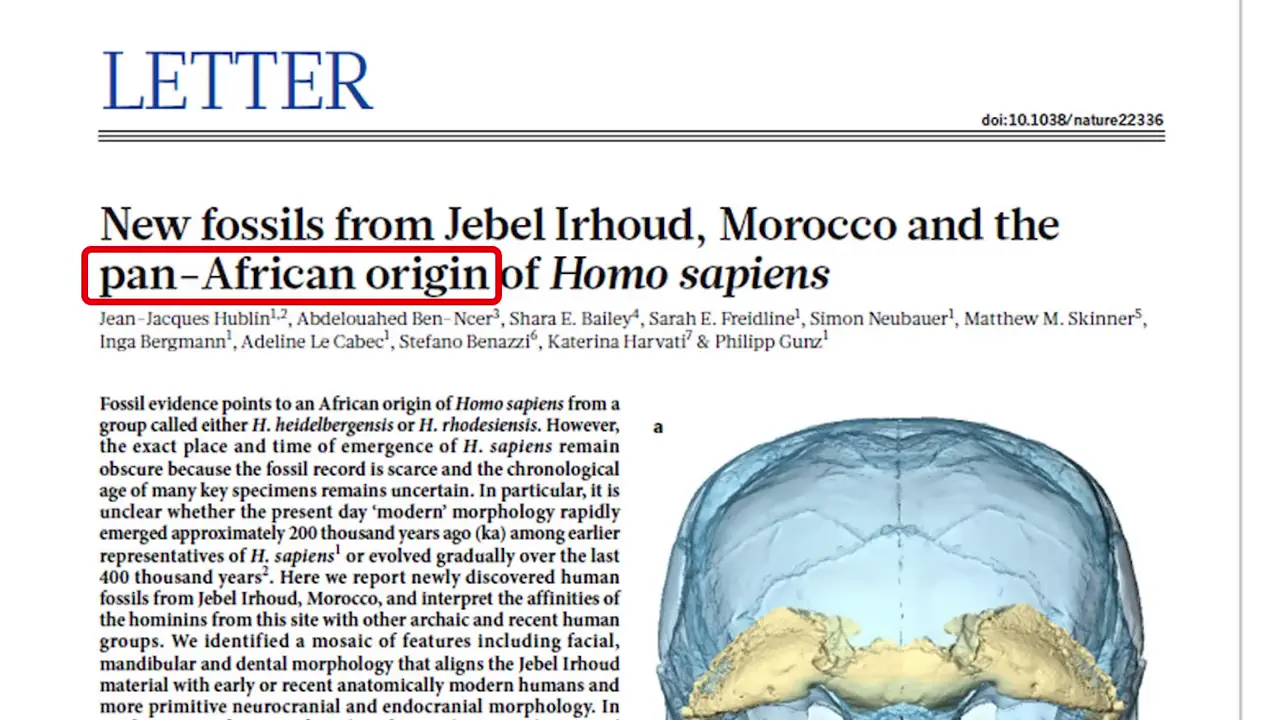
A newly described fossil ape named Masripithecus moghraensis, recovered from the Wadi Moghra region of northern Egypt and dating to approximately 17-18 million years ago, is now challenging the East Africa-centric view of ape origins [31] [34] [35] [29]. This Egyptian ape predates major ape expansions into Eurasia visible in the fossil record around 15 million years ago [V10], and its existence suggests modern apes may have originated outside East Africa rather than within it [39] [33] [32] [38] [36] [30]. Some researchers propose the Middle East was potentially a key center in early hominoid evolution, though scientists including Miller caution there is not yet enough evidence to definitively rewrite ape evolutionary history [37], and the phylogenetic position of Masripithecus remains under scientific debate pending additional fossil discoveries.
Archaeological research has revealed striking structural and functional parallels between Cahokia’s Woodhenge complex and Europe’s Stonehenge. Like its European counterpart, Cahokia’s ceremonial timber circles were arranged in five concentric rings, oriented along the same plane [40] [41]. Rather than stone monoliths, the Native American builders constructed posts in partial arcs, with Woodhenge I through V exhibiting varying diameters and post counts.
Contemporary LiDAR analysis and landscape archaeology have further verified broader astronomical alignments at Cahokia, including sight lines oriented toward the Sun, Moon, and Milky Way, with alignments intersecting prominent bluffs serving as horizon markers [42].
Cart ruts—parallel recesses carved into rock formations by repeated passage of wheeled vehicles—provide a rare window into historical transportation patterns across central Texas [46]. Bull Creek ruts are associated with mid-1800s Austin activity, appearing at crossings that would later become part of Lakewood Drive [44] [45] [43]. Multiple wagon rut crossings exist at various creek crossings along this historic route.

The most striking feature of Akrotiri’s destruction is the complete absence of human remains at the site, a finding that has puzzled researchers and suggested an extraordinary conclusion: the inhabitants evacuated before the catastrophic eruption [51] [50] [V14]. Archaeological evidence supports this hypothesis, revealing pre-eruption earthquake damage alongside signs of purposeful human action, such as the removal of valuables and structural modifications made in anticipation of disaster [48] [47]. Unlike Pompeii, where thousands perished, Akrotiri’s population appears to have organized an orderly departure, loading possessions and fleeing by sea. This preparedness likely stemmed from a series of major earthquakes that struck Thera in the preceding months or years, providing warning signs that prompted evacuation. Only one confirmed human victim of the broader Thera eruption has been identified, discovered at Çeşme-Bağlararası in Turkey rather than at Akrotiri itself, suggesting that casualties from the disaster occurred elsewhere among affected communities. The precise timing of the eruption remains contested, with estimates ranging from approximately 1627 BC to 1550 BC depending on the scientific methodology employed [49].

A January 2026 hypothesis proposes that Giza’s builders constructed an oversized pyramid first and then carved it down to its final shape [52]. However, engineering analysis reveals significant problems with this “unbuilding” model. The casing stones present another obstacle: they consist of imported distinct material rather than being carved from Giza limestone itself, undermining the premise of shaping the pyramid by reduction [V15].

This unbuilding proposal represents just one of several competing theories under recent discussion. A separate 2025/2026 hypothesis suggests that the Great Pyramid’s builders employed a hidden internal pulley or hoist system to raise giant blocks into position [53], representing an alternative explanation for the monument’s construction that contrasts with the carving-down model.
Archaeologists have uncovered Thailand’s oldest human skeleton at Tham Din cave in Khao Sam Roi Yot National Park, Prachuap Khiri Khan Province [59] [55] [58] [56] [54] [57] [60]. Radiocarbon dating established the remains at approximately 29,000 years old, making them the oldest human remains ever discovered in Thailand and significantly pushing back the timeline of human occupation in the region. The skeleton, nicknamed ‘Pangpond,’ was identified as a child estimated to be 6-8 years old at the time of death based on osteological analysis of the bones. The remains were found roughly six feet beneath the cave floor, suggesting careful burial or natural preservation conditions within the limestone cavern system. However, viewers should exercise caution with online content claiming to feature these discoveries, as at least one widely circulated video presents an art installation with concrete reproductions rather than authentic archaeological excavations [V16].
Sources
- 15,000-Year-Old Clay Beads Show Children Helped Craft Some of …
- 15,000 years ago, children shaped clay, long before pottery or …
- This 15,000-Year-Old Discovery Changes What We Know About …
- ‘Children Shaped Clay 15,000 Years Ago in Israel’ - Washington …
- Largest prehistoric bead cache, found in northern Israel, is a window …
- What Role Did Children Play in the Rise of Civilization?
- 15,000-Year-Old Clay Beads Preserve Children’s Fingerprints and …
- Children helped make some of the world’s earliest clay ornaments
- World’s oldest ritual discovered - EurekAlert!
- Offerings to a Stone Snake Provide the Earliest Evidence of Religion
- Python may have been the first sacred cow 70,000 years ago - The Times
- World’s oldest ritual discovered. Worshipped the python 70000 … - UiO
- Scientists find first known human ritual - NBC News
- [PDF] Ritual in the Hunter-Gatherer/Early Pastoralist Period - ResearchGate
- World’s Oldest Ritual Discovered – Worshipped The Python 70,000 …
- Ritual: Organised Activity Identified as World’s Oldest
- [PDF] The Real Sword in the Stone - Center for Inquiry
- Chemical Analysis Confirms Italy’s ‘Sword in the Stone’ To Be …
- The true story behind this 12th century legendary sword in the Stone …
- The truth about the real sword in the stone
- Italy’s Sword In The Stone Isn’t A Fake, According To Chemical …
- DNA rewrites when humans first partnered with dogs
- Scientists Identify the World’s First Known Dog, Which Pushes Back …
- World’s oldest genetic evidence for domestic dogs identified in …
- The mysterious towers of the Caucasus - Russia Beyond
- Medieval fortress towers of Ingushetia - North Caucasus Land
- Ingush towers - Wikipedia
- The Ingush Towers of North Caucasia - Amusing Planet
- Masripithecus: A new Miocene ape from Egypt sheds light on the …
- New ape discovery ‘reshaping’ understanding of evolution
- Masripithecus
- Early apes may not have evolved in East Africa - Science News
- An Early Miocene ape from the biogeographic crossroads of African …
- An Early Miocene ape from the biogeographic crossroads of African …
- Newly discovered primate species could redraw the ape family tree
- Scientists say we’ve been looking in the wrong place for human origins
- Were we looking in the wrong place? New fossil informs ape origins
- 18-Million-Year-Old Ape Fossil From Egypt Suggests Modern Apes …
- Aegyptopithecus
- RiverWeb:AmBot:PreHist:Technology - Illinois State Museum
- The History of Cahokia’s Five Woodhenges.
- Archaeoastronomy and Landscape Archaeology at Cahokia
- ‘Wagon ruts’ at Bull Creek provide window into Austin life in the 1800s
- Wagon Ruts on Bull Creek?
- Mid-1800s wagon ruts preserved at Bull Creek - FOX 7 Austin
- (PDF) A Characterization of the Cart Ruts in Texas and Azores
- Ignorance is Not Bliss: What Doomed Pompeii and Saved Akrotiri
- Lesson 17: Narrative – Aegean Prehistoric Archaeology
- Akrotiri: Remnants from a Volcanic Eruption - Her Life in Ruins
- 10 Amazing Facts About Akrotiri, the Bronze Age City Wiped Out by …
- The Mystery of Akrotiri: Unraveling the Enigma of the Missing …
- Were the Egyptian Pyramids Not Built Up, But Carved Down?
- Great Pyramid may hide an inner hoist for giant blocks, study suggests
- 29000-year-old child ‘Pangpond’ changes Thailand’s …
- 29000-year-old remains of child unearthed in Thailand …
- Oldest on record: 29000-year-old human skeleton found in …
- Ancient child skeleton, nicknamed ‘Pangpond,’ unearthed in …
- 29000-Year-Old Child’s Skeleton Unearthed in Thailand …
- 29000-Year-Old Human Remains Discovered In Thailand
- Archaeologists Discover 30000-Year-Old Child Remains in National …
Videos
V1. The Prehistory Guys — “LIVE ~ PREHISTORIC ARCHAEOLOGY NEWS From Around the World” V2. Ancient Architects — “The 70,000-YEAR-OLD Carved Stone Snake & the ‘Mountain of the Gods’” V3. Ancient Architects — “The 70,000-YEAR-OLD Carved Stone Snake & the ‘Mountain of the Gods’” V4. DeDunking — “Archaeologists Bury Our Past In Dirt: Göbekli Tepe Coverup” V5. Dark5 Ancient Mysteries — “The Sword of Razors: 5 Ancient Swords That Can’t Be Explained” V6. MegalithomaniaUK — “Is There Really A Second Sphinx? | More SAR Scan Revelations in 2026 | Megalithomania Podcast” V7. Institute for Natural Philosophy — “The Shaman and The Philosopher” V8. The Prehistory Guys — “LIVE ~ PREHISTORIC ARCHAEOLOGY NEWS From Around the World” V9. Michael Button — “Nobody Can Explain These Ancient Towers” V10. Timeless with Fred Snyder — “18 million year old Common Ancestor is from Egypt, not East Africa” V11. Institute for Natural Philosophy — “The Roundtable Chronicles” V12. The Randall Carlson — “The Mystery of the Cart Ruts” V13. Luke Caverns — “Bronze Age Atlantis: The Buried City of Akrotiri” V14. Luke Caverns — “Bronze Age Atlantis: The Buried City of Akrotiri” V15. Curious Being — “The Pyramid Theory That Solves Every Construction Mystery” V16. SPIRIT in STONE — “GIANT Skeletons, Songkran & Iranian New Year”
Quality Audit — 10/10 ✓
Quality Dimensions
✓ spelling✓ week date✓ proper nouns✓ source quality✓ citation format✓ section balance✓ summary accuracy✓ citation coverage✓ academic citations✓ screenshot placementResearch Clusters
Keep exploring
Every site on this page sits on the globe, and the people who research them are on the Discord.
3D Globe · Sites by country · Story Archive · Research Library · Weekly Journal · Search